Key Takeaways
- $16.4 billion — UAE’s Ramadan economy in 2026, part of a MENA-wide retail season topping $66 billion
- 57% of Gulf consumers report higher spending this Ramadan, but 62% say they are actively budgeting — a contradiction that defines the season
- 48% of digital activity occurs between 10 PM and 2 AM, forcing US brands to rethink campaign timing entirely
- E-commerce growth of 30–50% over baseline as consumers shift from malls to apps amid security concerns near conflict zones
- 84% plan Eid gifts, down from 90% last year — a six-point drop that signals war-driven consumer caution reaching even celebratory spending
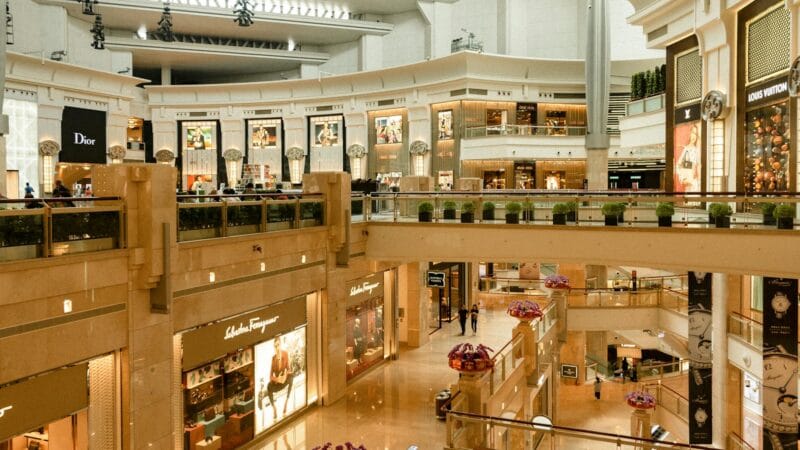
For American investors and executives, Ramadan is easy to underestimate. It is a religious month. It is also the single largest consumer spending event in a $3.6 trillion regional economy. This year, that spending is happening against the backdrop of an active war 400 miles from Dubai’s malls, oil above $110 per barrel, and a digital commerce infrastructure that has quietly matured into one of the fastest-growing in the world.
The bottom line for US companies: Visa, Mastercard, Amazon, Procter & Gamble, Colgate-Palmolive, and dozens of consumer staples firms have meaningful MENA revenue exposure. What happens in Gulf malls and on Gulf smartphones during March 2026 will show up in Q1 earnings calls. Understanding the mechanics of this shift is not optional for anyone with a position in these names.
How Big Is the Ramadan Economy, Really?
The UAE alone generates an estimated $16.4 billion in Ramadan-period economic activity, spanning food retail, fashion, electronics, hospitality, and increasingly, digital services. Scaled across the broader MENA region — Saudi Arabia, Egypt, Kuwait, Qatar, Bahrain, Oman, Jordan, and North Africa — the figure exceeds $66 billion annually.

To put that in American context: the MENA Ramadan retail season is roughly equivalent to the US back-to-school shopping period, but compressed into 30 days and skewed heavily toward evening and late-night hours. The GCC countries alone account for over 40% of that total, driven by high per-capita income, young demographics, and a cultural norm of elevated generosity during the holy month.
Saudi Arabia’s contribution is the largest single-country component. Vision 2030’s push for domestic entertainment has channeled Ramadan spending toward homegrown experiences — theme parks, local streaming content, Saudi restaurant chains — rather than imported luxury goods. This is a structural shift, not a cyclical one, and it is accelerating.
Why Is Wartime Ramadan Different?
The Iran-Israel conflict that erupted in February 2026 has introduced variables no Gulf retailer planned for. Physical mall traffic in cities within perceptual range of the conflict — particularly in Qatar and eastern Saudi Arabia — has softened. Security concerns, real and perceived, are accelerating the channel shift from in-person to digital that was already underway.
E-commerce across the Gulf is tracking 30–50% above baseline during Ramadan 2026, with the sharpest gains in grocery delivery, fashion, and consumer electronics. Platforms like Noon, Talabat, and Amazon.ae are the primary beneficiaries. The acceleration is structural: consumers who shift to app-based shopping during Ramadan tend to retain those habits afterward, compressing the timeline for full e-commerce maturity by an estimated 18–24 months.
The war has also hit supply chains. Hormuz disruptions have raised landed costs for imported consumer goods by an estimated 8–14% since early March, pushing some categories — electronics, imported food brands — into territory where Gulf consumers are visibly pulling back. This is where the 62% budgeting rate becomes meaningful: consumers are not abandoning Ramadan spending, they are reallocating it toward local goods, food staples, and digital services that bypass maritime supply chains entirely.
The Timing Anomaly: Who Shops at 1 AM?
Gulf consumers during Ramadan do. 48% of all digital commerce activity in the UAE during Ramadan occurs between 10 PM and 2 AM local time. This is not a quirk — it is a structural consequence of daytime fasting, with peak consumer energy, socialization, and discretionary spending all concentrated in post-Iftar evening hours.
For US brands running digital campaigns in MENA, this has direct implications for ad spend efficiency. Campaigns optimized for standard daytime dayparting will systematically underperform. The brands winning Gulf Ramadan digital spend — whether in paid social, search, or display — have rebuilt their scheduling stacks around Gulf Standard Time evenings. This is an operational advantage that takes multiple Ramadan cycles to develop, which is why first-movers have compounding returns.
The Eid Pullback: What the Gift Data Tells Us
84% of Gulf consumers plan to purchase Eid gifts in 2026, down from 90% last year. That six-point decline is significant in isolation. It is more significant when you consider that Eid gift-giving is one of the most culturally entrenched spending behaviors in the region — the equivalent of asking Americans whether they plan to buy Christmas gifts.
The pullback reflects three converging pressures: war-driven economic uncertainty, import cost inflation from Hormuz disruption, and a generational shift toward experiential gifting (restaurant outings, travel, digital gift cards) over physical goods. Categories most exposed to the decline include imported electronics, international fashion brands, and premium food hampers — all areas where US-listed companies have meaningful revenue exposure.
Meanwhile, 66% of consumers report delaying purchases specifically to capture Ramadan promotions, up from prior years. This promotional dependency is compressing margins for Gulf retailers and the international brands they carry. It also means that revenue recognition for Q1 is increasingly back-loaded, complicating quarterly earnings reads for consumer goods companies with MENA exposure.
Which US Companies Are Most Exposed?
Payment networks are the most direct beneficiaries of any Gulf consumer spending increase. Visa and Mastercard process the majority of digital transactions across the GCC, with contactless and mobile wallet penetration accelerating sharply. A 30–50% e-commerce surge during Ramadan translates directly into cross-border transaction volume — the highest-margin segment for both networks.
Consumer staples companies with MENA distribution — Procter & Gamble, Colgate-Palmolive, Mondelez — benefit from elevated food and personal care spending during Ramadan but face margin pressure from import cost inflation. Mondelez, which derives meaningful revenue from biscuits and chocolate sold as Ramadan and Eid gifts across MENA, is particularly exposed to the gift-spend pullback.
On the supply chain side, Hormuz-driven food price increases in the Gulf are pushing Gulf retailers toward regional sourcing alternatives, which benefits Turkish and Egyptian food producers at the expense of European and American importers.
What This Means for US Investors
The Gulf Ramadan economy is not a niche story. It is a $66B+ consumer event that flows directly through Visa/Mastercard transaction volumes, consumer staples earnings, and emerging-market ETF performance. The war-driven e-commerce acceleration is a structural positive for payment processors and digital platforms with MENA exposure. The Eid gift pullback and import cost inflation are structural negatives for physical goods brands. Investors should parse Q1 earnings calls for MENA revenue disclosures — this is where the war’s consumer impact will first become quantifiable. See our full guide to Middle East ETFs and stocks for US investors.
Frequently Asked Questions
How does Ramadan affect Gulf GDP?
Ramadan drives a significant seasonal surge in consumer spending, hospitality, and media consumption across the GCC. In the UAE alone, the month generates an estimated $16.4 billion in economic activity. While daily labor productivity typically dips due to fasting hours, the overall consumption boost means Ramadan is a net positive for GDP in consumer-driven Gulf economies.
Why is Gulf e-commerce spiking during the 2026 war?
Physical mall traffic has softened in areas near conflict zones, accelerating the pre-existing channel shift toward digital. Platforms like Noon and Amazon.ae are absorbing displaced mall traffic. The 30–50% e-commerce surge is also partly war-related, as consumers avoid crowded public spaces and prefer the convenience and perceived safety of home delivery during a period of regional tension.
Which US payment companies benefit most from Gulf Ramadan spending?
Visa and Mastercard are the primary beneficiaries, as both process the dominant share of GCC digital and card transactions. Cross-border transaction volume — their highest-margin segment — rises sharply during Ramadan as Gulf consumers purchase from international platforms. A 30–50% e-commerce surge represents a direct, high-margin volume uplift for both networks in Q1 results.
Is the Eid spending pullback a temporary or structural shift?
Both. The 2026 pullback from 90% to 84% of consumers planning Eid gifts is partly war-driven uncertainty (temporary) and partly a generational shift toward experiential over physical gifting (structural). The experiential trend predates the war and is likely to persist regardless of how the conflict resolves, representing a durable headwind for imported physical goods categories.
How does Hormuz disruption affect Gulf Ramadan supply chains?
An estimated 8–14% increase in landed costs for imported consumer goods since early March is flowing through to Gulf shelf prices. Categories most affected include imported electronics, premium packaged foods, and international fashion. Gulf retailers are partially offsetting this by promoting regional alternatives — Turkish, Egyptian, and Saudi-produced goods — reducing import dependency and reshaping brand market share.
The 2026 Ramadan season is a real-time stress test of the Gulf consumer economy — one that is simultaneously revealing its resilience (spending is up, e-commerce is surging) and its vulnerabilities (supply chain inflation, war-driven caution, promotional margin compression). For US companies and investors with MENA exposure, this is not background noise. It is Q1 data arriving in real time, weeks before earnings season begins.