Brent crude closed at $102 per barrel on March 16 — down $3.05 on the session — as Wall Street’s relief rally (S&P 500 +1.01%) briefly overpowered the geopolitical risk premium baked into energy markets since Operation Epic Fury began 17 days ago. For Americans filling their tanks, the national average gasoline price hit $3.70 per gallon, a 24% surge since the Iran-US conflict began. That math translates to roughly $400-600 in added annual fuel costs for the average US household.
Key Takeaways
- Brent at $102/bbl — down from $120 peak earlier in March, but still $15-20 above pre-conflict levels
- WTI trading $94-100 — US benchmark remains elevated due to Hormuz disruption
- OPEC+ adding 206,000 b/d from April, but output routed through Hormuz is largely blocked
- US gasoline at $3.70/gal — up 24% since the war began on March 1
- S&P 500 energy sector +3.2% YTD vs flat broad market — energy remains 2026’s top sector
Why Did Brent Drop to $102 If the Strait of Hormuz Is Still Closed?
The $3.05 single-session drop reflects two competing forces. First, Wall Street’s broader relief rally — driven by ceasefire negotiation signals from Oman — pulled speculative long positions out of crude. Second, OPEC+’s formal announcement of a 206,000 barrel-per-day production increase beginning April 1 gave traders a supply narrative to sell into. But neither development actually reopens the strait.
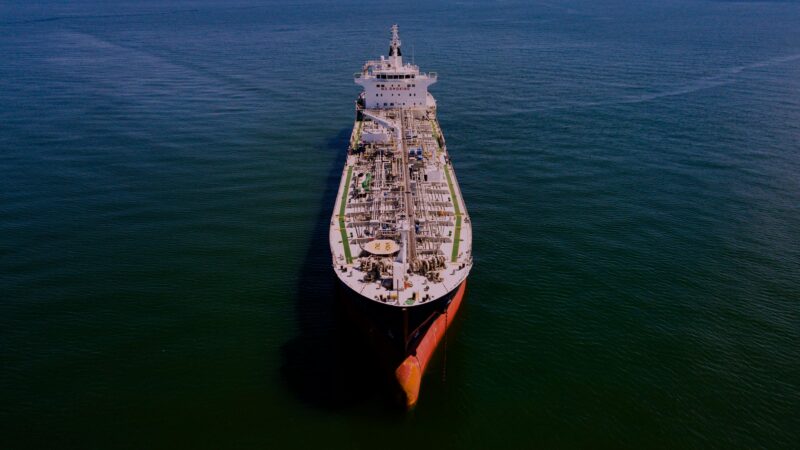
Iran’s Islamic Revolutionary Guard Corps (IRGC) continues to enforce the closure with naval assets in the lower Gulf. The 17-day closure has already diverted over 300 tanker voyages around Africa’s Cape of Good Hope — adding 10-14 days per voyage and an estimated $2-4 per barrel in freight cost. That structural cost doesn’t disappear when sentiment improves.

The key technical level to watch: $98/bbl on Brent. A sustained break below that would signal markets pricing a meaningful probability of Hormuz reopening within 30 days. Above $98, the war premium holds. As of March 17, we remain well above that floor.
For deeper context on what drives crude markets this month, see our full March 2026 oil price forecast and the OPEC+ production decision breakdown.
What Does the OPEC+ Supply Increase Actually Mean for Prices?
On paper, 206,000 additional barrels per day from April is meaningful — it’s roughly 0.2% of global consumption. In practice, the supply increase is largely symbolic for two reasons.
First, the majority of new OPEC+ output originates in Gulf states whose export terminals feed into Hormuz-dependent shipping lanes. Saudi Arabia’s primary export terminal at Ras Tanura handles over 6 million b/d — nearly all of which transits the strait. The Petroline pipeline to Yanbu (Red Sea) can handle 5 million b/d but was already operating near capacity before the crisis.
Second, the market has repriced the OPEC+ floor. When the group chose to add supply at $102 oil, it signaled a comfort zone above $90 — which structurally limits how far prices can fall even in a ceasefire scenario. Traders are reading the decision as OPEC+ defending a $90-95 floor while letting the war premium float above it.
How Are US Gasoline Prices Moving This Week?
The national average of $3.70/gallon masks significant regional variation. California drivers are paying $5.10-5.40/gallon, while Midwest states sit closer to $3.30-3.50. The spread reflects refinery capacity constraints: US refineries optimized for light sweet crude are running at 91% utilization as they absorb higher input costs.
The forward curve on RBOB gasoline futures implies the national average peaks near $3.90-4.10 if Hormuz remains closed through April — the traditional pre-summer demand ramp. If a ceasefire materializes before April 15, expect a $0.30-0.50/gallon pullback within three weeks as the freight premium unwinds.
Diesel prices — the trucking and freight backbone — are running at $4.15/gallon, creating embedded inflation across consumer goods supply chains. The Cleveland Fed’s inflation nowcast already revised March CPI estimates upward by 0.3 percentage points due to energy pass-through.
Which Energy Stocks Benefit from $100+ Oil?
US integrated majors are the clearest beneficiaries. ExxonMobil (XOM) generates roughly $1.5 billion in additional annual free cash flow for every $10/bbl increase in realized crude price. At $102 Brent, that’s a structural windfall of over $5 billion annually versus 2025 baseline assumptions. Chevron (CVX) and ConocoPhillips (COP) show similar leverage ratios.
Midstream operators — pipeline MLPs like Enterprise Products Partners (EPD) and Energy Transfer (ET) — benefit indirectly through higher throughput volumes as US domestic production ramps to fill the Hormuz supply gap. US crude production hit 13.4 million b/d in the latest EIA weekly report, a record.
The laggard: downstream refiners. Valero (VLO) and Marathon Petroleum (MPC) face margin compression as crude input costs rise faster than product prices can follow — a classic refinery squeeze in a supply shock environment.
What This Means for US Investors
The week of March 17-23 is a hold, not a chase moment for energy positions. Brent at $102 reflects fair value for a Hormuz-closed scenario. The upside to $115+ requires an escalation (second front, missile exchange with GCC states); the downside to $85 requires a credible ceasefire deal — neither is priced as base case. For portfolio construction: energy sector exposure of 8-12% is defensible at current macro; avoid leveraged crude ETFs given volatility; consider trimming refiner positions and adding upstream exposure through XOM, CVX, or the GULF ETF for regional exposure.
Frequently Asked Questions
Will oil prices fall if Iran and the US reach a ceasefire?
A verified ceasefire would likely push Brent down $12-18/bbl within two weeks as the war premium unwinds. However, the OPEC+ price floor near $90-95 limits how far crude can fall. Full Hormuz reopening takes 2-4 weeks after a ceasefire to normalize shipping, so the relief would be gradual rather than immediate.
How high could US gas prices go if Hormuz stays closed through summer?
If the strait remains closed through May, the summer driving season demand surge could push the US national average to $4.25-4.75/gallon — levels last seen during the 2022 Ukraine shock. California and Northeast markets would likely exceed $5.50. The White House has discussed releasing 60-100 million barrels from the Strategic Petroleum Reserve as a counter-measure.
Is the OPEC+ April production increase enough to offset Hormuz losses?
No. The 206,000 b/d increase represents less than 1.5% of the roughly 17 million b/d that normally transits Hormuz. Much of the new output also originates in Gulf states whose primary export route is the strait itself. The increase is geopolitically symbolic — a signal that producers want to contain prices — more than a material supply remedy.
What is WTI crude trading at compared to Brent in March 2026?
WTI is trading in the $94-100/bbl range, reflecting a $2-8 discount to Brent. The wider-than-usual spread (historically $2-4) reflects US domestic production records and pipeline constraints moving Permian Basin output to Gulf Coast export terminals, creating a slight domestic oversupply versus global scarcity.
What Is the Oil Price Outlook for the Rest of March 2026?
The base case for the week of March 17-23: Brent range of $98-108/bbl, with the midpoint near $103. Upside catalysts include any military escalation involving GCC infrastructure, a disruption to Saudi pipeline throughput, or a US SPR release that underwhelms markets. Downside catalysts are ceasefire signals — particularly if Oman’s back-channel negotiations produce a public framework.
Watch three data points this week: (1) the EIA Weekly Petroleum Status Report on Wednesday for US crude inventory changes; (2) any Oman foreign ministry communiques; and (3) the Baker Hughes rig count on Friday for evidence of US production acceleration. For a longer-term view on what drives crude, revisit our March 2026 crude markets analysis.