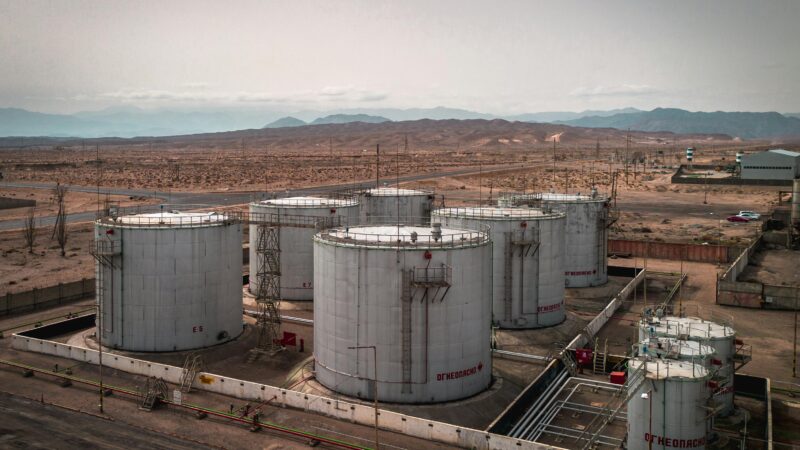
Two pipelines — one Saudi, one Emirati — stand between the global economy and complete dependence on Iran’s goodwill at the Strait of Hormuz. Saudi Arabia’s Petroline (East-West Pipeline) can move 5 million barrels per day from the Eastern Province to the Red Sea port of Yanbu. The UAE’s ADCO Abu Dhabi Crude Oil Pipeline can carry 1.5 million b/d from the interior to the Gulf of Oman port at Fujairah — entirely bypassing the strait. Together: 6.5 million b/d of Hormuz-free capacity. The problem: 17 million b/d normally transits the strait. That 10.5 million barrel daily gap is the geopolitical number driving everything in energy markets right now.
Key Takeaways
- Saudi Petroline capacity: 5 million b/d — routes crude to Yanbu on the Red Sea, bypassing Hormuz entirely
- UAE ADCO pipeline: 1.5 million b/d — terminates at Fujairah on the Gulf of Oman, outside Iranian IRGC patrol zones
- Combined bypass capacity: 6.5 million b/d — covers only 38% of Hormuz’s normal 17 million b/d throughput
- Bottleneck: Yanbu and Fujairah port loading capacity — tanker throughput, not pipeline, is the binding constraint
- Gap of 10.5 million b/d must reroute via Cape of Good Hope — adding $2-4/bbl in freight and 10-14 days per voyage
What Is Saudi Arabia’s Petroline and How Much Can It Actually Move?
The Petroline — formally the East-West Crude Oil Pipeline — is one of the world’s largest oil pipeline systems. Stretching 1,200 kilometers across the Arabian Peninsula from Abqaiq in the Eastern Province to Yanbu on the Red Sea coast, it was built specifically to give Saudi Arabia a Hormuz-independent export route. Its design capacity is 5 million barrels per day, though it has historically operated at 2-3 million b/d during peacetime — kept deliberately underutilized as a strategic reserve.
Since the Hormuz closure began on March 1, Saudi Aramco has been ramping Petroline throughput aggressively. Reports from Yanbu port officials indicate loading activity has increased 60-70% versus February averages, suggesting current throughput near 3.5-4 million b/d. The theoretical maximum of 5 million b/d is constrained not by pipeline capacity but by Yanbu’s Very Large Crude Carrier (VLCC) loading capacity — the port can handle approximately 4-5 VLCC loadings per day, each carrying roughly 2 million barrels.

The Yanbu route adds approximately 3-4 days to voyages heading to Asian markets (versus Hormuz routing) and saves 2-3 days for US East Coast destinations. For European buyers, Yanbu is actually more efficient than the Hormuz route — a silver lining that has redirected some European purchasing toward Yanbu-loaded Saudi crude.
For context on the Hormuz disruption’s broader impact, see our analysis of the Strait of Hormuz shipping disruption and global trade impact.
How Does the UAE ADCO Pipeline Route Work?
The UAE’s bypass infrastructure centers on the Abu Dhabi Crude Oil Pipeline (ADCO Pipeline), which runs 380 kilometers from Habshan in the Abu Dhabi interior to the Fujairah Marine Terminal on the Gulf of Oman coast. Critically, Fujairah sits east of the Strait of Hormuz, meaning tankers loading there never enter IRGC-controlled waters.
The pipeline’s rated capacity is 1.5 million barrels per day. ADNOC, Abu Dhabi’s national oil company, confirmed on March 5 that it was operating the Fujairah route at full capacity for the first time since the pipeline’s 2012 commissioning. The Fujairah terminal can simultaneously berth two VLCCs and three Suezmax tankers, creating a theoretical daily throughput of roughly 1.5-1.8 million barrels depending on vessel mix.
Fujairah has become a critical strategic node for a second reason: it hosts the world’s third-largest bunkering port and extensive commercial oil storage (estimated 14 million barrels of tank capacity). UAE officials have indicated they are exploring pipeline capacity expansion to 2.5 million b/d — a project that would take 18-24 months to complete if fast-tracked.
Why Can’t the Two Pipelines Cover the Full 17 Million b/d Hormuz Gap?
The arithmetic is unforgiving. Normal Hormuz throughput of 17 million b/d includes crude oil from multiple producers: Saudi Arabia (~7 million b/d), UAE (~2.7 million b/d), Kuwait (~1.7 million b/d), Iraq (~3.2 million b/d), Qatar (~600,000 b/d LNG equivalent), and Iran’s own remaining exports. The two bypass pipelines are Saudi and Emirati assets only — they cannot help Kuwait, Iraq, or Qatar move their exports.
Kuwait has no pipeline bypass. Its entire export capacity of 1.7 million b/d transits Hormuz at the Mina Al-Ahmadi terminal. Iraqi crude from Basra similarly has no bypass route — the Kirkuk-Ceyhan pipeline to Turkey runs through northern Iraq and handles a fraction of total Iraqi output. Qatar’s LNG exports — the gas liquefaction infrastructure at Ras Laffan — are the most exposed: LNG tankers require the strait, and there is no pipeline LNG alternative.
Even for Saudi Arabia and the UAE, the bypass routes have constraints beyond rated capacity. Pumping stations along the Petroline require maintenance and were not designed for continuous maximum-throughput operation. Aramco engineers have reportedly been working in rotating shifts to keep pressure optimal, but industrial sources indicate sustained operation above 4.5 million b/d risks pipeline integrity issues over a 30-60 day horizon.
What Does This Mean for Global Oil Supply Security?
The Hormuz crisis has exposed a structural vulnerability that energy security planners have documented for decades but that markets have largely ignored during peacetime. The two bypass pipelines cover 38% of normal Hormuz throughput — a meaningful buffer but not a solution. The remaining 62% must reroute via the Cape of Good Hope, adding 10-14 days of voyage time, approximately $2-4/bbl in incremental freight costs, and substantial tanker demand pressure (the global VLCC fleet is effectively operating 8-10% less efficiently due to longer route distances).
The strategic lesson being drawn in energy capitals: the Petroline and ADCO pipeline are now among the most strategically important infrastructure assets on Earth. Any disruption to either — sabotage, mechanical failure, or military targeting — would represent a catastrophic supply shock exceeding the Hormuz closure itself. Saudi Arabia has reportedly deployed additional air defense assets along the Petroline corridor in response.
What This Means for US Investors
The pipeline bypass story has direct portfolio implications. First, it limits Hormuz-closure oil price upside: the 6.5 million b/d in bypass capacity acts as a ceiling on how disruptive a prolonged closure can be — Brent is unlikely to revisit $120+ unless the pipelines themselves are threatened. Second, US-bound crude flows are actually less disrupted than Asian flows: Yanbu-loaded Saudi crude reaches US Gulf Coast refineries efficiently. Third, infrastructure plays benefit — companies with exposure to Fujairah storage, Yanbu terminal operations, and Cape of Good Hope voyage routing (tanker operators like Frontline (FRO) and International Seaways (INSW)) are direct beneficiaries of the rerouting premium. The Middle East ETFs guide covers regional equity exposure options.
Frequently Asked Questions
Can Saudi Arabia fully replace Hormuz with the Petroline?
Saudi Arabia can route its own exports around Hormuz via the Petroline to Yanbu — up to 5 million b/d. But this covers only Saudi crude. Kuwait, Iraq, Qatar, and Iranian exports have no comparable bypass. Saudi Arabia normally exports around 7 million b/d, so even its own bypass covers about 70% of its export capacity, with the remainder dependent on Hormuz conditions.
How long has the UAE ADCO pipeline been operational?
The Abu Dhabi Crude Oil Pipeline was commissioned in 2012 specifically as a strategic Hormuz bypass. It cost approximately $3.3 billion to build and runs 380 km to Fujairah. Despite being operational for 14 years, it has never before been used at full 1.5 million b/d capacity — the current Hormuz crisis is its first real strategic deployment.
Could Iraq or Kuwait build bypass pipelines quickly?
No realistic short-term solution exists. A pipeline from Basra to a Red Sea or Mediterranean terminal would require 1,500-2,000 km of new infrastructure, crossing multiple countries, at a cost of $8-15 billion and a construction timeline of 5-8 years. Emergency proposals have circulated for decades but never advanced due to political and financial obstacles.
Is the Petroline safe from Iranian military action?
The Petroline runs entirely through Saudi territory, making direct Iranian strikes a significant military escalation — tantamount to an attack on Saudi Arabia proper. Iran has historically avoided targeting Saudi infrastructure. However, proxy forces and sabotage remain theoretical risks. Saudi Arabia has reinforced pipeline corridor security with Patriot PAC-3 batteries and additional ground patrols since the crisis began.