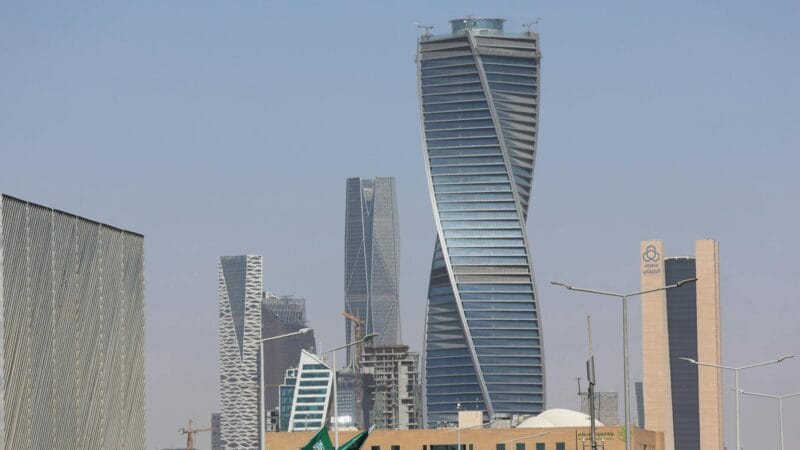
While the geopolitical crisis in the region intensifies, Saudi Arabia’s economy is delivering a performance that defies pessimistic expectations. GDP reached SR 4.789 trillion in 2025 with 4.5% growth, and forecasts point to 4.6% in 2026. The TASI index, which plummeted to 10,214, has recovered above 10,776 supported by Aramco’s successful breakout. Most importantly: oil above $100 means the Saudi budget is generating a surplus nobody anticipated.
GDP 2025: Dissecting the 4.5% Growth
Saudi Arabia’s economy grew 4.5% in 2025, bringing GDP to SR 4.789 trillion. The sectoral breakdown reveals important dynamics:
The oil sector grew 5.7%, benefiting from rising oil prices and gradual production increases under the OPEC+ agreement. But the bigger story lies in the non-oil sector, which grew 4.9% — representing a genuine structural transformation in the Saudi economy.
Sectors leading non-oil growth include tourism and entertainment, technology and digital services, construction tied to Vision 2030 projects, and financial services. Each of these sectors represents a pillar in the economic diversification strategy that has moved beyond being a government plan to becoming a tangible economic reality.
2026 Outlook: Why 4.6% Growth May Be Conservative
Official forecasts point to 4.6% growth in 2026, but this estimate was set before oil prices surged above $100 per barrel. With oil sustaining these levels, actual growth could exceed 5%.
The reason is straightforward: Saudi Arabia’s fiscal breakeven price — the oil price at which the budget balances — is estimated at approximately $78-85 per barrel according to IMF estimates. With Brent above $100, every additional dollar converts to fiscal surplus that can be directed toward accelerating development projects or bolstering reserves.
This means the war that is hurting most regional economies is effectively granting Saudi Arabia an unexpected financial windfall — a paradox worth contemplating.
TASI: From Crash to Recovery
The TASI index experienced a turbulent journey in March 2026. On March 12, it closed at 10,893, down 2.99% for the month and 7.10% year-over-year. But critically, the index had fallen to 10,214 before rebounding to approximately 10,776.
The primary driver of the recovery was Aramco’s stock, which successfully broke through an important technical resistance level, providing a strong boost to the entire index. Aramco benefits directly from higher oil prices, and its strong performance reflects investors’ reassessment of the company’s value in a $100+ oil environment.
TASI Sector Performance
The divergence between sectors reveals where smart money is heading. The energy sector — led by Aramco — clearly outperformed. The petrochemicals sector partially benefited from rising input prices. In contrast, the banking sector faced pressure due to concerns about lending slowdowns amid uncertainty.
The retail and tourism sector showed notable resilience, supported by the Ramadan season and elevated consumer spending. This confirms that Saudi Arabia’s domestic economy has become less dependent on international trade and more connected to domestic demand.
The Oil Windfall: Surplus Calculations
At $100 Brent and daily production near 9 million barrels, Saudi Arabia generates approximately $900 million in daily oil revenues. Compared to the fiscal breakeven of $78-85, this translates to a daily surplus ranging between $135 and $198 million.
On an annualized basis, if prices hold at these levels, we are looking at an additional fiscal surplus of $49-72 billion — enough to fund several major Vision 2030 projects or substantially bolster the Public Investment Fund.
But these gains are not without cost. According to the IMF, every 10% rise in oil prices adds 0.4% to inflation and subtracts 0.15% from global growth. The Kingdom — despite being an oil exporter — is not entirely immune to the consequences of a global economic slowdown on its non-oil exports and foreign investment flows.
Vision 2030 Under Crisis Conditions
The strategic question is how the current crisis affects Vision 2030’s trajectory. The answer is dual: in the short term, some projects may be affected by rising construction costs and supply chain disruptions. In the medium term, the crisis strengthens the core argument for Vision 2030 — the necessity of diversifying the economy away from oil dependence.
The paradox is that elevated oil prices provide the funding needed to accelerate diversification projects, meaning the crisis could actually speed up Vision 2030’s goals rather than slow them down.
Investment Opportunities: Where Is Money Flowing?
For investors seeking opportunities in the Saudi market, several themes deserve attention. Energy-linked stocks remain the most obvious play, but dividend stocks on Tadawul offer attractive yields in an uncertain environment.
Defensive sectors — such as food and healthcare — benefit from continued consumer spending regardless of geopolitical conditions. The technology sector is drawing increasing interest from the Public Investment Fund, making it a long-term bet backed by sovereign intent.
Conclusion: An Economy Defying Geopolitics
Saudi Arabia’s economy in March 2026 presents a unique case study: an oil-exporting nation financially benefiting from a crisis that drives prices higher, while continuing to build a non-oil economy growing at 4.9%. The TASI’s plunge to 10,214 followed by recovery reflects a market recalculating, not panicking. With GDP approaching SR 5 trillion and oil above $100, the Kingdom enters a phase of unexpected gains — and the real question is how it will deploy this surplus to accelerate economic transformation.