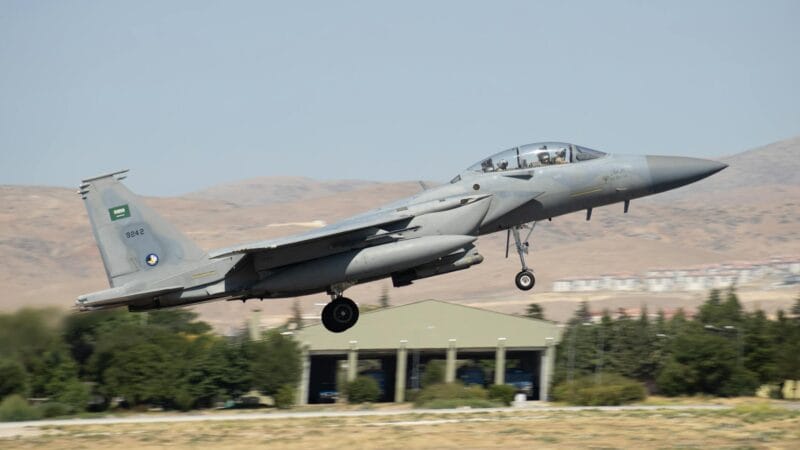
As the US-Israeli war on Iran enters its eleventh day on March 10, 2026, the military confrontation is escalating to unprecedented levels. The Pentagon has announced preparations to launch “the most intense strikes yet,” while Iran’s newly installed Supreme Leader Mojtaba Khamenei has vowed an “eye for eye” response. This mutual escalation casts a dark shadow over the regional and global economy.
Military Developments on Day 11
Pentagon Strikes: Qualitative and Quantitative Escalation
The Pentagon announced in a Tuesday briefing that US forces are preparing to execute “the most intense strikes yet” against Iranian targets. The target list includes air defense installations, command and control centers, and advanced weapons storage facilities. This comes as President Trump describes the military operations as a “short-term excursion” — a characterization that has drawn widespread criticism from military analysts who see the conflict heading toward a prolonged war of attrition.
US forces have conducted over 800 sorties since operations began on February 28, 2026, targeting sites in Tehran, Isfahan, Shiraz, and Bushehr. B-2 bombers and F-35 fighters are launching from bases in Qatar, Bahrain, and aircraft carriers in the Arabian Sea.
Iran’s Response: “Eye for Eye”
In his first formal address as Supreme Leader, Mojtaba Khamenei declared that Iran will adopt an “eye for eye” principle in responding to US-Israeli strikes. He added that the Islamic Revolutionary Guard Corps possesses capabilities not yet deployed, hinting at the potential use of long-range ballistic missiles or activation of proxy cells in Iraq, Lebanon, and Yemen.
Iranian air defenses claim to have downed 12 drones and 3 cruise missiles in the past 24 hours, though independent verification remains impossible under current media restrictions.
Human Toll: Alarming Numbers
The death toll has surpassed 1,700 people since the conflict began, including 1,205 civilians killed by US-Israeli strikes according to international human rights organizations. These figures are raising mounting concern in the international community, with the UN Secretary-General calling for an immediate ceasefire.
Hospitals in Tehran and Isfahan are operating at maximum capacity, facing acute shortages of medical supplies due to disrupted supply chains. The International Red Cross has described the humanitarian situation as “catastrophic and deteriorating.”
Oil and Energy Markets: Continued Turmoil
Oil Prices Above the $100 Barrier
Crude oil prices continue trading above $100 per barrel amid growing concerns about Strait of Hormuz supplies. Brent crude hit $108 in March 2026 trading, while West Texas Intermediate reached $104. Analysts warn that any actual disruption to shipping through the strait could push prices to $150 or higher.
Gold Soars
Gold prices have surged to new record highs above $5,400 per ounce as investors seek safe-haven assets amid geopolitical uncertainty. Physical bullion demand has risen 340% in Gulf states over the past two weeks.
Economic Impact Scoreboard: March 2026
The conflict paints a grim picture for the global economy across multiple fronts:
- Oil: Brent at $108 (+42% since war began)
- Gold: Above $5,400/oz (all-time high)
- Aviation: Over 23,000 flights cancelled
- Gasoline: US average $3.48/gallon (+58 cents in one month)
- Shipping: Maritime insurance premiums up 500% for Gulf vessels
- Tourism: $12 trillion global travel industry facing severe disruption
Diplomatic Efforts: Could Saudi Arabia Host Talks?
Diplomatic sources indicate that Saudi Arabia is leading behind-the-scenes efforts to host talks between the warring parties. Riyadh, which restored relations with Tehran in 2023 through Chinese mediation, finds itself in a unique position to communicate with all sides.
Saudi Foreign Minister Prince Faisal bin Farhan has conducted phone calls with his American, Iranian, Chinese, and Russian counterparts over the past three days. Meanwhile, China, the largest importer of Iranian oil, is pushing for a cessation of hostilities to protect its energy supplies.
But the obstacles are formidable. Washington insists on the dismantlement of Iran’s nuclear program as a precondition for any agreement, while Tehran refuses to negotiate “under fire.” Israel, for its part, demands permanent security guarantees including the complete disarmament of Hezbollah.
Mojtaba Khamenei: A War Leader, Not a Peace Leader
Mojtaba Khamenei’s assumption of the Supreme Leader role in the midst of war adds a new layer of complexity. New wartime leaders rarely lean toward concessions, as they need to demonstrate strength. His opening statements about “eye for eye” suggest a harder-line approach than his father’s, at least in the initial stages.
Analysts believe the younger Khamenei needs IRGC support to cement his legitimacy, which means he will not be in a position to offer early concessions. This analysis suggests that the war may drag on longer than some hope.
What to Watch for on Day 12
As escalation continues, several pivotal points demand attention:
- Strait of Hormuz: Any Iranian attempt to close the strait would be a fundamental turning point for the conflict and energy markets
- Iranian Response: The scale and nature of Iran’s response to the expected “most intense strikes” will determine the trajectory of coming days
- China and Russia: Any serious diplomatic move from Beijing or Moscow could change the equation
- Secondary Fronts: Movements by Hezbollah in Lebanon, Houthis in Yemen, and militias in Iraq
- Oil Markets: A breach of the $110 Brent level would trigger a new wave of economic panic
The Bottom Line: A Conflict With No Clear Horizon
Day 11 of the Iran war in March 2026 reveals a troubling reality: neither the United States nor Iran is showing any signs of willingness to back down. The human toll is mounting, the global economy is under immense pressure, and markets are gripped by anxiety and uncertainty. Trump’s description of the war as a “short-term excursion” stands in stark contrast to the reality on the ground, where all indicators point to a conflict that could extend for weeks if not months.
The Middle East Insider will continue its live coverage of military and economic developments in the 2026 Iran war. Follow us for updated daily analysis.