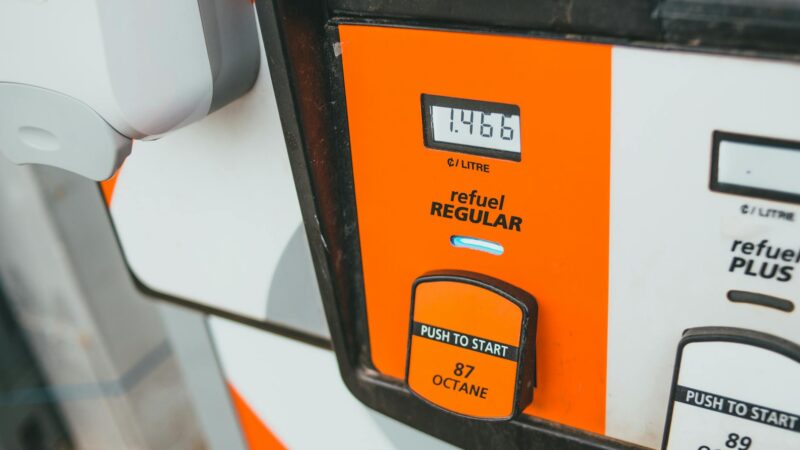
When the United States and Israel launched their military operations against Iran on February 28, 2026, most Americans were not thinking about the Strait of Hormuz or Middle Eastern geopolitics. But just 11 days later, the war’s consequences are being felt in the most everyday of places: gas stations. The national average gas price has surged to $3.48 per gallon, up 58 cents in just one month, and this may only be the beginning.
The Numbers Worrying Every American Driver
National Average: $3.48 and Climbing
According to US Energy Information Administration data for March 2026, the national average price for a gallon of regular gasoline stands at $3.48. This represents an increase of 58 cents in a single month — the largest monthly jump since Russia’s invasion of Ukraine in 2022. For the average American household driving 12,000 miles per year, this translates to roughly $45 extra per month in fuel costs alone.
California: $5.20 Pump Nightmare
In California, the situation is far more severe. The price per gallon has reached $5.20, the highest level since the energy crisis of summer 2022. Some stations in Los Angeles and San Francisco are posting prices above $5.80. Why? California relies more heavily on imported refined petroleum and imposes higher fuel taxes than any other state, amplifying the impact of any crude price increase.

Why Is Gas Going Up? The Supply Chain From Hormuz to Your Station
The Strait of Hormuz: Global Bottleneck
To understand the gas price crisis of March 2026, you must understand the Strait of Hormuz. This narrow waterway between Iran and Oman sees approximately 21 million barrels of oil pass through daily — roughly 21% of global consumption. With the outbreak of war, maritime insurance premiums have risen 500%, and some oil tankers have begun avoiding the strait entirely.
Even without an actual closure of the strait, the mere threat is enough to drive prices higher. Markets price in risk in advance, and every Iranian statement about potentially closing the strait adds dollars to the barrel price.
From Barrel to Pump: The Timeline
Crude oil takes a journey of 4 to 6 weeks from the Gulf region before it arrives at an American gas station as gasoline:
- Weeks 1-2: Crude oil ships from the Gulf via supertankers
- Weeks 2-3: Arrival at refineries on the Gulf of Mexico coast or East Coast
- Weeks 3-4: Refining process to convert crude into gasoline and diesel
- Weeks 4-6: Transportation via pipelines and trucks to gas stations
This means what we are seeing now in price increases reflects only the beginning of the crisis. The full impact of supply disruptions that began on February 28 will not be fully felt until mid-April 2026.
Inflation Knocks on the Door: 1% Monthly in March
Highest Monthly Inflation in 4 Years
Wall Street economists project that monthly inflation could reach 1% in March 2026 — the highest monthly rate in four years. Energy is the primary driver, but the impact extends to every corner of the economy.
The Federal Reserve, which had been planning interest rate cuts in the first half of 2026, now finds itself in a dilemma: cut rates to support growth, or keep them elevated to fight inflation? Markets are now pricing in a 75% probability that the Fed will hold rates unchanged through at least September.
Tax Refunds Evaporate
In a bitter irony, the gas price surge has arrived at the perfect time to erase the financial gains of millions of Americans. President Trump had promoted larger tax refunds during the 2026 tax season as proof of his economic policies’ success. But the average family that received an extra $500-$800 refund will spend most or all of it on higher fuel costs and related goods over the coming months.
Food Prices: The Next Wave
From Diesel to the Grocery Shelf
Rising fuel prices do not stop at the gas station. Diesel — which powers the trucks, trains, and ships that transport food from farms to stores — is rising faster than regular gasoline. The national diesel average has reached $4.15 per gallon in March 2026.
Supply chain experts warn that the 15-20% increase in shipping costs will begin appearing in food prices within 3 to 5 weeks. The most affected products will be:
- Fresh fruits and vegetables: Dependent on long-distance refrigerated transport
- Dairy products: Sensitive to logistics costs
- Meat: Long supply chain from feed to slaughterhouse to store
- Imported goods: Anything arriving via maritime shipping
What Analysts Predict for April and May 2026
Optimistic Scenario
If parties reach a ceasefire within the next two weeks, analysts expect gas prices to gradually retreat to the $3.00-$3.20 range by May. But even in this scenario, prices will remain above pre-war levels due to a lingering “risk premium” in markets.
Base Case Scenario
If the war continues at its current pace without major additional escalation, the national average is expected to reach $3.80-$4.20 by April, with California potentially breaking the $6.00 barrier.
Worst-Case Scenario
If Iran succeeds in disrupting shipping through the Strait of Hormuz — even partially — Goldman Sachs analysts project oil reaching $150 per barrel, which would mean gasoline averaging $5-$6 nationally and potentially $8 in California. This would be a full-blown economic nightmare.
What Can Be Done?
On an individual level, experts advise:
- Fill up your tank when you find a good price — prices are trending upward
- Use price comparison apps like GasBuddy to find the cheapest stations
- Reduce unnecessary driving and consider carpooling
- Budget for higher spending on fuel and food in the coming months
At the government level, President Trump has the option to release part of the Strategic Petroleum Reserve, as President Biden did during the 2022 Ukraine crisis. However, the reserve has shrunk significantly and has not been fully replenished, limiting this option.
The Bottom Line: A Distant War With a Very Close Cost
The 2026 Iran war may seem geographically distant from the average American, but its consequences reach their wallet every day. With gas at $3.48 and rising, monthly inflation potentially hitting 1%, and food prices on the way up, American consumers are paying a real and tangible price for this conflict. The question millions of Americans ask at every gas station: How high will prices go before this war stops?
The Middle East Insider will continue tracking the Iran war’s impact on energy prices and US inflation. Follow us for daily updates.