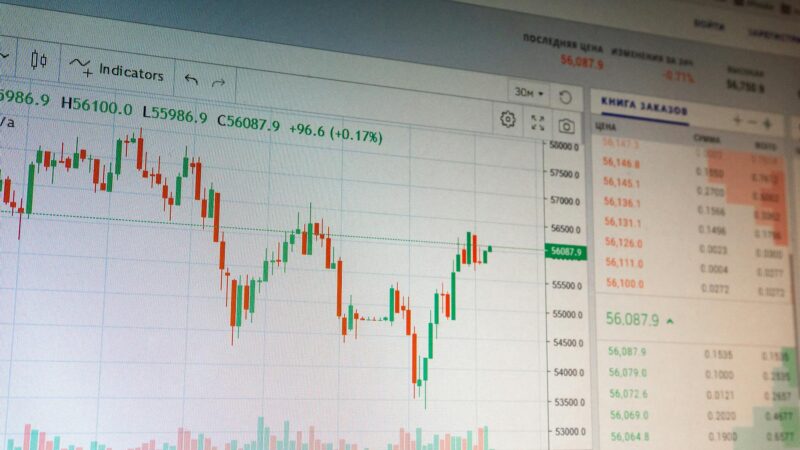
Global energy markets in 2026 are converging on one central question: will Brent crude return above the $90 per barrel threshold? The latest reports from the world’s largest investment banks reveal a growing consensus among analysts that a combination of Chinese demand recovery, OPEC+ production discipline, and escalating geopolitical risks will push prices to levels not seen since late 2023. The commodities research team at Goldman Sachs projects that Brent could reach $95 in the second half of the year, while JPMorgan sets a target of $90 and Morgan Stanley forecasts $88 as its base case, painting a clear picture of an oil market heading toward supply tightness and rising prices.
Major Bank Forecast Map: Bank-by-Bank Price Targets for 2026
Analysts diverge in their estimates for Brent crude and West Texas Intermediate (WTI) prices throughout 2026, but the general direction clearly points toward higher prices compared to early-year levels. Here are the most prominent institutional forecasts:
- Goldman Sachs — The Highest Target at $95: The commodities research team at Goldman Sachs projects an average Brent price of $95 per barrel in Q4 2026, based on a model showing a supply deficit of 1.2 to 1.5 million barrels per day (mb/d) in the second half of the year. The bank sets a WTI target of $90, with a spread of $4 to $5 in Brent’s favor.
- JPMorgan — The $90 Scenario: JPMorgan analysts set a Brent target of $90 by year-end 2026, with an annual average forecast of $86. This estimate assumes OPEC+ maintains current production ceilings while global demand grows by approximately 1.4 mb/d. The bank places WTI at $85 as its base case.
- Morgan Stanley — The Conservative Scenario at $88: Morgan Stanley adopts a more conservative stance with a Brent target of $88, alongside a bullish scenario reaching $95 if geopolitical tensions escalate or Russian production declines more than expected. The bank sets an average WTI forecast of $83.
- Citigroup — The Moderate View: Citigroup analysts forecast an average Brent price of $82 for 2026, the most conservative among major banks, noting that risks are skewed to the upside should supply constraints persist. The bank estimates WTI at $77 as its base case.
These forecasts converge with our previous analysis on the potential for oil to reach $100, which explored bullish scenarios based on structural supply-demand factors.

Supply-Demand Balance Models: Why the Market Is Heading Toward Deficit
Supply-demand balance models form the backbone of oil price forecasts, and current data indicates the market is heading toward a structural deficit in H2 2026. The OPEC Monthly Oil Market Report estimates that global oil demand will reach 105.2 mb/d on average in 2026, an increase of 1.8 mb/d from 2025 levels.
Meanwhile, the IEA Oil Market Report estimates demand growth at approximately 1.3 mb/d, a more conservative figure but still sufficient to draw down commercial inventories at an accelerated pace if current production constraints remain in place.
On the supply side, the U.S. Energy Information Administration (EIA) Short-Term Energy Outlook indicates that OPEC+ production will remain constrained at levels between 41 and 42 mb/d, with low probability of significant quota increases before Q4. These estimates align with the OPEC+ agreement on gradual production increases, which ties any output hike to confirmation of actual demand recovery.
The expected result is commercial inventory drawdowns at a rate of 0.5 to 1.0 mb/d during June through December 2026, a level historically sufficient to push prices up by $10 to $15 per barrel above current levels.
“Our model shows the global oil market will enter a clear deficit zone in Q3 2026, with OECD commercial inventories falling below the five-year average by more than 100 million barrels. This scenario strongly supports our $95 Brent forecast.”
— Commodities Research Report, Goldman Sachs, February 2026
Chinese and Indian Demand Recovery: The Decisive Drivers of 2026 Prices
China represents the single largest driver of global oil demand, with estimates indicating it will import approximately 12 mb/d in 2026, an increase of 600,000 b/d from 2025 levels. This rise is attributed to several factors:
- Petrochemical Sector Recovery: New Chinese refineries continue ramping up capacity, with two mega-refineries totaling over 800,000 b/d reaching full operation in H1 2026. A significant portion feeds the growing petrochemical sector exporting products to Southeast Asia.
- Air Travel Rebound: Chinese civil aviation has recovered strongly, exceeding pre-pandemic levels by 15%, boosting jet fuel (kerosene) demand by an additional 250,000 b/d.
- Strategic Stockpiling: Beijing continues filling its strategic petroleum reserves during periods of relative price softness, with estimates that Chinese strategic stocks will reach 1.5 billion barrels by year-end 2026.
India is increasingly emerging as the swing factor in the global demand equation. Analysts expect Indian oil demand to grow by approximately 350,000 b/d in 2026, driven by:
- Robust Economic Growth: The IMF projects Indian GDP growth at 6.8% in 2026, the highest among major economies, translating directly into higher energy consumption.
- Infrastructure Expansion: The Indian government is investing over $150 billion in infrastructure projects during 2026, significantly boosting diesel demand.
- Growing Middle Class: India’s rapidly expanding middle class is driving vehicle ownership growth, with projections of more than 5 million new cars sold in 2026, lifting gasoline consumption by approximately 100,000 b/d.
Bloomberg Energy reports that combined demand from China and India alone will account for approximately 65% of total global oil demand growth in 2026, making the economic recovery trajectory in these two nations the most influential factor in determining price direction.
Futures Market Signals: Backwardation and Options Positioning
Futures markets provide critical signals about trader expectations for price direction. The price structure of Brent futures on ICE shows clear backwardation, with near-term contracts trading at a premium of $2 to $3 above longer-dated contracts.
Backwardation is considered a classic bullish signal in oil markets, reflecting three fundamental dynamics:
- Tight Spot Supply: When immediately available oil is more expensive than future-dated oil, it signals that the market faces a relative shortage of current supplies versus demand.
- Reduced Storage Incentive: Backwardation discourages commercial storage because holding oil becomes financially unprofitable, reducing floating inventories and further tightening the market.
- Trader Confidence in Rising Prices: The backwardation structure indicates that the majority of traders expect prices to continue rising in the near term.
On CME WTI futures, options positioning shows a clear bullish tilt. Open interest on call options with strike prices between $90 and $100 has increased by 45% over the past two months, signaling that large traders are increasingly betting on the oil above $90 scenario.
By contrast, contango markets — where future contracts are more expensive than spot — prevailed through most of 2024 and early 2025, encouraging storage and keeping prices under pressure. The flip to backwardation in late 2025 stands as one of the strongest technical indicators that a new bullish cycle has already begun.
Impact on Gulf Fiscal Breakeven Prices and OPEC+ Strategy
Oil price forecasts carry profound strategic importance for Gulf Arab states, whose government budgets remain closely tied to oil and gas export revenues. The fiscal breakeven price is defined as the per-barrel price each country needs to balance its budget.
According to estimates from Reuters and Rystad Energy, fiscal breakeven prices for 2026 are distributed as follows:
- Saudi Arabia: Requires a breakeven between $78 and $82 per barrel, elevated from prior years due to massive spending on Vision 2030 projects, NEOM, and entertainment and sports infrastructure.
- United Arab Emirates: Enjoys a lower breakeven of $60 to $65, thanks to advanced economic diversification that has reduced oil revenue to less than 30% of GDP.
- Kuwait: Requires a price between $75 and $80, with rising pressure from a large government wage bill.
- Qatar: Enjoys the lowest breakeven in the Gulf at approximately $45, thanks to massive LNG revenues that reduce its oil dependence.
- Oman and Bahrain: Require prices between $80 and $90, making them the most sensitive to oil price fluctuations in the region.
The base scenario — Brent between $88 and $95 — means most Gulf states will enjoy comfortable fiscal surpluses in 2026, except for Oman and Bahrain which will remain near breakeven. This situation gives OPEC+ significant flexibility in managing production policy, as it can maintain current constraints without urgent fiscal pressure.
This analysis aligns with forecasts for the Gulf green hydrogen sector, partially funded by oil revenue surpluses, as well as Aramco’s restructuring of its venture capital arm to target clean technology startups.
Downside Risks: Scenarios That Could Derail Bullish Forecasts
Despite the growing consensus for higher prices, there are material downside risks that must be considered when evaluating 2026 oil price forecasts:
- Global Economic Recession: If the U.S. or European economies enter a deeper-than-expected recession, global oil demand could drop by approximately 1 mb/d, potentially returning Brent to the $65-70 range.
- Accelerated EV Adoption: Rystad Energy estimates that electric vehicles will displace approximately 2.5 mb/d of oil demand by end-2026, and any acceleration in this trend could ease upward price pressure.
- Surprise OPEC+ Production Increase: If Saudi Arabia or the UAE unilaterally raises output to defend market share, prices could retreat rapidly. However, this scenario remains unlikely given the need to fund economic diversification projects.
- Chinese Demand Slowdown: The Chinese economy remains exposed to real estate sector risks and export decline, and any significant deterioration could reduce Chinese oil demand growth by 300,000 to 500,000 b/d.
- New Iran Nuclear Deal: Any diplomatic agreement with Iran could return 1 mb/d or more to the market, placing severe pressure on prices.
Citigroup analysts estimate the bearish scenario could see Brent at $65 if multiple negative factors converge, but they assign this scenario only a 20% probability versus 50% for the base case and 30% for the bullish case.
Conclusion: An Oil Market Heading Toward Tightness and Higher Prices
The aggregate evidence indicates that global oil markets are heading toward a period of elevated prices during H2 2026. This trajectory is reinforced by the consensus of major banks — from Goldman Sachs at $95 to Citigroup at $82 — alongside backwardation signals in futures markets and bullish options positioning on ICE and CME.
Chinese demand recovery and Indian economic growth remain the primary engines of this scenario, while seasonal patterns and geopolitical risks provide additional fuel for prices. For Gulf states, the Brent $88-$95 scenario means comfortable fiscal surpluses and greater capacity to fund economic diversification and energy transition projects, including investments in nuclear energy and green hydrogen funded by oil revenues.
However, investors and analysts must carefully monitor downside risks — from global recession to unexpected acceleration in EV adoption — as oil markets remain susceptible to surprises that could invalidate even the most confident forecasts. What is certain is that 2026 will be a pivotal year in determining the trajectory of energy prices and their implications for economies and public finances across the Middle East and the world.
This article is for educational and analytical purposes only and does not constitute investment or financial advice. Oil prices are subject to sharp and unpredictable fluctuations. Consult a licensed financial advisor before making any investment decisions related to energy or commodity markets.