In a world of accelerating geopolitical shifts and rising demand for cleaner, more reliable energy sources, Qatar stands as the dominant force in the global liquefied natural gas (LNG) market. With the launch of the North Field Expansion (NFE) and North Field South (NFS) projects, Doha is redrawing the map of international energy supply, targeting a production capacity increase from 77 million tonnes per annum (MTPA) to 126 MTPA by 2027. This move is not merely about expanding market share — it is a clear strategic statement: natural gas will remain a cornerstone of the global energy mix for decades to come.
The North Field: The World’s Largest Non-Associated Gas Reservoir
Qatar’s North Field — shared with Iran under the name “South Pars” — is the largest discovered non-associated gas field in the world, with estimated reserves of approximately 1,760 trillion cubic feet of natural gas, according to data from QatarEnergy. This giant field is the source that powered Qatar’s rise to become the world’s largest LNG exporter over the past two decades, before Australia and the United States emerged as close competitors.
Since 2005, Qatar maintained a steady production capacity of 77 MTPA, but the strategic decision to lift the self-imposed moratorium on North Field expansion in 2017 opened the door to the largest expansion project in LNG history. Qatar’s Energy Minister Saad Al-Kaabi explained that the expansion responds to projected global demand growth that requires massive supply-side investments — a finding confirmed by reports from the International Energy Agency (IEA).

NFE and NFS: Details of the Mega-Expansion and Production Targets
The expansion program is divided into two main phases:
- North Field Expansion (NFE): Adds four new mega-trains with a combined capacity of 32 MTPA, raising the total to 110 MTPA. Commissioning began in late 2025, with full capacity expected by 2027.
- North Field South (NFS): Adds two additional liquefaction trains with a capacity of 16 MTPA, bringing the final total to 126 MTPA. Production is expected to start in 2028-2029.
Total investment in both projects is estimated at over $50 billion, making them among the largest industrial projects in Middle Eastern history. According to analysis by Wood Mackenzie, Qatar’s LNG production cost remains among the lowest globally, thanks to the sheer scale of its reserves and the efficiency of existing infrastructure.
“We are not expanding production merely to increase market share. We are expanding because the world will need significantly more LNG over the coming decades, and we are best positioned to meet that demand at competitive cost with the lowest carbon footprint.” — Saad Al-Kaabi, CEO of QatarEnergy.
International Partnerships: TotalEnergies, Shell, ExxonMobil, and ConocoPhillips
Qatar chose not to pursue its expansion projects alone. Instead, it brought in the world’s leading oil and gas companies as partners — a model that proved successful in its earlier ventures. The equity stakes are distributed as follows:
- TotalEnergies: The largest foreign partner with a 6.25% stake in NFE and 9.375% in NFS, reflecting the deep strategic relationship between Qatar and France in the energy sector.
- Shell: A 6.25% stake in NFE and 9.375% in NFS, reinforcing its position as one of the world’s largest LNG traders.
- ExxonMobil: A 6.25% stake in NFE and 9.375% in NFS, building on a decades-long relationship with Qatar through the former Qatargas and RasGas ventures.
- ConocoPhillips: A 6.25% stake in NFE and 6.25% in NFS.
- Eni: A 3.125% stake in NFE and 3.125% in NFS.
QatarEnergy retains the controlling stake in both projects (75% in NFE), ensuring state control over strategic decisions while benefiting from the technical expertise and financial capacity of international partners. A report by Reuters noted that this model reduces financial risk and accelerates project execution timelines.
Long-Term Contracts with Asia and Europe: Securing Demand for Decades
Long-term contracts are a central pillar of QatarEnergy’s business model, and recent years have seen a series of landmark agreements:
- China: QatarEnergy signed a 27-year contract with China National Petroleum Corporation (CNPC) to supply 4 MTPA from the NFE project — the longest LNG contract in history. This was followed by a similar agreement with Sinopec for the same duration.
- South Korea: An agreement with KOGAS to supply 2 MTPA over 20 years.
- Bangladesh and India: New contracts solidifying Qatar’s presence in fast-growing South Asian markets.
- Germany: A 15-year contract through ConocoPhillips to supply Qatari LNG to the Brunsbuttel floating terminal — a historic step in diversifying Germany’s energy supply away from Russian pipeline gas.
- France and Italy: Active negotiations to secure long-term supply agreements with major European utilities.
According to the International Gas Union (IGU) World LNG Report, the global trend toward long-term contracts has returned with force since the European energy crisis of 2022, and Qatar is at the center of this shift. These contracts provide Qatar with revenue stability and offer buyers supply security, while a portion of production remains directed at the spot market to capture price volatility.
Pricing Strategy: Balancing Long-Term Contracts and the Spot Market
QatarEnergy manages a diversified pricing portfolio that combines oil-indexed contracts with flexible or hybrid pricing arrangements. Data from S&P Global Platts indicates that:
- The majority of long-term Asian contracts are linked to the JKM (Japan Korea Marker) index or an oil price basket.
- European shipments tend to be linked to the Dutch TTF benchmark.
- Approximately 10-15% of production is allocated to the spot market, giving Qatar flexibility to capitalize on seasonal price spikes.
During the European energy crisis of 2022, spot LNG prices surged above $70 per million British thermal units (MMBtu), compared to a historical average of $8-12. This dramatic differential proved the value of a balanced portfolio: long-term contracts provided stability, while spot sales generated exceptional profits for the Qatari state.
Golden Pass: Qatar on the Competitor’s Turf
In a uniquely strategic move, QatarEnergy holds a 70% stake in the Golden Pass LNG project in Texas, USA (with ExxonMobil holding the remaining 30%), with a design capacity of 18 MTPA. This project means Qatar is not content to compete from its own shores — it is competing from within the American market itself.
According to Bloomberg, Golden Pass represents a qualitative addition to Qatar’s global portfolio, enabling it to serve Latin American and European markets from a geographic location distinct from the Arabian Gulf, thereby reducing supply disruption risks arising from tensions in the Strait of Hormuz.
With the completion of both NFE/NFS and Golden Pass, Qatar will control a production capacity exceeding 144 MTPA, making it the undisputed global leader in LNG production.
Global Competition: Qatar vs. the United States, Australia, and Mozambique
Qatar does not operate in a competitive vacuum. The global LNG market is experiencing a surge of new projects:
- United States: The fastest-growing exporter thanks to the shale gas revolution, with projects such as Sabine Pass, Freeport LNG, and Plaquemines LNG. However, US liquefaction costs remain 20-30% higher than Qatar’s, according to Wood Mackenzie estimates.
- Australia: Competes through mega-projects like Gorgon and Ichthys but faces growing regulatory and environmental challenges alongside rising operating costs.
- Mozambique: Promising projects that have suffered significant delays due to security risks.
- Russia: Western sanctions have limited the ability of projects like Arctic LNG 2 to access European markets.
Qatar’s competitive advantage rests on three factors: low production costs, massive reserves ensuring production sustainability for decades, and relative geopolitical stability. A study by the Oxford Institute for Energy Studies concluded that Qatar will retain its position as the lowest-cost producer until at least 2040.
Geopolitical Leverage After the Ukraine Crisis
The Russia-Ukraine war that erupted in February 2022 fundamentally reshaped Europe’s energy landscape. European imports of Russian pipeline gas dropped from approximately 155 billion cubic meters per year to less than 40 billion cubic meters by 2024, according to IEA data. This massive supply gap granted Qatar unprecedented geopolitical leverage.
Numerous European leaders visited Doha to secure long-term LNG contracts, including German Chancellor Olaf Scholz and French President Emmanuel Macron. While Qatar refused to divert Asia-bound shipments to Europe at the crisis’s onset — honoring its contractual obligations — it used the planned expansion as a framework for new contracts with European buyers.
This transformation gives Qatar diplomatic weight far exceeding its geographic and demographic size. Countries dependent on Qatari LNG will be more inclined to accommodate Qatar’s interests in regional and international affairs. For a deeper understanding of these dynamics, see our analysis of how geopolitical shifts impact global oil markets.
Carbon Capture and LNG Industry Sustainability
Qatar recognizes that the future of the LNG industry is inextricably linked to its ability to reduce its carbon footprint. Accordingly, the expansion projects include significant investments in carbon capture and storage (CCS) technology:
- Construction of the world’s largest CCS facility in the LNG industry, with a capacity of up to 11 million tonnes of CO2 per year.
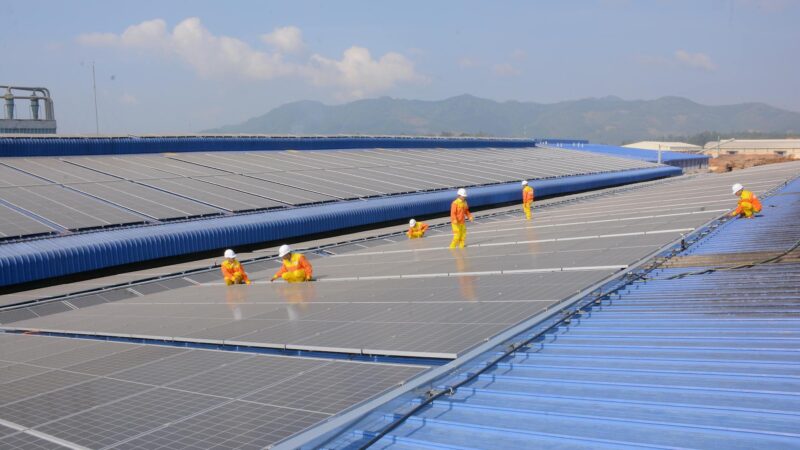
- Use of solar energy to power part of the liquefaction process through the Al Kharsaah solar plant (800 MW).
- Adoption of electric drive (e-drive) technology that reduces emissions by 25% compared to traditional gas turbines.
- QatarEnergy’s commitment to reducing greenhouse gas emissions intensity by 25% by 2030 and achieving carbon neutrality by 2050.
These efforts are not merely environmental commitments — they are commercial necessities. European buyers in particular increasingly demand low-carbon LNG, and Qatar aims to be the preferred supplier in this context. For more on the region’s clean energy efforts, see our report on clean energy initiatives in the Gulf states.
Gas Revenues and the Qatar Investment Authority: Transforming Wealth into Lasting Legacy
LNG revenues flow into the Qatar Investment Authority (QIA), one of the world’s largest sovereign wealth funds with assets estimated at approximately $475 billion. QIA invests in a diversified global portfolio including:
- Real estate: Stakes in Harrods, Canary Wharf, and The Shard in London, plus luxury properties in New York and Paris.
- Technology and finance: Investments in companies such as Volkswagen, Credit Suisse (formerly), and Barclays.
- Infrastructure: Stakes in airports and global utilities.
- Domestic economy: Funding economic diversification projects under Qatar National Vision 2030.
The anticipated increase in LNG revenues following the expansion’s completion — potentially reaching $40-60 billion annually depending on price levels — will enhance QIA’s capacity to invest in future sectors such as artificial intelligence, biotechnology, and renewable energy. For more, see our detailed analysis of GCC sovereign wealth funds and their role in economic diversification, as well as our article on Gulf economic diversification.
Challenges and Risks: What Could Disrupt the Trajectory
Despite Qatar’s strong position, several challenges loom on the horizon:
- Global oversupply: The simultaneous entry of Qatari expansion projects and new US facilities could exert downward pressure on prices during the 2027-2030 period.
- Energy transition: Over the long term, growth in renewable energy and green hydrogen could reduce natural gas demand, though most forecasts — including those from Reuters — indicate LNG demand will continue growing until the mid-2040s.
- Geopolitical risks: Any escalation in the Gulf region could affect supply chains, although Qatar’s diversification through Golden Pass partially mitigates this risk.
- Environmental pressures: Growing regulatory restrictions on fossil fuels in European and Japanese markets could impose additional compliance costs.
Outlook: Qatar and LNG Through 2050
Qatar is betting that natural gas will be the “transition fuel” bridging the oil era and the clean energy era. Several factors reinforce this vision:
- Population and economic growth in Asia is driving electricity demand, and LNG is the cleaner alternative to coal.
- Blue hydrogen — produced from natural gas with carbon capture — represents a future opportunity that preserves the value of Qatar’s reserves.
- Global LNG infrastructure (receiving terminals and storage) is expanding rapidly, opening new markets in Southeast Asia, Latin America, and Africa.
According to the latest reports from S&P Global, global LNG demand is expected to reach 700 MTPA by 2040, up from approximately 400 MTPA in 2024. If this scenario materializes, Qatar’s 126 MTPA share would represent roughly 18% of the global market — a remarkable share for a country with a population of fewer than 3 million people.
Ultimately, Qatar is proving that geographic size does not determine strategic weight. Through long-term vision, massive infrastructure investments, carefully selected international partnerships, and a balanced approach between profitability and sustainability, Qatar is redefining what economic power looks like in the twenty-first century. Whether LNG demand continues to grow as projected or the clean energy transition accelerates, Qatar has positioned itself to adapt and thrive under either scenario.
Disclaimer: The information contained in this article is for informational and analytical purposes only and does not constitute investment or financial advice. Please consult qualified financial professionals before making any investment decisions. The Middle East Insider assumes no liability for losses resulting from the use of this information.