Iran War Impact on Egypt Economy: The Five Numbers That Tell the Real Story
When military operations against Iran began in January 2026, the first question every Egyptian asked was immediate and visceral: “What’s going to happen to our economy?” The fear was real and justified — Egypt sits at the epicenter of the most affected region, with the Suez Canal serving as the global trade artery running right alongside the conflict zone.
Three months into the war, the picture is coming into focus. And the surprise? Reality is far more complex than either the pessimists or optimists predicted. Some numbers are genuinely catastrophic — but others reveal a remarkable capacity for adaptation and resilience that even seasoned economists didn’t anticipate.
In this comprehensive, data-driven analysis, we present five shocking numbers that capture the real impact of the Iran war on the Egyptian economy — with evidence and data, not speculation and sensational headlines. We explain what Egypt has lost, what it has unexpectedly gained, and what awaits ordinary Egyptians in the months ahead.

Number 1: Suez Canal Revenue Dropped 38%
The Catastrophe Everyone Feared
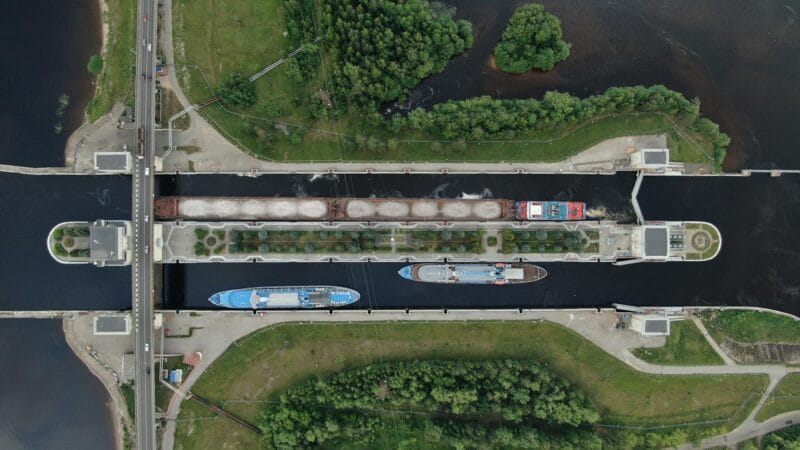
The Suez Canal isn’t just a waterway — it’s the financial backbone of Egypt. In normal years, it generates over $9 billion annually, making it the country’s second-largest source of foreign currency after overseas worker remittances. Approximately 12% of all global trade passes through this 193-kilometer canal, and for Egypt’s government budget, it’s the difference between managing debt obligations and defaulting on them.
The Iran war changed everything.
In Q1 2026, canal revenues collapsed 38% year-over-year:
| Metric | Q1 2025 | Q1 2026 | Change |
|---|---|---|---|
| Revenue | $2.4 billion | $1.5 billion | -38% |
| Vessel transits | 5,870 ships | 3,820 ships | -35% |
| Cargo tonnage | 348 million tons | 228 million tons | -34% |
Why Ships Are Avoiding the Suez Canal
The direct cause is clear: Red Sea risk. With hostilities escalating in connection with the Iran conflict, and Houthi attacks from Yemen becoming bolder, better-armed, and more sophisticated since the war began, the world’s largest shipping companies made a calculated decision to reroute their vessels around the Cape of Good Hope.
This rerouting adds 10-14 days to the Asia-Europe shipping journey — but shipping companies calculated that the cost of extra fuel and transit days is far less than the risk of losing a vessel worth hundreds of millions of dollars. When a single container ship carries $500 million in cargo, the math is straightforward.
Major companies that rerouted include:
- Maersk (world’s largest container shipping company) — rerouted 85% of its fleet
- MSC — rerouted 78% of vessels
- CMA CGM — rerouted 70%
- Hapag-Lloyd — rerouted 90%
What Egypt Is Doing to Counter the Decline
The Suez Canal Authority hasn’t stood idle. Several measures have been implemented:
- Transit fee reductions: The authority cut transit fees by 15-20% for certain vessel categories to incentivize continued use of the canal.
- Subsidized insurance packages: In partnership with international insurers, Egypt now offers subsidized war-risk coverage for transiting vessels — reducing one of the key cost deterrents.
- Enhanced military protection: The Egyptian Navy expanded its Red Sea protection operations in coordination with the international coalition, establishing safe corridors for vessels approaching the canal.
But the painful truth is that these measures have recovered only a fraction of lost traffic. As long as the war continues and the Red Sea remains a contested zone, revenues will stay under severe pressure. The canal’s fortunes are directly tied to the war’s duration — and nobody can predict when it will end.
Budget Impact
If the decline continues at this rate through 2026, Egypt will lose approximately $3.5 billion in canal revenue compared to 2025. To put this in perspective, that amount represents roughly 0.8% of GDP — or enough to fund 70,000 social housing units or pay 500,000 government employees for a full year.
Number 2: Fuel Prices Rose 17%
The Hit Every Egyptian Feels Daily
In March 2026, Egypt’s petroleum products pricing committee announced the third fuel price increase in a single year — this time by 17%. For a population already stretched by years of economic reform and devaluation, this was another blow to household budgets:
| Product | Price Before Hike | Price After Hike | Increase |
|---|---|---|---|
| Octane 80 gasoline | 11.00 EGP/liter | 12.85 EGP/liter | +17% |
| Octane 92 gasoline | 13.25 EGP/liter | 15.50 EGP/liter | +17% |
| Octane 95 gasoline | 15.00 EGP/liter | 17.55 EGP/liter | +17% |
| Diesel | 11.50 EGP/liter | 13.00 EGP/liter | +13% |
Why the Government Raised Prices
The direct cause is the surge in global oil prices. With the Iran war, Brent crude jumped above $130/barrel in January and settled in the $115-125/barrel range through February and March. This was devastating for Egypt, which imports over 30% of its petroleum needs and had budgeted for oil at $80-85/barrel.
The government faced an impossible equation: absorb the cost difference and blow out the budget deficit by an additional 150 billion EGP, or pass the costs to consumers and accept the political consequences. Under IMF program conditions that explicitly require fuel subsidy reduction, the government chose the latter — the same choice it would have made regardless, but the IMF framework provided political cover.
The Cascading Effect on Consumer Prices
A 17% fuel price hike doesn’t just mean paying more at the pump. The increase ripples through every supply chain in the economy:
| Sector | Expected Price Increase | Mechanism |
|---|---|---|
| Public transport | 10-15% | Higher bus and minibus operating costs |
| Food delivery | 12-18% | Higher delivery fees on Uber Eats, Talabat |
| Fresh produce | 8-12% | Higher farm-to-market transport costs |
| Bread and bakeries | 5-8% | Higher oven operating costs |
| Construction materials | 10-15% | Higher cement and steel transport costs |
Official inflation in Egypt reached 19.4% in March 2026 — but the “real” inflation experienced by consumers at supermarkets and pharmacies is significantly higher. Economists estimate actual food inflation exceeded 28%, with staples like meat and poultry up 15-20%, cooking oils up 12%, and dairy products up 10%.
Number 3: Tourism Held Up Surprisingly (-12% Only)
The Positive Surprise Nobody Expected
When the war began, many analysts predicted Egyptian tourism would collapse by 30-40% — mirroring the crashes after the 2011 revolution and the 2015 Russian plane disaster over Sinai. But the actual numbers surprised everyone:
| Metric | Q1 2025 | Q1 2026 | Change |
|---|---|---|---|
| Tourist arrivals | 3.8 million | 3.35 million | -12% |
| Tourism revenue | $4.2 billion | $3.9 billion | -7% |
| Hotel occupancy rate | 72% | 65% | -7 points |
Revenue declined less than arrivals (-7% vs. -12%) because the tourists who did come in 2026 spent more — particularly Gulf tourists, who represent the highest-spending demographic in Egyptian tourism.
Why Egyptian Tourism Held Up
First: Geography favors Egypt. Egypt is geographically distant from the primary theater of operations (the Persian Gulf and Iran). Sharm el-Sheikh and Hurghada sit on the Red Sea but in its southern section, far from the conflict zone. Luxor, Aswan, and Cairo are even further removed. For most tourists, Egypt simply doesn’t register as being “near” the war zone.
Second: Gulf tourism surged 20%. This is the biggest surprise of all. With other tourist destinations either closed or classified as “high risk,” many Gulf tourists pivoted to Egypt — particularly Cairo, the North Coast, and Alexandria. Egypt became the “safe haven” for Gulf families seeking a nearby vacation without conflict-related risks. The irony is that a regional war made Egypt more attractive to its wealthiest tourism segment.
Third: The weak pound made Egypt incredibly cheap. For foreign tourists, Egypt is now one of the cheapest premium destinations in the world. A five-star hotel in Sharm el-Sheikh costs $40-60/night — a price point that’s essentially unbeatable globally. The value proposition is so extreme that budget-conscious European tourists chose Egypt precisely because their euros go so far.
Fourth: The Grand Egyptian Museum. The Grand Egyptian Museum’s opening in October 2025 provided a powerful new draw. Many tourists who had postponed their Egypt trip specifically came to see the new museum — a once-in-a-lifetime cultural event that superseded war-related concerns for archaeology and history enthusiasts.
The Upcoming Challenge: Summer Season
The real test will come in summer 2026 when the main tourism season begins. If the war continues, European tourism (representing 60% of total arrivals) may decline further. But if Gulf and Arab tourism rises enough to compensate, Egypt may survive without a full-blown tourism crisis. The summer bookings data from Booking.com and Expedia currently shows a 15% decline from 2025 — concerning but not catastrophic.
Number 4: Remittances From the Gulf Jumped 23%
The “Silver Lining” Inside the Crisis
This is the number nobody’s talking about — but it may be the most consequential in terms of direct impact on millions of Egyptian families and the broader economy.
Remittances from Egyptians working abroad — particularly in the Gulf states — are Egypt’s largest single source of foreign currency, exceeding both the Suez Canal and tourism. In 2025, remittances totaled $32 billion. In Q1 2026, they surged 23% year-over-year:
| Metric | Q1 2025 | Q1 2026 | Change |
|---|---|---|---|
| Total remittances | $8.2 billion | $10.1 billion | +23% |
| From Saudi Arabia | $2.8 billion | $3.5 billion | +25% |
| From UAE | $2.1 billion | $2.6 billion | +24% |
| From Kuwait | $1.4 billion | $1.7 billion | +21% |
Why Remittances Surged Despite the War
The answer is one word: oil.
Oil prices above $120/barrel were catastrophic for oil-importing Egypt — but they were a bonanza for oil-exporting Gulf states. Saudi Arabia, the UAE, Kuwait, and Qatar are generating record petroleum revenues in 2026. That money flows into the domestic economy through infrastructure projects, government spending, private sector expansion, and — critically — hiring.
The direct result: more jobs for Egyptian workers in the Gulf and higher wages for those already there. Egypt’s Ministry of Manpower data shows new Gulf employment contracts for Egyptians rose 18% in Q1 2026. Construction projects in particular are booming — Saudi Arabia’s NEOM, the Red Sea Project, and Riyadh Season infrastructure are all accelerating thanks to flush government coffers.
This means the Iran war — indirectly and paradoxically — is putting more money in Egyptian families’ pockets via remittances. It’s the biggest economic paradox of this crisis, and it’s measurably real.
Impact on the Egyptian Economy
The 23% remittance surge means an additional $1.9 billion entered Egypt in Q1 alone. This amount:
- Compensates for more than half of the Suez Canal losses
- Supports domestic demand and consumption spending
- Provides dollars to the Central Bank, helping support the exchange rate
- Raises living standards for millions of families dependent on Gulf remittances
- Creates a multiplier effect in local economies as families spend the money on housing, education, and consumer goods
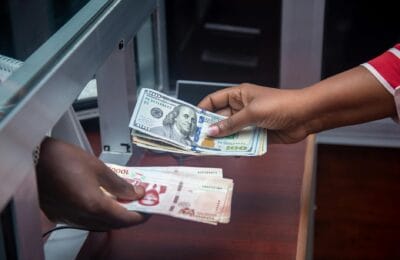
Number 5: The Egyptian Pound Stable at 54 — Despite Everything
The Most Important Surprise in Egypt’s Economic Story
If you’d asked any economist in January 2026 what would happen to the Egyptian pound during a major regional war, the consensus answer would have been: “It collapses.” Many analysts projected the dollar reaching 65-70 EGP by April. Some extreme forecasts reached 80 EGP.
The pound defied them all. It has remained stable around 54 EGP per dollar — with fluctuations of less than 2% over three months of war.
| Date | USD/EGP Rate | Monthly Change |
|---|---|---|
| January 2026 | 53.00 | — |
| February 2026 | 53.80 | +1.5% |
| March 2026 | 54.20 | +0.7% |
| April 2026 (current) | 54.00 | -0.4% |
What’s Protecting the Egyptian Pound?
1. The UAE-Saudi Support Package ($35 billion)
In February 2026, the UAE and Saudi Arabia announced a joint support package for Egypt worth $35 billion — comprising Central Bank deposits, direct investments, and credit lines for oil imports. This package is the pound’s “first line of defense” and represents a clear strategic calculation: with 110 million people, Egypt is too large and too important to fail. An Egyptian economic collapse would create a security and humanitarian crisis that would destabilize the entire region.
2. The IMF Program
The fourth review of the IMF’s program with Egypt was completed successfully in March 2026, releasing a $1.2 billion tranche. Beyond the money itself, the program provides an international “certificate of confidence” that helps attract foreign investment and financing at reasonable rates.
3. Surging Remittances
As discussed, remittances jumped 23% — and as Egypt’s largest dollar source, this steady inflow provides natural currency support that doesn’t depend on government intervention or foreign aid.
4. Sky-High Interest Rates
The Central Bank’s 27.25% benchmark rate makes the Egyptian pound one of the highest-yielding currencies in the world. This attracts “carry trade” flows — where international investors borrow in low-yield currencies (Japanese yen, Swiss franc) and invest in Egyptian Treasury bills for the yield differential. This inbound capital flow supports the pound.
But… Could the Pound Still Collapse?
We must be realistic. Current stability is fragile — built on factors that could change:
- If Gulf support wanes (very unlikely given strategic importance)
- If the IMF program fails a review (unlikely but possible if reforms stall)
- If the war expands directly to the Red Sea (medium probability)
- If oil prices suddenly drop and remittances fall (unlikely while war continues)
- If global risk appetite collapses and carry trade unwinds (moderate risk)
The most dangerous scenario is a military escalation that directly threatens Suez Canal navigation or Egyptian territorial security. In that case, all calculations change fundamentally — and the pound would come under enormous pressure regardless of support packages.
The Full Picture: What These Numbers Mean for Ordinary Egyptians
The Losers
1. Maritime and logistics workers: Declining Suez Canal traffic means reduced demand for pilotage, tugboat, and ship provisioning services. Thousands of workers in Canal Zone cities (Port Said, Ismailia, Suez) are experiencing sharply reduced business activity and income.
2. Car owners and transport operators: The 17% fuel hike translates to a direct increase in daily commuting costs. An Uber driver or microbus operator now pays 500-700 EGP more per month in fuel — a significant hit to already thin margins.
3. Food consumers: Food inflation is hitting the middle class and poor hardest. Meat and poultry prices rose 15-20%, cooking oils 12%, and dairy 10%. For families spending 40-50% of their income on food, these increases are genuinely painful.
The Winners
1. Egyptians working in the Gulf: Higher wages, more job opportunities, larger remittances. Approximately 5 million Egyptians in the Gulf are direct beneficiaries of the oil price surge that’s powering Gulf economic expansion.
2. Domestic tourism sector: Egyptian hotels and resorts are receiving more Gulf tourists — and the average Gulf tourist spends 3-4 times more than the average European tourist. High-end properties in Sharm el-Sheikh, Cairo, and the North Coast are the primary beneficiaries.
3. Egyptian exporters: The pound’s slight depreciation (2%) enhances the competitiveness of Egyptian exports. Non-oil exports rose 8% in Q1 — with textiles, fresh produce, and chemicals leading the growth.
4. Dollar holders: Anyone holding dollar savings before the war benefits from exchange rate stability combined with rising yields on dollar-denominated instruments.
How Egypt Compares to Regional Neighbors
| Country | Primary War Impact | Expected GDP Growth 2026 | Currency Impact |
|---|---|---|---|
| Egypt | Suez Canal losses + higher oil imports | 3.2% | Stable (54 EGP) |
| Jordan | Tourism decline + energy costs | 1.8% | Dollar-pegged |
| Lebanon | Direct security risks + refugee crisis | -2.5% | Continued collapse |
| Saudi Arabia | Oil revenue surge | 5.1% | Dollar-pegged |
| UAE | Oil revenue surge + diversification | 4.8% | Dollar-pegged |
| Turkey | Higher oil imports + lira weakness | 2.1% | -18% decline |
Egypt is in better shape than Lebanon, Jordan, and Turkey — but far from the Gulf prosperity. Its position is squarely in the middle: not benefiting from oil like the Gulf states, but not collapsing like Lebanon. For a 110-million-person economy heavily dependent on imports, this middle-ground outcome is actually a significant achievement.
What Comes Next for Egypt’s Economy in 2026
Upcoming Challenges
1. Large debt maturities: Egypt must repay or refinance approximately $25 billion in external debt in H2 2026. If global debt markets seize up due to the war, refinancing costs will spike — potentially adding billions in interest payments.
2. Privatization delays: The government’s plan to sell stakes in 32 state-owned companies has stalled. Foreign investors are reluctant to commit capital during a regional war, and valuations have dropped, making sales less attractive for the government.
3. Hajj season risk: If regional aviation is disrupted, the annual Hajj season could be affected — impacting Egyptian tourism companies and reducing hard currency inflows from religious tourism.
Potential Opportunities
1. Supply chain shifts: Global companies are actively seeking alternatives to Asian supply chains disrupted by the war. Egypt’s Suez Canal Economic Zone could attract some of these industries — particularly in textiles, electronics assembly, and food processing.
2. Natural gas exports: Rising global gas prices benefit Egypt, which exports LNG via the Idku and Damietta plants. Gas export revenues could rise 30-40% in 2026, partially offsetting increased oil import costs.
3. Renewable energy: High oil prices accelerate the transition to clean energy. Solar projects in Benban (Aswan) and wind projects in the Gulf of Suez are attracting increasing investment from European and Gulf financiers seeking to hedge their fossil fuel exposure.
Conclusion: Egypt Isn’t in Crisis, But It’s Under Pressure
The conclusion from these five numbers is clear: Egypt’s economy has taken real hits from the Iran war — but it hasn’t collapsed. There are significant losses (Suez Canal -38%, fuel +17%), but there are also effective shock absorbers (remittances +23%, tourism only -12%, stable pound).
The overall balance tilts slightly negative — but thanks to economic diversification, Gulf support, and the IMF program, Egypt has avoided the catastrophe that many predicted. The Bloomberg assessment that Egypt is “battered but not broken” captures the reality accurately.
Ordinary Egyptians are paying a real price — in fuel costs, food inflation, and diminished purchasing power. But comparison with countries like Lebanon (economic freefall) and Turkey (18% currency collapse) shows that Egypt’s situation, while difficult, is substantially better than it could have been.
The coming months will be decisive. If the war ends or de-escalates, Egypt’s economy will recover relatively quickly — its fundamentals remain sound, and pent-up investment demand is significant. But if the conflict escalates, the numbers we’ve seen today may prove to be just the beginning of a longer and more painful adjustment. The Financial Times warns that Egypt’s resilience has limits — and the next six months will test them.
Frequently Asked Questions
How much has Egypt lost in Suez Canal revenue due to the Iran war?
Suez Canal revenue dropped 38% in Q1 2026 year-over-year, from approximately $2.4 billion to $1.5 billion. If this rate continues through 2026, Egypt will lose approximately $3.5 billion in canal revenue — representing about 0.8% of GDP.
How has the Iran war affected fuel prices in Egypt?
The government raised gasoline and diesel prices by 17% in March 2026 — the third increase in a year. Octane 92 gasoline reached 15.50 EGP/liter. This increase drove transport, food, and most essential goods prices higher, with food inflation exceeding 28%.
Has tourism in Egypt been affected by the Iran war?
Tourist numbers declined just 12% — far less than the 30-40% crash many predicted. Gulf tourism actually rose 20% as Egypt became a “safe haven” destination. European tourism declined more significantly, but the higher spending of Gulf tourists partially compensated in revenue terms.
How has the Iran war affected the Egyptian pound exchange rate?
The pound has maintained stability around 54 EGP per dollar, supported by the $35 billion UAE-Saudi support package, the IMF program, the 23% remittance surge, and high domestic interest rates (27.25%). This stability defied widespread predictions of a collapse to 65-70 EGP.
Did Egyptian worker remittances from the Gulf increase because of the war?
Yes — remittances surged 23% in Q1 2026 as high oil prices drove Gulf economic expansion and employment. This compensated for more than half of the Suez Canal revenue losses and provided crucial dollar inflows supporting both the currency and household spending.
What is the overall impact of the Iran war on Egypt’s GDP growth?
The IMF estimates the war will reduce Egyptian GDP growth by 0.8-1.2 percentage points in 2026. The current growth forecast is 3.2%, down from the pre-war expectation of 4.0-4.4%. While negative, this impact is modest compared to Lebanon (-2.5% contraction) or Turkey (growth nearly halved).
Last Updated: April 3, 2026