The Night Ras Laffan Was Hit
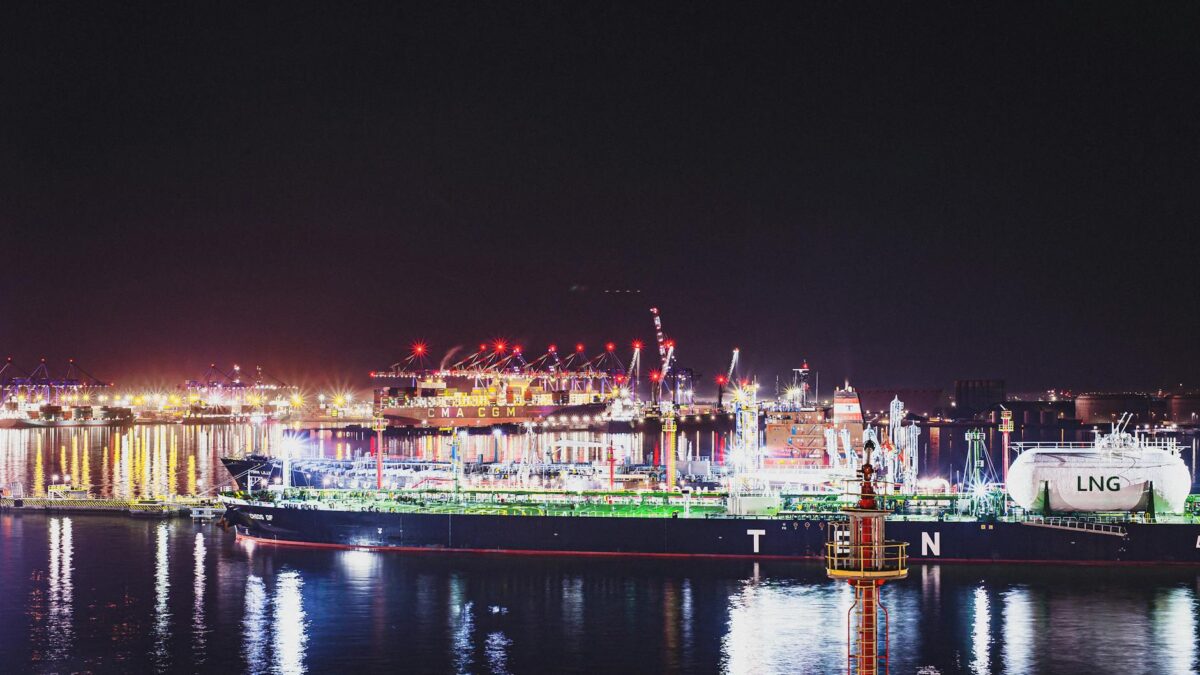
Just before midnight Doha time on March 18, 2026, infrared sensors at the Ras Laffan Industrial City command center registered a series of high-velocity contact events distributed across two of the six liquefaction trains operated by QatarEnergy LNG. Trains 4 and 6, which had been brought online in 2008 and 2010 respectively, are part of the original North Field expansion that made Qatar the world’s largest exporter of liquefied natural gas. Together, the two trains produce approximately 12.8 million tons of LNG per year, equivalent to roughly 17 billion cubic meters of gas equivalent and around 16 percent of Qatar’s total liquefaction capacity.
Within hours, QatarEnergy declared partial force majeure on supply contracts referenced to those trains. Within twenty-four hours, the Qatari government had requested an emergency UN Security Council session and had begun coordinating with Tokyo, Seoul, New Delhi, Beijing and several European capitals whose long-term contracts depend on Ras Laffan tonnage. By the end of the week, insurance underwriters in London had repriced Gulf LNG infrastructure war-risk premia by approximately 340 percent.
The strike has not been formally attributed by Qatar, although the Qatari Foreign Ministry has filed a complaint at the United Nations naming specific aerial trajectories. Multiple regional analyses have pointed to a non-state actor with state-level sophistication. As of mid-May 2026, the full forensic reconstruction has not been published.

The Asset That Was Built on LNG
To understand what March 18 means for the Qatar Investment Authority, it is necessary to understand how QIA was funded. The fund was established in 2005 with an initial $50 billion of seed capital. Its growth from that base to today’s $557 billion in disclosed assets has been almost entirely funded by Qatar’s LNG and condensate export surpluses. Every quarter for nearly two decades, Qatari LNG cash flow has been the engine that injected new capital into the QIA balance sheet, allowing the fund to build positions in trophy assets around the world.
The August 2025 disclosure pegged QIA’s assets under management at $557 billion, making it the eighth-largest sovereign wealth fund globally. The fund sits below ADIA at $993 billion, Norway at $1.74 trillion, the Saudi Public Investment Fund at $925 billion, China Investment Corporation at $1.33 trillion, the Kuwait Investment Authority at approximately $1.03 trillion, Singapore’s GIC at $774 billion, and HKMA’s Exchange Fund at $588 billion. Among Middle Eastern sovereign wealth peers, QIA ranks third behind ADIA and PIF.
Critically, QIA’s funding model is not done. The North Field expansion plan, announced in 2022 and progressively expanded, was supposed to take Qatari LNG output from 77 million tons per year to 142 million tons by 2030, an 84 percent increase in eight years. In bcm-equivalent terms, that meant rising from approximately 105 to 193 billion cubic meters per year. The expansion was designed to feed not only contract LNG sales but also a new wave of long-term capital injection into QIA, supporting an internal balance sheet trajectory that would have taken the fund toward $850-900 billion of AUM by 2030.
What the Strike Does to the Expansion
Ras Laffan Trains 4 and 6 are not in the new North Field expansion. They are part of the original liquefaction footprint, and their damage does not directly affect the North Field East and North Field South megaproject trains being built by Chiyoda Corporation, Technip Energies and McDermott. However, the strike has done three things that complicate the expansion in less direct ways.
First, war-risk insurance for the LNG carriers and the infrastructure has repriced. The Qatari LNG fleet, operated through Nakilat and including some of the largest Q-Max and Q-Flex vessels ever built, faces materially higher insurance premia. Initial estimates from London marine insurance brokers suggest the additional annual cost across the fleet is approximately $1.4 billion. This is passed through to long-term contract prices and reduces the netback to QatarEnergy.
Second, financing for the North Field expansion has become more expensive. The project is partly financed by international banks, export credit agencies, and Japanese-Korean equity partners. After March 18, several of these participants requested re-pricing of their commitments. The QatarEnergy treasury team negotiated through April to limit the spread widening, and the final increase came in at approximately 35 basis points on the senior debt tranches. Multiplied across the $30 billion of expansion financing, this represents roughly $105 million of additional annual interest cost.
Third, and most importantly for QIA, the strike has called into question the multi-decade reliability of LNG cash flow that the fund’s long-term plan was built around. Sovereign wealth fund planners use 20-30 year horizons. If Qatar’s LNG infrastructure can be hit, the implicit risk premium on every Qatari export ton increases. This is not a one-quarter problem. It is a strategic-horizon problem.
QIA’s Major Holdings
To understand the fund’s pivot, it helps to inventory what QIA actually owns. The fund’s portfolio, while not fully disclosed, has been progressively detailed through regulatory filings and management commentary. Among the largest disclosed positions are stakes in Volkswagen Group (approximately 11 percent of the voting capital, making QIA the third-largest shareholder after the Porsche-Piech family and the State of Lower Saxony), Glencore (around 9 percent), the London Stock Exchange Group (approximately 10 percent), Barclays plc (around 6 percent), Credit Suisse’s successor entities post-UBS merger, J Sainsbury (about 15 percent), and Heathrow Airport (a 20 percent stake).
In real estate, QIA owns Harrods outright, Canary Wharf jointly with Brookfield, the Shard, Park House on Oxford Street, and a portfolio of trophy properties on Avenue des Champs-Elysees and in midtown Manhattan. In hospitality, QIA holds Constellation Hotels (parent of the Le Royal Monceau in Paris, the InterContinental Carlton Cannes, the W Doha and the Bürgenstock Resort in Switzerland), the Costa Smeralda group, and a 50 percent stake in the Asian Plaza hotel chain.
In aviation and infrastructure, QIA owns 25 percent of International Airlines Group (the holding company for British Airways and Iberia), a 17 percent stake in airline catering specialist Gategroup, and various minority stakes in Asian and African air infrastructure.
In technology and entertainment, QIA has positions in Tesla through Volkswagen, in Empire State Realty, in Vodafone Idea, and in a Japanese gaming joint venture with Sony.
Recent Deals: Rolls-Royce, U.S. Banks, Spanish Renewables
QIA has been highly active in 2025 and early 2026. In September 2025, the fund completed a $1.1 billion investment in Rolls-Royce Holdings, acquiring a strategic minority position alongside the UK government’s golden share. The investment was structured as an anchor in Rolls-Royce’s small modular reactor program, where Qatar has been positioning itself as a potential customer for grid-scale nuclear deployment in the GCC.
In December 2025, QIA participated in a $2.4 billion preferred equity placement at a top-five U.S. regional banking holding company, providing capital cushion against the regional banking sector’s continuing commercial real estate exposure. The transaction was structured as a non-voting convertible preferred with a 7.25 percent coupon and an eight-year tenor.
In February 2026, QIA acquired a 33 percent stake in EDP Renovaveis’ Spanish solar portfolio, a 4.2 gigawatt operating and pipeline business that includes some of the largest single-site PV installations in Europe. The transaction value was approximately 2.1 billion euros. The Spanish renewables deal is part of a broader QIA pivot into European clean infrastructure, partly in response to the recognition that gas-based industrial leverage is no longer the secure long-term thesis it was assumed to be in 2018-2022.
In March 2026, just days before the Ras Laffan strikes, QIA announced a $750 million co-investment with Brookfield Infrastructure in an Australian fiber-to-the-home rollout. In April, the fund participated in the rights issue of a major French utility and increased its position in a global container shipping operator.
How QIA Pivots
The strategic pivot under construction in Doha through April and May 2026 has three pillars.
The first is diversification of cash flow sources. QIA is accelerating its allocation to non-Qatari operating cash flow streams. Real estate rental income, dividend flows from listed equity positions, infrastructure tariffs from utility and transport investments, and the new clean energy tariffs are being weighted more heavily inside the fund’s long-term cash flow projections. The implicit message is that the fund cannot continue to rely on LNG topping up the AUM at the previous pace if regional infrastructure risk has fundamentally repriced.
The second pillar is geographic rebalancing. QIA’s portfolio has historically been heavily concentrated in the UK, France, Germany and the U.S. The new direction, signaled in chairman commentary and reinforced by the recent transactions, is to grow exposure to Asia (especially India, Vietnam and Indonesia) and to selected African markets (Egypt, Morocco and Kenya specifically named) where infrastructure returns are higher and where geopolitical alignment with Qatar’s foreign policy is stronger. This rebalancing is incremental rather than radical. QIA is not selling European trophy assets; it is allocating new capital differently.
The third pillar is operational sovereign-wealth philosophy. The fund has moved decisively from a buy-and-hold trophy asset approach toward a more activist co-investor model. The Rolls-Royce, the U.S. regional banking, the EDP Renovaveis and the Brookfield Australian fiber deals all share a common structure: QIA enters as a strategic anchor with governance rights, alongside a domestic or global operating partner who manages the asset day-to-day. This is closer to the Mubadala and Temasek model than to the older QIA practice of taking pure financial stakes in publicly listed champions.
Comparison to Other Gulf Sovereign Wealth Funds
Inside the GCC, the QIA pivot is the third major sovereign wealth reset in the region after the Saudi Public Investment Fund and the Abu Dhabi Investment Authority. PIF’s April 2026 strategy reorganized its $925 billion into three portfolios and narrowed the giga-project ecosystem to six. ADIA, traditionally the most secretive of the GCC funds, has continued its multi-year drift toward higher allocation to private credit, infrastructure and Asian emerging markets. ADQ, Abu Dhabi’s more activist sovereign wealth vehicle, has been deploying aggressively into Egyptian assets and African logistics. Mubadala continues to operate at the technology, semiconductor and clean energy interface.
QIA’s pivot is the most directly driven by an external shock. PIF’s reset reflected internal capital discipline after a five-year sprint. QIA’s reset reflects the LNG infrastructure attack and the question it raises about the durability of the fund’s funding source. This is a more uncomfortable pivot, and it is happening under more pressure.
The North Field East and South Trajectory
Despite the strike, the North Field expansion projects are not stopping. The North Field East expansion (NFE), which adds 32 million tons per year of capacity through four new mega-trains, is approximately 78 percent complete. First LNG from NFE Train 1 is now scheduled for the second half of 2026, with the full train sequence delivering through 2027. The North Field South expansion (NFS), adding a further 16 million tons per year through two additional trains, is targeting first LNG in 2028.
Together NFE and NFS will lift Qatar’s nameplate LNG capacity from 77 million tons per year to 125 million tons per year, somewhat short of the originally targeted 142 million but still a transformative increase. The Trains 4 and 6 damage at the existing facility is being repaired, with full restart expected in stages through late 2026.
The key implication is that Qatar’s LNG cash flow will recover, and the kingdom of the Tamim era still has the most cost-competitive liquefaction in the world. What has changed is not the cash flow itself but the risk premium attached to it.
What This Means for Long-Term Buyers
The dozens of long-term LNG buyers with contracts referenced to Ras Laffan tonnage, including China’s Sinopec, India’s GAIL and Petronet, Japan’s JERA, South Korea’s KOGAS, Italy’s Eni, Germany’s SEFE, the UK’s Centrica, and a growing roster of European utilities, are now working through contract clauses, force majeure provisions and price adjustment mechanisms. QatarEnergy has indicated that it will honor all volume commitments through a combination of repaired Trains 4 and 6 output, drawdowns from working storage, and reshuffled spot purchases.
The deeper strategic question for these buyers is whether to diversify their sources of LNG away from Qatar at the margin. Several have already indicated that future contract renewals will likely include greater optionality across U.S. Gulf Coast LNG (where multiple new facilities are coming online), Russian LNG via the Northern Sea Route, Australian LNG, and African LNG from Mozambique, Tanzania and West Africa. Qatar will remain the lowest-cost global producer but its single-source advantage has weakened.
The Strategic Repositioning
QIA’s pivot is not a retreat. It is a recognition that the fund’s strategic environment has changed. The three-pillar repositioning (diversification of cash flow sources, geographic rebalancing toward Asia and Africa, and the shift to activist co-investor philosophy) is rational and well-considered. The fund will continue to grow, but its growth trajectory will be slower than the pre-March 18 baseline assumed.
The 2030 AUM target, previously implicit at around $850-900 billion, has been quietly de-emphasized in recent management commentary. A more realistic figure given the strike and the broader rebalancing is in the range of $720-780 billion by 2030. That is still significant growth, and it would keep QIA among the world’s ten largest sovereign wealth funds, but it represents a roughly 15 percent downward revision from the previous trajectory.
The Doha Lesson
The Qatar Investment Authority story in the wake of Ras Laffan is the clearest illustration in the region of how war and infrastructure attacks compress sovereign wealth fund timelines. A fund that was on a steady-state path of 8 percent annual growth has, in the space of a single night in March, been forced into a multi-pillar strategic recalibration. The pivot is being executed competently. The fund’s leadership is experienced. The portfolio is diversified enough to absorb the shock. The new direction toward Asia, Africa and clean infrastructure is sensible and timely. But the underlying lesson is that sovereign wealth in the Gulf is no longer a one-way street of LNG-funded accumulation.
For the broader region, the QIA pivot reinforces a theme that runs through Saudi PIF’s April reset, ADQ’s Egyptian deployment, and Mubadala’s semiconductor pivot: Middle Eastern sovereign wealth is becoming more operational, more diversified geographically, and more activist in its co-investment philosophy. The era of passive Gulf trophy-asset accumulation is closing. The era of strategic GCC capital, deployed actively across Asia, Africa and selectively in the West, is opening. Qatar’s pivot, forced by a single night’s shock, has confirmed that the new era is here.