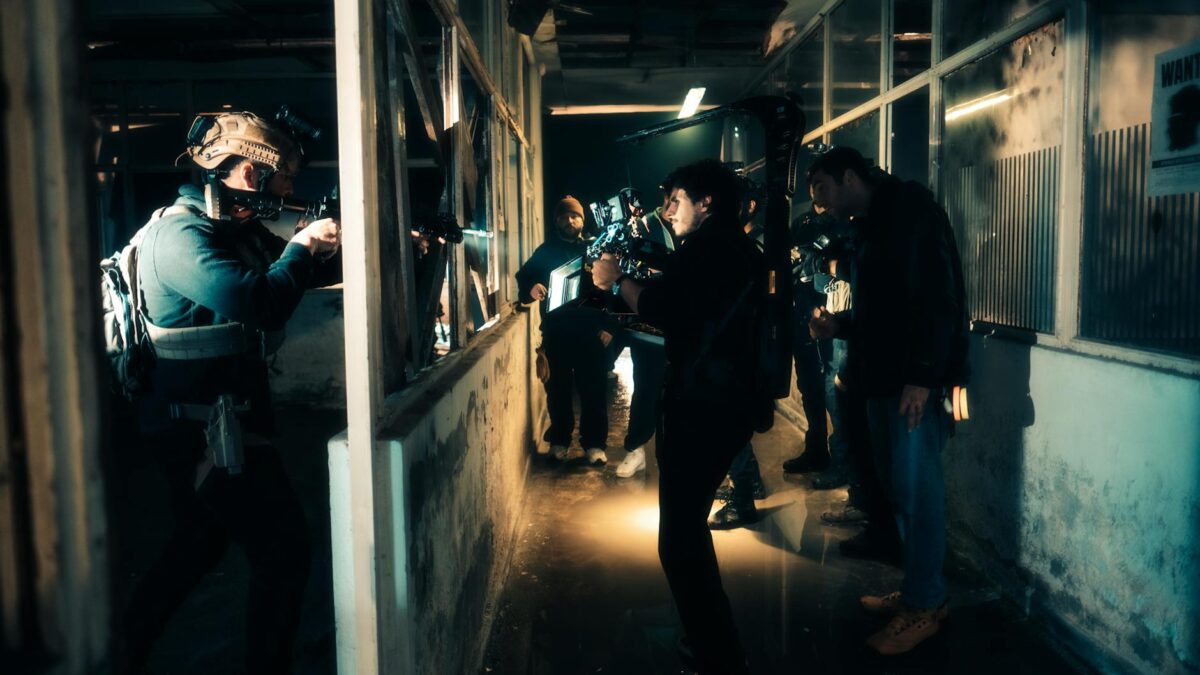
Fauda returns for Season 5 in late 2026, and with the return comes the inevitable wave of cast speculation, confirmations, and fan analysis. The franchise has maintained remarkable continuity across its four seasons of core cast — Lior Raz, Itzik Cohen, Rona-Lee Shimon, Doron Ben-David — while also evolving the ensemble with each new season’s specific mission arc. Season 5 extends both patterns: the core team returns, augmented with new characters whose roles have been teased in trailers and Israeli press coverage.
This is the complete Fauda Season 5 cast guide. For each major character returning, we cover their arc across the franchise, the actor behind them, and what we know about their Season 5 trajectory. For new additions, we cover what has been confirmed, what has been hinted, and what reasonable viewers can expect. This guide is designed for both long-time fans and new viewers who want to understand who matters and why before the season drops.
The Core Team: Returning Cast
Doron Kavillio — Lior Raz
Doron Kavillio is Fauda. The character — created by Lior Raz and based loosely on Raz’s own service experience — has anchored every season since the 2015 original. Raz writes Doron as a man perpetually between the soldier he was trained to be and the person he wishes he could become. Through four seasons of ever-escalating operational and personal cost, Doron has accumulated the psychological weight of an entire mista’arvim unit’s worth of decisions.

Season 5 picks up with Doron in a state that the Season 4 finale left deliberately unresolved. Israeli entertainment press has reported that Raz has spoken about the character’s arc as “the season where Doron either breaks or rebuilds, and we did not decide in advance which one.” The writing style that has defined Fauda — refusing to sentimentalise its lead while also refusing to dismiss his humanity — is apparently extended into Season 5 in ways that challenge viewers.
Raz’s performance has been the single most essential element of Fauda’s success. He is not a conventionally charismatic action lead; his appeal comes from the visible weight the character carries. Season 5 reportedly gives Raz more interior material to play — quieter scenes, more grief, more ambivalence — alongside the franchise-defining action sequences.
Captain Gabi Ayub — Itzik Cohen
Captain Ayub is the franchise’s moral and operational anchor. Played by Itzik Cohen across all four seasons, Ayub moves from straight-ahead Shin Bet operator in Season 1 to increasingly complex figure whose moral compromises and personal costs accumulate season by season. The Season 4 storyline — his kidnapping, interrogation, and eventual rescue — placed Ayub at the centre of the season’s emotional arc.
Season 5 continues that trajectory. Ayub is described in Israeli press as “officially out of the field” yet “running more operations from his desk than he ever did as an active officer.” The transition from action hero to operational controller is a specific challenge for any action drama; Cohen’s performance is what makes it work dramatically. His scenes with Raz continue to anchor the show’s most nuanced character work.
Itzik Cohen outside Fauda is an established Israeli stage actor with three decades of theatre and television experience. His presence on Fauda grounds the show; where Raz plays compressed rage, Cohen plays considered weariness. The combination has been essential to the show’s tonal range.
Nurit Ben-Haim — Rona-Lee Shimon
Nurit has evolved more than any other character across the Fauda seasons. She entered the series as a junior operator; by Season 4 she is a senior commando with her own command responsibilities. Her relationship with Sagi Tzur, which formed across Seasons 3 and 4, adds an emotional dimension that the show’s male leads have struggled to match.
Rona-Lee Shimon’s performance has been consistently among the strongest in the ensemble. She plays Nurit as both capable and vulnerable, committed and conflicted. Season 5 reportedly places Nurit at decision-making points that test every dimension of her character — professional competence, marital commitment, and loyalty to the team that has been her community for a decade of screen time.
Shimon outside Fauda has built a serious Israeli film and theatre career. Her non-Fauda work shows the range she brings to the character; the role of Nurit uses perhaps 60 percent of her actual dramatic capacity. Season 5 trailers suggest the role may use more.
Sagi Tzur — Idan Amedi
Sagi is Nurit’s partner both professionally and personally, and one of the show’s most likable regular characters. Idan Amedi plays Sagi with a combination of competence and stability that contrasts effectively with Doron’s volatility. The Season 4 storyline gave Amedi some of the show’s most powerful emotional moments.
Amedi’s personal context matters here. During the October 2023 Gaza war, Amedi served with Israeli Defence Forces and was seriously injured. His recovery through 2024-2025 was public and difficult. His return to Fauda Season 5 production in 2025 was widely covered in Israeli entertainment press as a testament to his commitment to the role.
The real-world context inevitably informs Sagi’s Season 5 arc. Whether the production addresses this directly or allows the real-world backdrop to speak through the character’s trajectory is something Season 5 will reveal. What is certain is that Amedi’s performance carries weight in Season 5 that no previous Fauda arc has required.
Steve (Avi Maman) — Doron Ben-David
Steve is Doron’s closest team member, the combat professional who anchors the tactical unit beside him. Doron Ben-David plays Steve with understated reliability — he is the character who is always there, always competent, always loyal without needing to be loud about it. In an ensemble of larger personalities, Steve’s consistency is its own form of presence.
Season 5 reportedly gives Steve more dramatic material than prior seasons. The exact direction is unannounced but the teasing from Ben-David in interviews has suggested that Steve faces choices in Season 5 that challenge his unstated loyalties. For long-time viewers who have watched Steve function as the team’s steady conscience, this is a significant development.
Returning Shin Bet and Mossad
Hila Bashan — Marina Maximilian
Hila Bashan is the Shin Bet analyst whose arc across Seasons 3 and 4 placed her at the operational heart of major storylines. Marina Maximilian plays her as sharply intelligent and morally complex; she is the character viewers understand makes the decisions Doron cannot afford to make directly. Season 5 reportedly deepens Hila’s role, placing her at organisational friction points within Shin Bet that have been hinted at but not fully explored.
The Mossad Contingent
Fauda’s Mossad characters have been more intermittent than the Shin Bet team. Season 5 introduces a new Mossad station chief played by an actor whose identity has been confirmed but not yet in widely-published reporting. What is known is that the character functions as a partial antagonist within the Israeli security apparatus — a bureaucratic counter-force to Ayub and the Shin Bet operational approach. This intra-organisational conflict adds thematic texture that Fauda has touched on previously but not elevated to a sustained storyline.
The Adversaries: Season 5 Antagonists
Fauda has evolved its antagonist structure across the four seasons. Season 1 centred on a single antagonist (the Panther); subsequent seasons built ensemble antagonist structures that more accurately reflect the complexity of the real conflicts the show dramatises. Season 5 reportedly continues this evolution with a network of antagonists across the West Bank, Gaza, and adjacent theatres.
Confirmed antagonist casting includes several Palestinian actors whose names have been announced through Israeli entertainment press, though English-language outlets have been slower to pick up the details. The casting choices for Season 5 adversaries reportedly emphasise moral complexity over simple villainy — a continuation of the series’ post-Season 1 approach of refusing to caricature the opponents.
The specific geographical framing of Season 5 places the storyline more heavily in the West Bank than prior seasons, with operational extensions into Jordan and other neighbouring territories. This expanded geographic canvas allows the series to examine different Palestinian political factions and their internal dynamics, rather than focusing on a single unified adversary structure.
The Creators: Lior Raz and Avi Issacharoff
Fauda was created by Lior Raz (who stars as Doron) and Avi Issacharoff (a journalist and security analyst who draws on extensive reporting from the Israeli-Palestinian conflict). Their continued creative involvement in Season 5 is central to the production’s quality. Raz handles story and character; Issacharoff grounds the operational and political reality; together they have produced a show that Israeli security observers treat seriously and that international audiences receive as genuine drama.
The creative team has evolved across seasons. Season 4 introduced additional writing voices to manage the expanded scope. Season 5 reportedly returns to a tighter core creative team as the story arc focuses more narrowly on Doron’s trajectory. Director duties in Season 5 are divided across multiple directors, each handling specific episodes — a pattern established in prior seasons that the production has refined.
The Fauda creators have also launched companion projects. Both Raz and Issacharoff have produced adjacent series including Hit & Run (Netflix, 2021) and other Israeli-set thrillers. These companion projects share creative DNA with Fauda but do not cross over with the series itself.
Production Details and Filming Locations
Season 5 filming took place across multiple locations in Israel and the West Bank — with security protocols consistent with the show’s historical operational practice. Specific filming sites included:
- Various West Bank locations for the Palestinian community scenes
- Tel Aviv urban environments for the command centre and home life scenes
- Jerusalem and adjacent settlements for specific operational scenes
- Jordan (selected scenes) for wider geographical framing
- Studio interiors in Tel Aviv for extended dialogue and planning scenes
The logistical complexity of filming Fauda has always been significant. Production delays during the 2023-2024 period (related to both the Gaza war and Amedi’s injuries) pushed the Season 5 shooting schedule out by approximately six months. Post-production has been intensive, with reports that the 9-episode season includes more extended action sequences than any prior Fauda season.
The show’s technical crew includes veterans of previous Fauda seasons and several new additions. Cinematography by Giora Bejach continues; editing by Noit Geva; the distinctive sound design that Fauda has used since Season 1 has been preserved while being updated for the larger-scale sequences. Variety‘s coverage of the production has highlighted the technical team’s consistency as one of the reasons Fauda has maintained visual quality across seasons.
What the Trailers Reveal
The first Season 5 teaser trailer dropped in February 2026 to substantial regional press attention. Reading between the scenes carefully (without spoiling major plot points) yields several observations:
Doron is in darker psychological territory than prior seasons. The opening shots of the trailer show him in settings that suggest withdrawal from the unit — a storyline direction the show has teased previously but not fully explored.
Ayub appears in multiple command-centre scenes that suggest his role is more central than ever, even as he remains officially retired from field operations. The trailer visual language positions Ayub as simultaneously in control and under pressure.
The West Bank setting is heavily featured. Urban environments (Ramallah, Hebron, adjacent areas) are visible across multiple trailer sequences, suggesting the operational theatre of Season 5 extends further into West Bank cities than prior seasons.
Nurit has action sequences that suggest significant operational exposure. The trailer includes shots of her in field gear that imply her Season 5 storyline involves returning to active operational duty.
Multiple new faces appear briefly — likely the new cast members mentioned above. The production has clearly expanded the ensemble while retaining the core team structure.
Release Schedule
Fauda Season 5’s release follows the established pattern for the series. Yes TV in Israel broadcasts first, typically over 9 weeks; Netflix receives the entire season in a single drop approximately 3-4 months after the Israeli finale.
For Season 5, the confirmed Yes TV broadcast schedule is October 2026. Assuming the show runs for 9 weekly episodes, the Israeli finale will air in late December 2026. The Netflix global release window is therefore expected between late February and early May 2027, with a specific premiere date typically announced 4-6 weeks before release.
Different markets may have slightly different release timing. The UK, North America, Western Europe, and most of Asia-Pacific will receive the Netflix simultaneous release. Some MENA markets have historically received earlier access through regional partnerships.
How Fauda Season 5 Fits the Franchise Arc
Seasons 1-4 of Fauda have built a substantial cumulative narrative. Each season has been a distinct operational arc, but recurring character and relationship threads weave across the series. Season 5 reportedly places more emphasis on cumulative consequence than any prior season — the decisions made in Seasons 1 through 4 come to bear on Season 5 in ways that prior seasons hinted at but never fully reckoned with.
This creative approach mirrors patterns in other serialised international dramas (Homeland Seasons 6-8, Bureau Seasons 4-5) where late-season arcs examine the accumulated moral cost of earlier missions. For Fauda, this shift is earned — the show has spent four seasons establishing the universe and the character dynamics; Season 5 can now engage with the consequences at a level that would have been premature earlier.
Whether Season 5 is the final season has not been confirmed. Raz has spoken about a Season 6 being possible but not committed to; Netflix has not formally announced Season 6 ordering. What is clear is that Season 5 is crafted as if it might be a conclusion. The storyline structure reportedly allows for either continuation or resolution, depending on how the show performs and how the creative team feels after the Season 5 release cycle.
The Writing Team: What Changes in Season 5
The Fauda writers’ room has evolved across seasons. Season 5 reportedly reconstitutes the core writing team with Raz and Issacharoff as the anchoring voices, supplemented by a smaller group of writers who worked on Seasons 3 and 4. This structure reportedly gives the creators more direct control over story decisions than the expanded Season 4 writers’ room.
The production schedule for writing was tightened compared to Season 4. Scripts for all 9 episodes were finalised before principal photography began — a disciplined approach that prior seasons had not always maintained. According to Variety‘s reporting on the production, the locked scripts reflect an intent to treat Season 5 as a cohesive single narrative rather than a sequence of operational arcs.
Consultation with security and operational advisors continued from prior seasons. The specific names of these advisors are not disclosed but their role is to ensure that operational scenes feel authentic to viewers with actual military or security backgrounds. Fauda’s credibility among Israeli military professionals has been one of the show’s signature qualities since Season 1, and the creators have worked to maintain that standing even as the scope has expanded.
Music and Sound Design
The Fauda music scoring by Gilad Benamram has been a specific quality signature across seasons. Season 5’s score reportedly introduces new thematic material while retaining the sonic identity of the series. Arabic musical elements continue to feature prominently, with Palestinian and broader Arab musicians contributing to select scenes’ underscoring. The soundtrack is typically released by Netflix Music alongside the season drop; for Season 5 the release timing will follow the Netflix premiere in early 2027.
Sound design for action sequences has been a technical strength of the production. The distinctive rhythm of Fauda action — handheld camera movement, tight cutting, dense diegetic sound — continues through Season 5 with larger-scale set pieces than the series has attempted previously. The technical team has reportedly expanded for specific sequences, including drone photography work that prior Fauda seasons did not employ extensively.
The International Reception Factor
Fauda’s international audience is a meaningful part of the show’s strategic calculation. The Hollywood Reporter coverage of Season 4 highlighted the show’s exceptional global viewership metrics — among the top non-English Netflix titles by watch hours in several quarters. Season 5’s release strategy reflects this international profile, with simultaneous global release across most markets (with minor MENA exceptions) and coordinated press activity across multiple territories.
Cultural translation for international viewers has required specific attention. The show’s Arabic dialogue is extensive; Hebrew dialogue dominates; subtitling (and limited dubbing) must render the specificity of operational language, the code-switching between languages that characters naturally perform, and the cultural context that Israeli viewers bring automatically but international viewers need foregrounded. The subtitling team for Season 5 is reportedly expanded to handle multiple language target versions simultaneously.
The Full Season 5 Character List
| Character | Actor | Status | Season Role |
|---|---|---|---|
| Doron Kavillio | Lior Raz | Lead | Central protagonist, complex psychological arc |
| Captain Gabi Ayub | Itzik Cohen | Major | Shin Bet operations lead, moral anchor |
| Nurit Ben-Haim | Rona-Lee Shimon | Major | Senior commando, family storyline |
| Sagi Tzur | Idan Amedi | Major | Unit tactical lead, husband to Nurit |
| Steve (Avi Maman) | Doron Ben-David | Major | Unit combat specialist |
| Hila Bashan | Marina Maximilian | Major | Shin Bet analyst, operational director |
| New Mossad Chief | [Announced TBC] | New major | Mossad station chief, inter-agency tension |
| New Shin Bet Analyst | Netta Riskin | New major | Analytical support, Season 5 plot engine |
| Palestinian antagonist 1 | [Announced TBC] | New major | West Bank network leader |
| Palestinian antagonist 2 | [Announced TBC] | New recurring | Inter-faction figure |
| Various supporting military/civilian | Multiple | Recurring | Background ensemble |
Who New Viewers Should Focus On
For viewers new to Fauda who want to prepare for Season 5 efficiently, the essential character preparation is:
Know Doron Kavillio. The show’s centre of gravity; without understanding his arc, Season 5 will feel disoriented.
Know Ayub. The operational architect; his presence in every scene shapes what else is happening.
Know Nurit and Sagi. Their relationship and parallel operational arcs are the most accessible entry points for viewers interested in character drama beyond pure action.
Know Hila. She is the bridge between analysis and action; the Season 4 arc for Hila significantly informs Season 5 setup.
Do not worry about minor characters. Supporting cast reintroduces organically; Season 5 will not assume deep familiarity with peripheral figures.
The realistic viewing preparation for Season 5 if you have never seen the show is approximately 12-14 hours — Season 4 in full, plus selected earlier episodes to establish Ayub’s arc and Doron’s backstory. A binge plan before October 2026 is feasible.
Fauda in Context: Israeli Drama on the Global Stage
Fauda has become the reference point for Israeli drama international success. Prior to Fauda, Israeli content rarely achieved sustained global audience; post-Fauda, Netflix, Apple TV, and Amazon Prime have commissioned multiple Israeli productions aimed at global audiences. The success has been measurable — Hit & Run, Tehran, and several other Israeli productions have achieved broad streaming distribution at least partly because Fauda demonstrated that Israeli security drama travels.
The show’s approach — serious engagement with conflict complexity, willingness to depict Palestinian characters with dramatic weight rather than as caricatures, refusal to simplify moral calculation — has been both controversial and durable. Israeli press has sometimes treated the show’s ethical framing as too sympathetic to adversaries; Palestinian and pro-Palestinian commentary has sometimes treated the same framing as not nearly sympathetic enough. That the show provokes both critiques simultaneously is arguably the strongest indicator that it is engaging honestly with difficult material.
Season 5’s place in this broader context is significant. As the Israeli-Palestinian conflict has intensified through 2023-2025, the show’s relevance has increased in ways that also complicate its production and reception. Raz and Issacharoff have been clear in interviews that they are not attempting to make a political show — they are making a drama about people under operational stress — but the political backdrop of Season 5 is unavoidable. How the show handles that backdrop will be a major discussion point when the season releases.
Fauda Compared to Other Israeli Dramas
Fauda does not exist in isolation. The Israeli drama ecosystem includes several other internationally-distributed productions that deserve comparison.
Tehran (Apple TV). Different geography and spy-thriller framing, but shares the production values and moral complexity. Tehran Seasons 1 and 2 have earned substantial international audience. The Niv Sultan performance is comparable in quality to the best Fauda performances. If you like Fauda’s Mossad elements, Tehran extends that thematic territory.
Hit and Run (Netflix, 2021). Co-created by Raz and Issacharoff, Hit and Run is a direct spin-off in tone and style from Fauda. Some critics found it derivative; others appreciated the narrative extension of the Raz-Issacharoff creative voice. One season, mixed reception, but watchable for Fauda fans seeking additional material from the creative team.
Shtisel (Netflix). Very different subject matter — Haredi (ultra-Orthodox) family drama — but shares the emotional precision and character-centered storytelling that distinguishes strong Israeli TV. Multiple seasons, multiple awards, substantial international audience.
False Flag (Hulu). Israeli intelligence thriller with different tone from Fauda — more cerebral, less action-driven. Worth watching for viewers who want Israeli spy drama with a different rhythm from Fauda.
Season 5 and the Broader Netflix Strategy
Fauda Season 5 sits inside Netflix’s broader international original content strategy. The platform’s commitment to non-English originals has been a defining investment area for the past five years, with Squid Game, Money Heist, Lupin, and the Turkish Netflix catalogue all achieving substantial international success. Fauda joined that roster earlier than most — arguably before international viewers were fully ready for Israeli drama — and has grown its audience steadily over subsequent seasons.
Netflix’s commitment to renewal through Season 5 and potentially beyond is therefore less surprising than it might seem. The show reportedly delivers strong viewership relative to its production cost, and its prestige value (international awards consideration, high-profile cultural engagement) adds marketing benefit beyond raw subscriber metrics. The platform’s Israeli content slate has expanded parallel to Fauda’s success, with commissions for other Israeli productions benefiting from the Fauda halo effect.
One final note worth highlighting for Season 5 anticipation. The show’s willingness to depict the human cost on all sides of its conflicts — not just the Israeli operators but also the Palestinian families, neighbours, and incidental witnesses caught in operational decisions — has been a differentiator from simpler treatments of the same material. Season 5 reportedly continues this commitment with specific sequences that reviewers who have seen early episodes describe as among the most emotionally challenging in the franchise. How viewers process these sequences will be a significant part of the discourse around Season 5’s release.
Finally, a practical viewing note: Fauda rewards attentive watching. The show is dense with dialogue, operational detail, and tonal shifts that reward viewers who pay full attention. Binge-watching at the expense of engagement can cause viewers to miss the emotional beats that distinguish the series from simpler action drama. The 9-episode Season 5 is best spread across at least three sittings with time to process between sittings.
The Bottom Line
Fauda Season 5 is the most anticipated Israeli drama release of 2026-2027. The cast returning — Raz, Cohen, Shimon, Amedi, Ben-David, Maximilian — represents the core of the franchise’s dramatic strength, supplemented by new characters whose arcs will shape the season’s specific concerns. The production values, narrative complexity, and cultural significance of the show have grown rather than diminished across four seasons, and the trailers for Season 5 suggest the upward trajectory continues.
For long-time viewers, Season 5 promises the accumulated weight of four prior seasons finally coming to bear on the characters who have carried the series. For new viewers, the accessible entry point remains Season 1, but the incentive to catch up before Season 5 has rarely been greater. For regional observers of Middle Eastern entertainment, Fauda Season 5 is both a major drama release and a cultural artefact that will inform the continued international conversation about Israeli-Palestinian storytelling.
The Netflix drop window of Q1 to early Q2 2027 will land months from now. What we have for the moment is an exceptionally strong cast, a reputable creative team, and specific trailers that suggest the show’s ambitions have expanded rather than contracted. For more context on the Netflix Arabic content landscape, our April 2026 Arabic shows ranking provides complementary coverage. For broader Middle East streaming industry analysis, the entertainment section tracks ongoing developments across platforms and productions.