While the world focuses on Trump’s naval blockade and the collapse of the Islamabad talks, Saudi Arabia quietly made the most strategically significant energy announcement of the entire war: the East-West pipeline has been restored to full pumping capacity of approximately 7 million barrels per day. This single piece of infrastructure changes the entire calculus of the Hormuz crisis — because it means Saudi Arabia can export most of its oil without passing through the Strait of Hormuz at all.
This is the story nobody is covering properly. While CNN, Bloomberg, and Reuters focus on the blockade’s geopolitical drama, the pipeline restoration quietly undermines the blockade’s economic impact. Here’s why this matters more than any diplomatic statement or military threat.
What Is the East-West Pipeline?
The Infrastructure
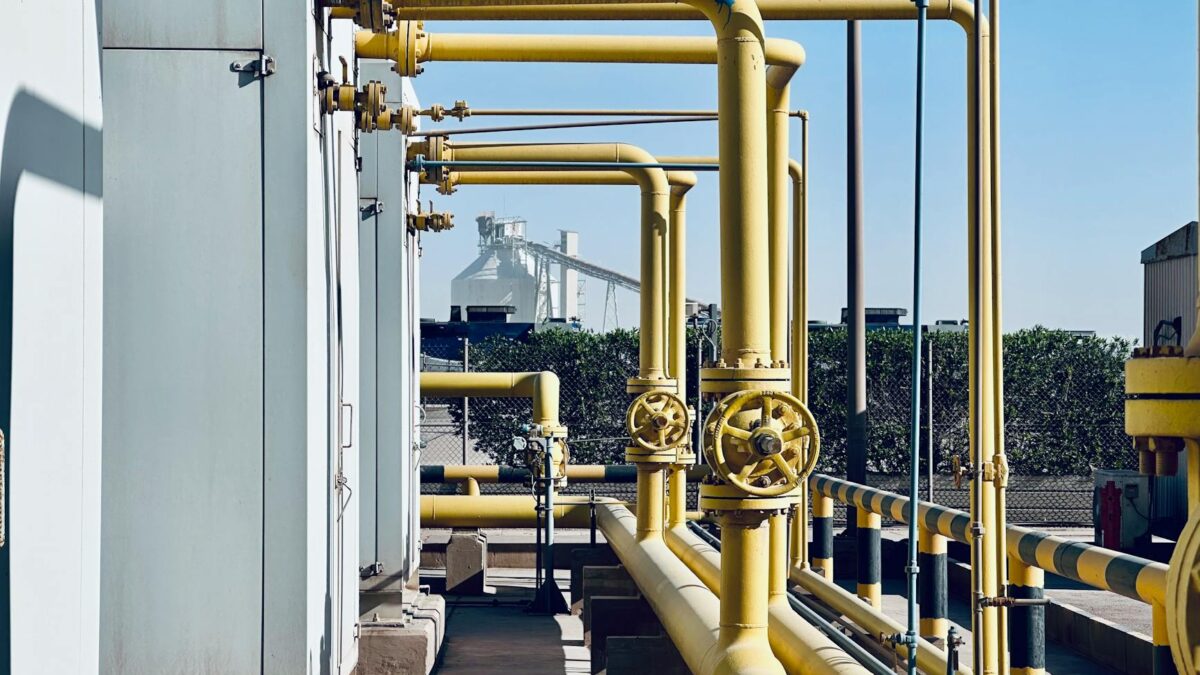
The East-West pipeline (officially the Petroline, also known as the Yanbu pipeline) is a 1,200-kilometer oil pipeline running from the Abqaiq oil processing facilities in Saudi Arabia’s Eastern Province to the Red Sea port of Yanbu on the kingdom’s western coast.

| Specification | Details |
|---|---|
| Capacity (restored) | ~7 million barrels per day |
| Length | ~1,200 km |
| Origin | Abqaiq, Eastern Province |
| Destination | Yanbu, Red Sea coast |
| Bypass | Completely avoids Strait of Hormuz |
| Export route | Red Sea → Suez Canal → Mediterranean (Europe) OR Red Sea → Bab el-Mandeb → Indian Ocean (Asia) |
| Original construction | 1981 (expanded multiple times) |
| Operator | Saudi Aramco |
Why 7 Million bpd Matters
Saudi Arabia’s total oil production capacity is approximately 10 million bpd. The pipeline at 7 million bpd can handle 70% of total Saudi production without using Hormuz. This is an extraordinary capability that no other Gulf producer can match:
| Country | Hormuz Bypass Capacity | Total Production | % Bypassed |
|---|---|---|---|
| Saudi Arabia | 7,000,000 bpd | 10,000,000 | 70% |
| UAE | 1,500,000 bpd (Habshan-Fujairah) | 3,200,000 | 47% |
| Iraq | ~500,000 bpd (Turkey pipeline) | 4,500,000 | 11% |
| Kuwait | 0 | 2,700,000 | 0% |
| Qatar | LNG ships via Arabian Sea | LNG-focused | ~80% |
How This Changes the Hormuz Equation
Before the Pipeline Restoration
The narrative was simple: Hormuz blocked = 20% of global oil offline = prices to $130+. This narrative drove oil from $74 pre-war to $109 at peak.
After the Pipeline Restoration
The math changes significantly. If Saudi Arabia can export 7 million bpd via Yanbu:
- Global supply deficit narrows from ~12 million bpd to ~5 million bpd
- Saudi revenue continues flowing (kingdom isn’t squeezed)
- European customers can receive Saudi oil via Suez Canal
- Asian customers can receive via Bab el-Mandeb + Indian Ocean
This doesn’t solve the crisis for other Gulf producers (UAE, Kuwait, Iraq), but it dramatically reduces the global supply shock.
Impact on Oil Prices
| Scenario | Without Pipeline | With Pipeline (7M bpd) |
|---|---|---|
| Prolonged blockade | $120-140/barrel | $95-110/barrel |
| Military escalation | $150-180/barrel | $110-130/barrel |
| New talks resume | $85-95/barrel | $80-90/barrel |
The pipeline effectively caps the upside for oil prices by $15-30/barrel compared to a scenario where Saudi exports were fully blocked.
The Strategic Implications
Saudi Arabia’s Independence Signal
The announcement is as much diplomatic as it is logistical. By demonstrating that it can export oil independently of both Hormuz AND the US Navy blockade, Saudi Arabia is signaling:
- To Iran: ‘Your Hormuz leverage doesn’t work on us’
- To the US: ‘Your blockade doesn’t control our exports’
- To oil markets: ‘Saudi supply is more resilient than you think’
- To OPEC: ‘We have export capability others don’t — this gives us negotiating power’
Impact on the Blockade
Trump’s naval blockade aimed to deny Iran leverage by controlling Hormuz. But the blockade also threatens allied Gulf exports. Saudi’s pipeline announcement effectively says: ‘We’ve already solved that problem for ourselves.’ This could encourage the US to modify the blockade to create allied shipping corridors, since Saudi Arabia has demonstrated an alternative.
Impact on Other Gulf States
The pipeline highlights the strategic vulnerability of other Gulf producers who lack bypass infrastructure:
- UAE: Habshan-Fujairah pipeline handles only 1.5M bpd (47% of production). Abu Dhabi recently invested heavily in expanding this — a prescient decision.
- Kuwait: No bypass infrastructure. Completely dependent on Hormuz. Most vulnerable Gulf producer.
- Iraq: Limited Turkey pipeline capacity (~500K bpd). Exploring Syria route cooperation.
- Qatar: LNG ships can route via Arabian Sea, partially bypassing Hormuz. But pipeline gas exports are affected.
What This Means for Egypt
Suez Canal: The Beneficiary
If Saudi oil flows via the East-West pipeline to Yanbu, it then ships through the Red Sea and Suez Canal to reach European markets. This means:
- Suez Canal traffic increases: More tankers transiting the canal with Saudi oil
- Canal revenue partially recovers: Even while Hormuz is blocked, Suez benefits from the pipeline route
- Egypt’s strategic importance rises: The Suez Canal becomes even more critical as the primary non-Hormuz route for Gulf oil to reach Europe
This is the most positive development for Egypt’s Suez Canal in weeks. While full Suez recovery depends on the broader Hormuz situation, Saudi pipeline oil through Yanbu provides partial relief.
Impact on Egyptian Fuel Costs
More Saudi oil reaching global markets via pipeline reduces the supply deficit, which moderates oil prices. If Brent stays at $100-105 instead of spiking to $130, Egypt saves $2-3 billion annually in fuel subsidies compared to the escalation scenario.
For Investors: What This Changes
Oil
The pipeline caps oil’s upside. Don’t expect $150/barrel while Saudi has 7M bpd of Hormuz bypass capacity. More realistic range: $95-115/barrel during the blockade period. This is still elevated but not catastrophic.
Saudi Stocks (TASI)
Bullish for Saudi equities. Saudi Aramco’s revenue is protected. Saudi banks benefit from continued government spending. TASI should recover from the post-blockade dip as the market recognizes the pipeline’s significance.
Shipping
Tanker companies servicing the Red Sea and Suez route benefit. Expect increased Suez Canal transit volume as Saudi oil reroutes from Hormuz to the pipeline.
Gold
Slightly bearish for gold in the short term. The pipeline reduces catastrophe risk. But gold’s structural drivers remain — don’t sell. The target of $158-165/gram still holds.
The History: Why Saudi Built This Pipeline
Saudi Arabia built the original East-West pipeline in 1981, during the Iran-Iraq War, precisely for this scenario: a Hormuz disruption. The kingdom has invested billions over four decades to maintain and expand this strategic asset. The 2026 restoration to 7M bpd proves that the investment was worth every riyal.
This is what strategic infrastructure planning looks like: built for a crisis that might happen decades in the future, maintained even when it seemed unnecessary, and now proving its value when the crisis actually arrives.
Frequently Asked Questions
What is the East-West pipeline?
A 1,200-km Saudi pipeline from eastern oil fields to Yanbu on the Red Sea, bypassing Hormuz entirely.
How much oil can it carry?
7 million barrels per day — 70% of Saudi’s total production.
How does it bypass Hormuz?
Oil goes from eastern Saudi Arabia across the desert to the Red Sea, then via Suez Canal to Europe or via Indian Ocean to Asia.
How does this affect oil prices?
Moderately bearish — caps oil at $95-115 instead of $130-150 during the blockade.
What does this mean for Egypt?
Positive — more tanker traffic through Suez Canal, partial canal revenue recovery.
Related Articles
For more, see Reuters Energy, Bloomberg Oil, and Arabian Business.
Last Updated: April 13, 2026