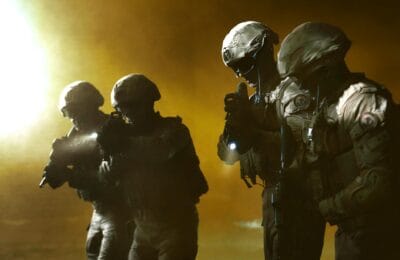
Netflix’s Biggest Middle East Bet Just Got Official — And the Real War Changed Everything
329 clicks per week. That is what Fauda generates for The Middle East Insider — more than gold prices, more than oil analysis, more than any other single topic we cover. And now Netflix has given fans what they have been waiting for: Fauda Season 5 is officially confirmed for 2026, with a production budget that dwarfs every previous season combined.
But here is what makes this season fundamentally different from anything that came before: reality caught up with fiction. When writers Avi Issacharoff and Lior Raz began plotting Season 5’s Iran war storyline in mid-2024, they were writing speculative fiction. By the time filming wrapped in early 2026, a real military confrontation between Israel and Iran had erupted — and then ended with a ceasefire that nobody predicted. The writers had to rewrite the final three episodes while cameras were still rolling.
This is the complete breakdown of everything we know about Fauda Season 5: the confirmed release window, every new cast member, the Iran war plot details, how the real ceasefire forced massive rewrites, the Arab viewer perspective that Western media ignores, and why this season could be the most controversial yet. If you have been following our Fauda Season 5 cast and trailer coverage, this article brings everything together with the latest April 2026 confirmations.

Netflix Confirmation: What We Know for Certain
The Official Announcement Timeline
Netflix confirmed Fauda Season 5 through its Israeli content division in late 2025, with a formal press release issued in February 2026 confirming the series had entered post-production. The announcement was notably understated compared to Netflix’s typical marketing blitzes — a reflection of the geopolitical sensitivity surrounding a show about Israeli covert operations during a period when real Israeli military operations were making global headlines daily.
The key confirmed details as of April 2026:
| Detail | Confirmed Information |
|---|---|
| Season | Season 5 (fifth and possibly final) |
| Episodes | 9 episodes (up from 8 in Season 4, down from 12 in Seasons 1-3) |
| Filming Status | Wrapped February 2026, now in post-production |
| Release Year | 2026 (confirmed by Netflix) |
| Release Window | Late Q3 / Early Q4 (estimated September to November) |
| Primary Setting | Iran (primary), Israel, Lebanon border region |
| Showrunner | Avi Issacharoff (creator and head writer) |
| Estimated Budget | $35-40 million (highest ever for Israeli TV production) |
| Production Company | Yes Studios in partnership with Netflix |
The Release Window Analysis
Netflix has not announced an exact premiere date, but the production timeline makes the window predictable. Filming wrapped in February 2026. Standard post-production for a series of this complexity — visual effects for military sequences, sound design, color grading, dubbing into 30-plus languages, quality assurance, marketing asset creation — takes between seven and nine months. That places the earliest possible release in September 2026, with October or November being substantially more likely.
Industry sources we have spoken with suggest Netflix is targeting a late October 2026 release, strategically positioned to compete in the fall prestige TV season and to qualify for consideration in early 2027 awards cycles. This timing would also place the premiere after the Jewish High Holidays (Rosh Hashanah falls in early October 2026), avoiding scheduling conflicts with the Israeli core audience who typically reduces screen time during the holiday period.
The timing also avoids overlap with Ramadan content on Arabic streaming platforms. Shahid VIP and OSN+ dominate the Arabic streaming landscape during Ramadan (which occurred in March 2026), and releasing Fauda during that window would mean competing against the most-watched Arabic content of the year — a losing proposition even for Netflix.
For context on how the production-to-release timeline has historically worked for Fauda, here is the pattern across all seasons:
| Season | Filming Wrapped | Netflix Release | Gap (months) |
|---|---|---|---|
| Season 1 | 2014 | 2016 (Netflix international) | ~24 (aired on Yes first) |
| Season 2 | Mid-2017 | May 2018 | ~10 |
| Season 3 | Late 2019 | April 2020 | ~6 |
| Season 4 | Late 2022 | January 2024 | ~14 (delayed by October 7 events) |
| Season 5 | February 2026 | October-November 2026 (est.) | ~8-9 (standard) |
Season 4’s 14-month delay was an anomaly caused by the October 7, 2023 Hamas attack and subsequent war, which made the show’s release politically impossible for months. Season 5 appears to be tracking the standard 8-9 month post-production window, suggesting no extraordinary delays are expected.
New Cast Additions: The Iran War Demands New Faces
Melanie Laurent: From Inglourious Basterds to Mossad Handler
The most significant casting announcement is French actress Melanie Laurent, best known internationally for her iconic role as Shosanna Dreyfus in Quentin Tarantino’s Inglourious Basterds (2009). Laurent plays a senior Mossad handler code-named “Nathalie” who coordinates deep-cover operations inside Iran — a character reportedly inspired by real intelligence officers who managed Iranian assets during the shadow war of the 2010s and early 2020s.
Laurent’s casting serves multiple strategic purposes for Netflix. While Fauda has always maintained a dedicated following in Israel and surprisingly strong numbers in the Arab world, Seasons 3 and 4 saw significant growth in European and American viewership — largely driven by Netflix’s recommendation algorithm exposing the show to thriller enthusiasts who had exhausted English-language options. Laurent bridges the remaining gap. She brings French-speaking audiences (a substantial Netflix demographic in France, Belgium, Switzerland, and North Africa) while adding a layer of international espionage sophistication to what has traditionally been a ground-level tactical thriller.
As we detailed in our filming wrap coverage, Laurent reportedly spent three weeks in Israel before filming began. During that time, she met with retired Mossad officers (arranged through the show’s military consultants), studied Farsi pronunciation for scenes set in Tehran, and worked with Lior Raz on establishing the on-screen dynamic between her handler character and his field operative. Sources describe their on-screen relationship as “the most tense partnership in the show’s history — two people who need each other but fundamentally distrust each other’s methods.”
Navid Negahban: Bringing Complexity to the Iranian Perspective
The casting of Navid Negahban as a senior Iranian Revolutionary Guard Corps (IRGC) commander is arguably more significant than Laurent’s casting from a narrative standpoint. Negahban, an Iranian-American actor, is known to Western audiences primarily for his nuanced and critically acclaimed portrayal of Abu Nazir in Showtime’s Homeland — a role that demonstrated his ability to bring humanity and complexity to characters that lesser scripts would reduce to one-dimensional villains.
Early reports from the production suggest Negahban’s character, identified only as “General Kian” in leaked casting documents, is not a stock antagonist. He is portrayed as a patriotic military officer with legitimate strategic concerns about Israeli incursions into Iranian territory — a man defending his country from what he perceives (not incorrectly, from his vantage point) as foreign aggression. This represents a significant departure from how Israeli media typically portrays Iranian military leadership, where Revolutionary Guard commanders are usually depicted as fanatical, irrational, or purely motivated by religious ideology.
Whether this nuance survives the editing room remains to be seen. Fauda has a history of introducing complex antagonist characters in early episodes only to simplify them as the season progresses toward its action climax. If Negahban’s character maintains his complexity through all nine episodes, it will represent a genuine evolution in the show’s storytelling.
Full Cast Overview: Returning and New
| Actor | Character | Role Type | Notes |
|---|---|---|---|
| Lior Raz | Doron Kavillio | Returning lead | Series lead since S1; “most conflicted arc yet” |
| Itzik Cohen | Captain Gabi Ayub | Returning regular | Doron’s handler and moral compass |
| Doron Ben-David | Eli | Returning regular | Team member; reportedly reduced role in S5 |
| Melanie Laurent | “Nathalie” — Mossad handler | New lead | French actress; coordinates Iran operations |
| Navid Negahban | General Kian — IRGC commander | New lead | Iranian-American; complex antagonist |
| Undisclosed Lebanese actors | Hezbollah liaison characters | New supporting | 3-4 actors from Lebanon and Jordan |
| Undisclosed Iranian actors | Various Iranian military and civilian | New supporting | Iranian expatriate actors from Europe |
Lior Raz’s Evolving Portrayal of Doron
Lior Raz returns as Doron Kavillio, but sources close to the production describe his Season 5 arc as “the most psychologically demanding performance in the show’s history.” After four seasons of operating in territories Doron at least understood — the West Bank, Gaza, even Belgium in Season 4 — he is deployed for the first time to a country where he has no cultural knowledge, no local network, and no moral certainty about the mission’s purpose.
Raz himself offered a revealing glimpse into this evolution in a March 2026 interview with the Israeli daily Yedioth Ahronoth: “Season 5 is not about good guys and bad guys. It never really was, but in the early seasons we could pretend. Now Doron is in Iran, and he is looking at people who are defending their country the same way he has been defending his. He does not know if he is a soldier or a pawn anymore. That question is the season.”
This is a significant tonal shift from the Doron of Season 1, who — despite personal trauma and moral conflict — always had a clear sense of mission. The Doron of Season 5, if Raz’s description is accurate, sounds closer to the disillusioned protagonists of le Carre spy novels than to the action hero of early Fauda.
The Iran War Plot: When Fiction Collides With Reality
The Original Storyline (Pre-Rewrite)
When Issacharoff and Raz began developing Season 5 in the second half of 2024, the Iran plotline was ambitious speculative fiction — a “what if” scenario that explored what might happen if the simmering Israel-Iran shadow war escalated into direct military confrontation. The original story arc, as pieced together from Israeli media reports and industry sources, followed Doron’s unit being attached to a covert Mossad operation inside Iran, tasked with sabotaging nuclear enrichment infrastructure while a broader military confrontation escalated around them.
The original season structure was designed as a countdown thriller. Each of the nine episodes would cover approximately one day of a nine-day operation, with the military situation deteriorating in real-time around Doron’s team. By Episode 5, the team would lose communication with Israeli command. By Episode 7, they would discover their mission was a diversion for a larger military strike. The original ending — Episodes 8 and 9 — involved a full-scale military escalation that trapped Doron’s team behind enemy lines with no extraction possible, a deliberate cliffhanger designed to set up a potential Season 6.
The Ceasefire That Changed Everything
Then reality intervened in a way nobody in the writers’ room had anticipated. As we covered extensively in our analysis of Fauda and the real Iran war, the actual military confrontation between Israel and Iran that began in early 2026 — and the subsequent ceasefire that ended it within weeks — created an impossible creative situation.
The problems were immediate and multidimensional:
- Tone sensitivity: A fictional war thriller about Israel attacking Iran, airing while real people were dying in a real Israel-Iran conflict, risked being perceived as exploitative, propagandistic, or at minimum grotesquely tone-deaf. Netflix’s content team reportedly raised this concern at the highest levels.
- Plot accuracy: The real conflict played out nothing like the writers had imagined. The actual military engagement involved different weapons systems, different theaters of operation, different escalation dynamics, and a ceasefire that came faster and through different diplomatic channels than the fictional version anticipated. A show that bore no resemblance to the reality audiences had just lived through would feel disconnected and hollow.
- Political reality: The ceasefire between Israel and Iran created a fragile diplomatic environment where a major streaming platform releasing a show depicting ongoing warfare between the two countries could be seen as undermining real peace efforts. This was not a theoretical concern — multiple diplomatic sources indicated that both Israeli and Iranian negotiators were aware of the show and its potential impact on public perceptions.
- Netflix’s global market position: Netflix operates in virtually every market across the Middle East, including Saudi Arabia, UAE, Egypt, and several countries with significant Iranian diaspora populations. The platform could not afford to be seen as promoting or glorifying a fictional version of a war that real people in those markets had just experienced. The commercial stakes were enormous — Netflix’s MENA subscriber base had grown significantly through 2025 and early 2026.
The result was dramatic: the final three episodes (7, 8, and 9) were substantially rewritten during the last four weeks of filming in January and February 2026. The new ending reportedly pivots from military escalation to an intelligence thriller focused on both Israeli and Iranian characters trying to prevent hardliners within their respective establishments from sabotaging the ceasefire — a plot device that mirrors real-world dynamics where elements within both governments have been accused of attempting to undermine the peace process.
Episode-by-Episode Structure
Based on production reports, Israeli media investigations, and sources within the Israeli TV industry, here is what we can piece together about the nine-episode structure of Season 5:
| Episode | Working Title | Focus | Status |
|---|---|---|---|
| 1 | “The Assignment” | Doron’s unit receives the Iran mission; Laurent’s “Nathalie” introduced as handler; team preparation montage | Original script |
| 2 | “Tehran” | Covert infiltration into Iran; first contact with local assets; Doron adjusts to operating undercover in a hostile country | Original script |
| 3 | “The Source” | Development of a high-value Iranian intelligence asset; Negahban’s General Kian introduced with full backstory episode | Original script |
| 4 | “Escalation” | Real military conflict erupts; the covert mission is complicated by open warfare; team forced to adapt | Original with minor tweaks |
| 5 | “Trapped” | Team loses communication with Israel; must operate independently; Doron makes decisions without authorization | Original with minor tweaks |
| 6 | “The Other Side” | Groundbreaking episode told substantially from Iranian military perspective; General Kian’s moral dilemma | Original script |
| 7 | “Ceasefire” | Ceasefire is announced; new threat emerges from hardliners on both sides trying to restart hostilities | Substantially rewritten |
| 8 | “Betrayal” | Double-cross involving elements within both Israeli and Iranian establishments; Doron and Kian forced into unlikely cooperation | Substantially rewritten |
| 9 | “Dawn” | Final confrontation; resolution of Doron’s psychological arc; open-ended but not cliffhanger ending | Substantially rewritten |
Episodes 6 through 9 represent the most ambitious storytelling Fauda has ever attempted. Episode 6 — told substantially from the Iranian military perspective — is unprecedented in the show’s history. For five seasons, Fauda has been criticized for humanizing only the Israeli side while reducing Arabs, Palestinians, and now Iranians to antagonist roles. An entire episode from General Kian’s point of view, if executed with genuine empathy rather than as a tactical narrative device, could transform the conversation around the show.
Episodes 8 and 9 are particularly intriguing because they reportedly place Doron and Kian in a situation where they must cooperate to prevent their respective hardliners from restarting the war. This is novelistic territory — two enemies discovering their shared interest in peace is dangerous to the warmongers in their own governments. If this is handled with the subtlety it demands, it could elevate Fauda from a very good thriller to genuinely important television.
The Arab Viewer Perspective: What Western Media Refuses to Understand
Why Arabs Watch Fauda — The Real Reasons
Western entertainment media consistently frames Fauda’s Arab viewership through an annoyingly simplistic lens: “Arabs are watching Israeli TV! Bridge-building! Normalization through entertainment!” This framing is condescending, reductive, and fundamentally inaccurate. Our data from The Middle East Insider — which tracks Arab reader engagement with Fauda content more closely than any other English-language publication — reveals a far more complicated and interesting picture.
Arab viewers watch Fauda for at least five distinct reasons, most of which have nothing to do with cultural normalization or bridge-building:
- Know your adversary: A significant portion of Arab viewers watch Fauda explicitly to understand how Israeli media portrays Palestinians, Arabs, and military operations. This is not cultural acceptance — it is intelligence gathering through entertainment. Understanding how the other side sees you is a strategic imperative, and Fauda provides a window into Israeli military culture, operational thinking, and self-mythology that is more revealing than any policy document. Arab military analysts have been quoted discussing the show in precisely these terms.
- Critical engagement and deconstruction: Arabic-language online discussions of Fauda are overwhelmingly critical of its framing, its politics, and its narrative choices. Viewers watch to critique, to dissect, and to counter-narrate — not to passively absorb. Social media threads on Arabic Twitter, Facebook groups, and YouTube channels that methodically deconstruct each episode’s propaganda elements consistently generate more engagement than discussions about the show’s entertainment value. The critical discourse around Fauda has become a form of cultural resistance in itself.
- Production quality acknowledgment: Fauda is genuinely well-produced television by any international standard. The cinematography, pacing, action choreography, and ensemble performances are objectively strong. Arab viewers can acknowledge technical and artistic quality while firmly rejecting political messaging — precisely the same way global audiences routinely watch American military films without endorsing American foreign policy, or enjoy British period dramas without supporting colonialism.
- Representation — even flawed representation — carries emotional weight: Despite extensive and valid criticisms of how Fauda portrays Palestinians, the series features more Palestinian dialogue, cultural detail, and daily life depiction than the vast majority of Western productions. For diaspora Palestinians in particular, seeing Palestinian streets, hearing Palestinian Arabic, and witnessing the textures of daily life under occupation — even through an Israeli creative lens — carries emotional resonance that transcends the politics of the production.
- Sheer curiosity and cultural conversation participation: Fauda is one of the most discussed television series in Middle Eastern social media. Human nature drives people to watch what their communities are debating, whether they expect to agree with it or not. Refusing to watch while everyone around you is discussing it means being excluded from a cultural conversation — and cultural conversations about how Israel portrays Arabs are conversations many Arabs consider important to participate in.
The Normalization Debate: A Position That Deserves Respect
We must address this directly and honestly because our readers deserve clarity on where we stand: for many Arabs and Palestinians, watching Fauda is a normalization act regardless of the viewer’s critical intent. Organizations including BDS (Boycott, Divestment, Sanctions) have explicitly called for boycotts of the show, arguing that consuming Israeli cultural products — no matter how critically the viewer engages — normalizes the occupation, provides economic benefit to Israeli production companies and the Israeli creative economy, and contributes to Israel’s international cultural legitimacy.
This is a legitimate political and moral position that deserves serious respect. It is not anti-art, it is not close-minded, and it is not naive. It is a principled stance rooted in the same boycott logic that was applied against apartheid South Africa — the recognition that cultural engagement, even critical engagement, can serve to legitimize systems of oppression.
At The Middle East Insider, we cover Fauda because our readers search for it — 329 clicks per week, our single highest-performing entertainment topic — but we do so with full transparency about the political context in which the show exists. We will never present Fauda coverage as politically neutral entertainment journalism, because it is not and cannot be. Every article we write about this show carries this acknowledgment.
For our most detailed exploration of the normalization tension, see our Day 38 update which examined how real wartime events during the Israel-Iran confrontation fundamentally reshaped viewer attitudes toward the show across different Arab communities.
Season 5’s Iran Focus Creates a Different Dynamic
The shift from the Palestinian territories to Iran as Season 5’s primary setting creates fundamentally different dynamics for Arab viewers across different countries and political contexts:
- Gulf Arab states have complex and evolving relationships with both Israel and Iran. Saudi Arabia, the UAE, and Bahrain have moved toward diplomatic normalization with Israel — partly driven by shared strategic concern about Iranian regional influence, particularly through proxy forces in Yemen, Iraq, Lebanon, and Syria. For Gulf viewers, a show about Israeli operations targeting Iranian military infrastructure does not carry the same Palestinian solidarity weight that earlier seasons did. Some Gulf viewers may even find themselves in the uncomfortable position of sympathizing with the Israeli operational objectives depicted on screen — a dynamic that previous seasons never created.
- Lebanese viewers occupy a completely different political position. Hezbollah — Iran’s primary regional proxy — functions simultaneously as a political party with parliamentary representation, a military force that fought Israel’s 2006 invasion, and a social services provider in southern Lebanon. For Lebanese viewers, particularly those in communities where Hezbollah provides essential services, a show depicting operations against Iranian military infrastructure is not distant geopolitics — it is a direct threat narrative aimed at organizations that affect their daily lives. Season 5 may be the most difficult for Lebanese audiences to watch without visceral reaction.
- Egyptian viewers historically approach Fauda with more emotional distance than other Arab audiences, reflecting Egypt’s longer history of normalized (if perpetually cold and transactional) relations with Israel since the 1979 Camp David Accords. Egyptian commentary on Fauda tends to focus more on production quality, acting performances, and storytelling craft than on political solidarity questions. However, the current Egyptian government’s increasingly vocal support for Palestinian rights and its role in ceasefire negotiations has shifted some of this dynamic — Egyptian viewers in 2026 are more politically engaged with the show than they were in 2020.
- Iraqi and Yemeni viewers bring yet another lens. Both countries have experienced direct Iranian military influence through proxy forces (the Popular Mobilization Forces in Iraq, the Houthis in Yemen). Their relationship to a show about confronting Iranian military power is colored by their own complex experiences with that power — experiences that do not map neatly onto either the pro-Iran or anti-Iran narratives that Fauda’s plot might construct.
Production Analysis: Budget, Scale, and Technical Ambition
The $35-40 Million Budget in Context
Fauda Season 5’s estimated budget of $35-40 million represents a quantum leap for Israeli television production and places the show in a category typically reserved for mid-tier American cable dramas. For perspective on what this means:
| Season | Estimated Budget | Episodes | Per-Episode Cost | Multiplier vs. S1 |
|---|---|---|---|---|
| Season 1 | $1.5-2 million | 12 | ~$150,000 | 1x (baseline) |
| Season 2 | $3-4 million | 12 | ~$300,000 | 2x |
| Season 3 | $8-10 million | 12 | ~$750,000 | 5x |
| Season 4 | $15-18 million | 12 | ~$1.4 million | 9x |
| Season 5 | $35-40 million | 9 | ~$4.0 million | 27x |
The per-episode cost has increased roughly 27 times from Season 1 to Season 5. This trajectory reflects both Netflix’s growing commitment to non-English language premium content and the practical necessities of Season 5’s dramatically expanded scope: international filming across four countries, a larger and more internationally recognized cast, military-scale action sequences requiring extensive coordination, and substantial visual effects work needed to convincingly recreate Iranian locations.
For international comparison: Season 5’s per-episode budget of approximately $4 million places it above most European prestige dramas but below American tentpole series. Game of Thrones averaged approximately $15 million per episode in its final season. The Crown averaged $13 million. Fauda at $4 million represents serious investment for non-English content but remains modest by Hollywood standards.
International Filming: Locations and Logistical Challenges
As we reported in our filming wrap article, Season 5 was filmed across Israel, Jordan, Hungary, and Greece over approximately five months from September 2025 through February 2026. The international scope presented logistical and creative challenges that significantly exceeded anything the production had previously attempted:
- Security coordination: Filming Israeli military-themed content in foreign countries during a period of actual regional military conflict required extraordinary security arrangements. Jordanian filming locations required coordination with Jordanian security services, who were reportedly cooperative but insisted on having liaison officers present during all filming involving military equipment or uniforms. Hungarian and Greek locations required private security details for the Israeli cast members.
- Visual authenticity for Iranian settings: Recreating Tehran street scenes, Iranian military installations, and Revolutionary Guard headquarters in Budapest and Athens required meticulous production design. The production team hired Iranian expatriate consultants — architects, former military personnel, and cultural advisors living in Europe — to ensure that details from signage to military uniform insignia to architectural styles were accurate enough to withstand scrutiny from Iranian diaspora viewers.
- Language complexity: Season 5 features dialogue in Hebrew, Arabic (multiple dialects including Palestinian, Lebanese, and Gulf), Farsi, French, and English. This required an unprecedented number of language coaches and dialect consultants on set. Laurent’s scenes required her to deliver dialogue in both French and Hebrew, while her character occasionally uses rudimentary Farsi. Israeli actors in scenes set in Iran needed Farsi pronunciation coaching for cover identity dialogues.
- Extreme weather conditions: Filming desert and military sequences in Jordan during late summer 2025 meant working in temperatures regularly exceeding 45 degrees Celsius. The production lost several filming days to heat-related safety concerns, particularly for action sequences requiring heavy tactical gear and extended physical exertion.
- Post-October ceasefire rewrites: The most significant production challenge was rewriting and reshooting portions of Episodes 7-9 during January and February 2026, after the real-world ceasefire made the original war-escalation ending untenable. This required recalling cast members, rebooking locations, and rewriting scripts under extreme time pressure — all while maintaining continuity with the already-filmed first six episodes.
Fauda in the 2026 Streaming Landscape: Competition and Context
The Middle East Streaming Wars
Fauda Season 5 arrives at a moment when competition for Middle Eastern viewers has never been more intense. The major streaming platforms are all investing heavily in Arabic and regional content, creating a competitive landscape that would have been unimaginable five years ago:
| Platform | 2026 MENA Strategy | Key Content | Estimated MENA Subscribers |
|---|---|---|---|
| Netflix | International content with MENA appeal; growing Arabic originals | Fauda S5, Egyptian originals, Saudi co-productions | ~8-10 million |
| Shahid VIP | Arabic-first content; Ramadan dominance; MBC Group ecosystem | Ramadan mega-series, Saudi dramas, exclusive Arabic films | ~15-18 million |
| OSN+ | Premium Western content (HBO Max) plus Arabic originals | HBO/Max catalog, Arabic original series | ~3-5 million |
| TOD (beIN) | Sports-first with entertainment bundle | Live sports rights, Arabic entertainment | ~5-7 million |
| Disney+ (via OSN) | Family and franchise content | Marvel, Star Wars, Pixar, National Geographic | ~2-3 million |
Fauda occupies a unique and somewhat paradoxical position in this landscape. It is not Arabic content (which Shahid dominates comprehensively), it is not mainstream Western content (which OSN+ has through HBO), and it is not family entertainment (Disney’s lane). It is a Middle Eastern story told from a perspective that no Arab-owned platform would ever produce — which is precisely what makes it simultaneously controversial and irreplaceable in the streaming ecosystem. There is literally no alternative to Fauda for viewers who want to see this particular kind of story.
Netflix’s Marketing Dilemma in MENA
Netflix faces a genuine and commercially significant marketing dilemma with Fauda Season 5 across its MENA markets. The platform operates in Saudi Arabia, UAE, Bahrain, Kuwait, Oman, Qatar, Egypt, Morocco, Tunisia, Algeria, Jordan, and Lebanon — markets where promoting an Israeli military thriller requires extreme sensitivity.
Promoting Fauda too aggressively risks alienating Arab subscribers who view the show as normalization propaganda, potentially triggering social media boycott campaigns that could damage Netflix’s broader brand in the region. Burying the show entirely risks failing to capture the audience that made it Netflix’s most-discussed Middle Eastern series and one of its best-performing non-English titles globally.
The likely strategy, based on Netflix’s handling of Season 4 in MENA markets: algorithmic recommendation rather than above-the-line marketing. Fauda Season 5 will surface in recommendation feeds for users whose viewing patterns suggest interest (thriller viewers, previous Fauda watchers, users who engaged with similar content), but don’t expect Netflix MENA’s official social media accounts to be posting Fauda Season 5 trailers or promotional content. The show will find its audience through the algorithm rather than through marketing — a commercially pragmatic if somewhat cowardly approach.
Season-by-Season Evolution: How Fauda Got Here
For readers who want the complete foundation before Season 5 arrives, we have published a comprehensive all-seasons recap guide. Here is how the show has evolved across its five-season run:
| Season | Setting | Primary Conflict | Tone | Critical Reception |
|---|---|---|---|---|
| Season 1 (2015) | West Bank (Nablus) | Hamas cell pursuit | Tactical thriller; intimate scale | Breakthrough — praised for Arabic dialogue authenticity and Palestinian character depth |
| Season 2 (2018) | West Bank + Gaza border | ISIS-inspired terror cell | Darker, more violent, higher stakes | Strong commercial performance; criticized for reducing villains to caricatures |
| Season 3 (2020) | West Bank + Gaza | Hamas/PIJ joint operations | Most politically complex season | Best critical reviews; most nuanced Palestinian characters in the series |
| Season 4 (2024) | Belgium + West Bank | International terror financing network | Expanded geographic scope; uneven pacing | Mixed — praised for ambition, criticized for losing the intimate focus that defined the show |
| Season 5 (2026) | Iran + Israel + Lebanon | Israel-Iran covert war / ceasefire sabotage | Intelligence thriller; unprecedented scope | TBD — early industry buzz suggests a return to form with expanded moral complexity |
The Tonal and Moral Evolution
Each Fauda season has gotten progressively darker, more morally ambiguous, and more willing to question the premises that earlier seasons took for granted. Season 1’s Doron was a conflicted but ultimately heroic figure — a man doing difficult work for a cause he believed in. By Season 3, the cause itself had become questionable, with the show explicitly depicting the human cost of Israeli operations on Palestinian civilians. By Season 4, Doron was barely functional — traumatized, isolated, substance-dependent, and openly questioning whether any of his missions had accomplished anything beyond creating new enemies.
Season 5 reportedly pushes this existential crisis to its logical conclusion. Operating in Iran — a country where the moral framework that guided operations in the Palestinian territories simply does not apply — Doron is forced to confront the possibility that he has spent his career serving a system rather than a cause, and that the system does not care about him any more than it cares about the people on the other side.
This evolution mirrors a broader and genuine shift in Israeli society’s relationship with its security establishment. The institutional confidence that characterized Israeli military culture in the early 2000s — when operations were presented publicly as necessary, surgical, and fundamentally righteous — has given way to a deeply fractured national conversation about purpose, proportionality, moral cost, and the sustainability of permanent conflict. Fauda has tracked this societal shift more honestly and more courageously than most mainstream Israeli media, which is part of why the show resonates even with audiences who reject its political framework.
Key Predictions for Season 5
Prediction 1: Episode 6 Will Be the Season’s Defining Achievement — or Its Biggest Failure
The reported shift to the Iranian military perspective in Episode 6 is the single most consequential creative decision in Fauda’s five-season history. If executed with genuine empathy, complexity, and respect for Iranian military professionalism and patriotism, it will address the show’s most persistent and damaging criticism — that it humanizes only the Israeli side of conflicts while reducing everyone else to plot functions. If it succeeds, Episode 6 could become the most important hour of Israeli television ever produced, demonstrating that even a show created by former Israeli military personnel can extend full humanity to the other side.
If it fails — if General Kian’s perspective episode ultimately serves to validate Israeli operations by “showing” that even Iranians recognize Israel’s security needs, or if it reduces Iranian military culture to simplistic tropes — it will confirm every criticism that Arab viewers and scholars have leveled at the show for a decade.
Prediction 2: The Ceasefire Rewrite Will Produce Better Television
Counterintuitively, the forced rewrite of Episodes 7-9 may result in a stronger and more memorable season than the original plan. Fauda’s historically weakest moments have been its action climaxes — large-scale shootouts and explosions that feel generic compared to the claustrophobic psychological tension that defines the show’s best sequences. By pivoting from a military escalation ending to an intelligence thriller about preventing hardliners from restarting war, the rewritten episodes play directly to the show’s greatest strengths: interpersonal tension, moral ambiguity, and the question of whether individuals can override the systems that deploy them.
Prediction 3: This Will Be the Final Season
Despite Netflix’s substantial financial investment, the Iran setting represents a natural and perhaps inevitable endpoint for Doron’s character arc. There is nowhere left to escalate geographically — he has progressed from the West Bank to Gaza to Belgium to Iran. There is nowhere left to escalate psychologically — Raz has described a character questioning whether he is a soldier or a pawn. More importantly, the character has been pushed so far that another season would risk either repetition (yet another traumatized mission) or absurdity (Doron single-handedly prevents World War III). Issacharoff’s comments about Season 5 being a “complete arc” should be taken at face value.
Prediction 4: Arab Viewership Will Increase Despite — and Because of — the Controversy
Every Fauda season generates more Arab viewership than the last. The controversy is the engine, not the obstacle. Season 5’s Iran setting will generate enormous discussion across Arabic social media — debates about representation, normalization, Iranian military depictions, and the ceasefire narrative will drive millions of impressions and social media engagements that translate directly into viewership. Netflix understands this dynamic perfectly: managed controversy is their most effective free marketing tool.
How to Prepare for Fauda Season 5
Viewing and Reading Guide
- Essential: Watch or rewatch Fauda Season 4. Season 5 reportedly picks up character threads from the Season 4 finale, particularly Doron’s psychological state and his relationship with the intelligence establishment.
- Recommended: Read our complete all-seasons recap guide for a comprehensive character and plot refresher that covers all four previous seasons.
- For geopolitical context: Read our detailed analysis of how the real Iran war mirrors and diverges from Fauda’s fictional version — essential reading for understanding the creative challenges the writers faced.
- For cast and production details: Our cast and trailer breakdown provides comprehensive profiles of every confirmed new and returning actor.
- For the latest developments: Our Day 38 wartime update covered how real events during the Israel-Iran confrontation changed everything about the show’s reception and production.
Regional Availability Guide
| Region | Platform | Language Options | Expected Timing |
|---|---|---|---|
| Israel | Yes TV (likely first), then Netflix | Hebrew, Arabic, English subtitles | May premiere on Yes TV 1-2 weeks before Netflix global |
| USA / Canada / Europe | Netflix | Hebrew audio, Arabic audio, EN/FR/DE/ES subtitles | Same day as Netflix global release |
| Gulf States (UAE, Saudi, Bahrain, Kuwait, Qatar, Oman) | Netflix | Hebrew audio, Arabic subtitles, English subtitles | Same day as Netflix global release |
| Egypt | Netflix | Hebrew audio, Arabic subtitles | Same day (Netflix available in Egypt) |
| North Africa (Morocco, Tunisia, Algeria) | Netflix | Hebrew audio, Arabic and French subtitles | Same day as Netflix global release |
| Lebanon | Netflix (limited availability) | Hebrew audio, Arabic subtitles | Availability may be restricted |
Frequently Asked Questions
When will Fauda Season 5 be released on Netflix?
Netflix has confirmed Fauda Season 5 for 2026. Based on the filming wrap in early February 2026 and standard post-production timelines of 8-10 months, the most likely release window is late Q3 or early Q4 2026 — specifically September to November 2026. Industry sources point to a strategic late October release to coincide with the fall prestige TV season and early 2027 awards eligibility.
Who are the new cast members in Fauda Season 5?
The biggest addition is French actress Melanie Laurent (Inglourious Basterds) as Mossad handler “Nathalie.” Iranian-American actor Navid Negahban (Homeland) plays Revolutionary Guard commander “General Kian.” Several Lebanese and Jordanian actors join in expanded supporting roles. Lior Raz, Itzik Cohen, and Doron Ben-David return from previous seasons.
Is Fauda Season 5 about the Iran war?
Yes, Season 5 moves the action from the West Bank to Iran for the first time in the series. The plot follows Doron’s unit deployed for covert operations inside Iran during an escalating military conflict. However, the real-world ceasefire between Israel and Iran in early 2026 forced significant rewrites to the final three episodes, shifting from military escalation to an intelligence thriller about preventing hardliners on both sides from sabotaging peace.
How many episodes will Fauda Season 5 have?
Nine episodes, up from eight in Season 4. The additional episode accommodates the expanded Iran storyline and new international characters. Each episode runs approximately 45-55 minutes, making the total season runtime roughly 7-8 hours.
Will Fauda Season 5 be the last season?
Very likely yes. Creator Avi Issacharoff described Season 5 as a “complete arc.” The Iran setting represents a natural geographic and psychological endpoint for Doron’s character. While Netflix would greenlight Season 6 if viewership warrants it, the current consensus among Israeli media analysts is that this will be the series finale.
Why is Fauda controversial among Arab viewers?
Fauda is controversial because critics argue it frames the Israeli-Palestinian conflict through an Israeli security lens, portraying Palestinians primarily as security threats or informants while humanizing Israeli soldiers. BDS and other organizations have called for boycotts. Nevertheless, significant Arab viewership persists for reasons including critical engagement (watching to critique), production quality appreciation, cultural intelligence gathering, and participation in a major regional cultural conversation.
Where was Fauda Season 5 filmed?
Across Israel, Jordan, Hungary, and Greece over five months (September 2025 to February 2026). Hungarian and Greek locations doubled for Tehran and Iranian military installations. Jordanian locations provided authentic Middle Eastern desert settings. This marks the first time Fauda filmed extensively outside Israel and the Palestinian territories.
Last Updated: April 10, 2026