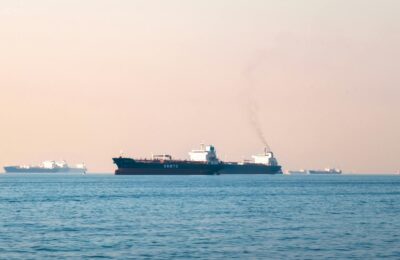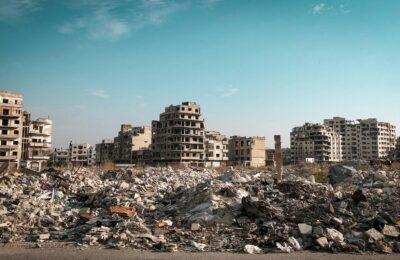
In a scene that has become disturbingly routine, President Donald Trump has extended his deadline for Iran for the third consecutive time, now pushing it to Tuesday, April 7, 2026, at 8:00 PM Eastern Time. The announcement came via Truth Social in characteristically explosive language: “Tuesday will be Power Plant Day, and Bridge Day, all wrapped up in one, in Iran… Open the F****** Strait, you crazy bastards, or you’ll be living in Hell – JUST WATCH!”
But in a paradox that has become the defining feature of this crisis, Trump appeared on Fox News hours later to say that Tehran “is negotiating now” and there’s a “good chance” of a deal within 24 hours. This whiplash between apocalyptic threats and cautious optimism has left the entire region in a state of suffocating uncertainty, with oil surging past $111 per barrel and gold soaring to $149 per gram.
We are now on Day 38 of a war that began on February 28, 2026, with strikes that killed Supreme Leader Ali Khamenei, and has claimed more than 3,400 lives. In this comprehensive analysis, we examine the timeline of all three extensions, dissect the three possible scenarios for Tuesday, and assess what each path means for oil, gold, and the 400 million people living in this region.

The Timeline: Three Deadlines, Three Extensions
The First Deadline: The Opening Ultimatum
The pattern began weeks ago when Trump issued his first direct ultimatum to Iran, demanding the immediate reopening of the Strait of Hormuz or face military consequences “the likes of which the world has never seen.” This came after Iran escalated its naval posture in the strait, threatening total closure in retaliation for Khamenei’s killing. That deadline passed without incident — Iran didn’t open the strait, and the United States didn’t follow through on its threats.
The Second Deadline: Verbal Escalation
In the second extension, Trump noticeably raised the rhetorical stakes, speaking of targeting Iranian energy infrastructure. Behind the scenes, indirect communication channels were working actively. This deadline also expired without execution, raising serious questions about the credibility of American threats and emboldening Iranian hardliners who argued that Washington was bluffing.
The Third Deadline: Tuesday, April 7
Now we face the third extension, and this time several factors make it fundamentally different from its predecessors. First, the language has become far more specific — Trump didn’t talk about vague “consequences” but explicitly mentioned “power plants” and “bridges,” suggesting concrete military plans to target civilian infrastructure. Second, the emergence of Pakistan’s “Islamabad Accord” framework means there is now a genuine diplomatic track that could give both sides a face-saving exit. Third, Iran’s position has hardened further following today’s assassination of IRGC intelligence chief Major General Majid Khademi.
| Deadline | Date | Primary Threat | Outcome |
|---|---|---|---|
| First | Late March | General military consequences | Extended |
| Second | Early April | Infrastructure targeting | Extended |
| Third | April 7, 8 PM ET | Power plants and bridges | Pending |
What’s Happening on the Ground Today
Assassination of the IRGC Intelligence Chief
In a development of enormous consequence, both Iranian and Western sources have confirmed the killing of Major General Majid Khademi, the head of the IRGC’s intelligence apparatus, in a joint US-Israeli strike today. Khademi was no ordinary military commander — he was the man responsible for Iran’s entire overseas intelligence network, including operations across Lebanon, Syria, Iraq, and Yemen. His assassination represents a devastating intelligence blow to Iran, but it may simultaneously push Tehran toward unpredictable retaliatory actions.
This killing follows a clear pattern that began with Khamenei himself on February 28, continuing through a systematic series of precision strikes targeting IRGC leadership. The critical question now: does this “decapitation” strategy bring the war closer to its end, or does it make it more chaotic by removing the very leaders who could negotiate a ceasefire? History suggests the latter — killing leaders rarely ends wars, but it frequently makes them more unpredictable and violent.
Iranian Missiles Strike Haifa
Iran demonstrated today that it remains capable of inflicting damage despite catastrophic losses in its leadership ranks. Iranian missiles struck Haifa, killing two people and trapping four others under rubble. This strike is not merely a military action — it is a clear political message: Iran will not surrender under pressure, and no amount of “deadlines” will prevent it from retaliating.
The cumulative casualty figures tell the story of a starkly asymmetric conflict: more than 1,900 Iranian dead, more than 1,400 Lebanese dead, versus just 21 Israeli fatalities. This enormous disparity reflects the technological military gap, but it also reflects a painful truth that must be stated clearly: Arab and Iranian civilians are paying the overwhelming price of this war. More than 3,400 lives lost in just 38 days, the vast majority in Iran and Lebanon — countries that did not choose this war but had it forced upon them. For ongoing coverage of the human toll, follow our reporting at The Middle East Insider.
The “Easter Miracle” — F-15 Pilot Rescue
On a separate front, the Pentagon announced the successful rescue of an American F-15 pilot who was shot down over Iranian territory. Trump described the operation as an “Easter miracle,” a characterization laden with obvious propaganda value. Details remain scarce, but the very fact that an American pilot was on Iranian soil and required extraction confirms that US military operations are being conducted at close range, not just from standoff distances.
The American narrative around the “miracle” conveniently ignores a fundamental question: how was an F-15 — one of the world’s most capable fighter jets — shot down in the first place? This means Iranian air defenses remain effective despite weeks of sustained bombardment, raising serious questions about the American assumption that air supremacy has been fully achieved. It suggests Iran’s integrated air defense network is more resilient than Pentagon planners anticipated.
Trump’s Dual Message: Threat and Optimism Simultaneously
Deconstructing the Truth Social Post
Let us analyze Trump’s post with precision: “Tuesday will be Power Plant Day, and Bridge Day, all wrapped up in one, in Iran… Open the F****** Strait, you crazy bastards, or you’ll be living in Hell – JUST WATCH!” This post operates on multiple levels:
Level One — Specificity: The mention of “power plants” and “bridges” is not random. These are civilian infrastructure targets whose destruction would represent an enormous qualitative escalation. Destroying power plants means plunging entire Iranian cities into darkness; destroying bridges means severing supply lines and communication between cities. This is the language of total war, not limited military operations.
Level Two — Dehumanization: The use of “crazy bastards” reflects an attempt to frame the Iranian leadership as irrational, a dangerous characterization because it justifies any action against them. In reality, Iran’s leadership is acting with clear rationality from the perspective of its own strategic calculations, even if one disagrees with those calculations. Dismissing an adversary as “crazy” is how nations stumble into wars they cannot control.
Level Three — Spectacle: The phrasing “JUST WATCH” resembles a television event teaser more than a foreign policy statement. This is consistent with Trump’s pattern of converting international crises into media events, treating geopolitics as entertainment for a domestic audience.
The Contradictory Fox News Appearance
Trump’s appearance on Fox News, with an entirely different tone — speaking of a “good chance” of a deal — reveals a “good cop, bad cop” strategy played by a single person. The Truth Social post targets the American base that wants to see “strong America,” while the Fox News comments target markets and allies who need reassurance that things won’t spiral out of control.
This duality is not necessarily a sign of weakness. In crisis negotiations, ambiguity about true intentions can be an effective pressure tool. The problem is that this ambiguity comes at the expense of regional stability and global markets. Each contradiction in messaging adds another layer of uncertainty, and uncertainty means sharp volatility in oil and gold prices that ripples through every economy in the Middle East and beyond.
Iran’s Position: Hardening Under Pressure
The IRGC Navy’s Declaration
Facing Trump’s threats, the IRGC’s naval force issued a statement that leaves no room for interpretation: “The Strait of Hormuz will never return to its previous status for the United States and Israel.” This declaration carries profound strategic implications. The word “never” is not mere rhetorical exaggeration — it represents a fundamental redefinition of the rules governing the world’s most important oil chokepoint.
What this means practically is that Iran is proposing a new concept: the Strait of Hormuz is no longer an unrestricted international waterway but an Iranian sphere of influence subject to its conditions. Regardless of the legal merits of this position, the military reality on the ground gives Iran real tools to enforce it, at least partially. Iran’s arsenal of anti-ship missiles, naval mines, and fast-attack craft makes any attempt to force the strait open a potentially catastrophic military operation.
The Warning of a “More Severe and Expansive” Response
Iran has gone beyond defense to issue a counter-threat. The warning of a “more severe and expansive” response should the US target energy infrastructure means Iran is holding capabilities in reserve that it has not yet deployed. This could include targeting oil facilities across the Gulf, escalation through proxies in Iraq and Yemen, or even cyber operations against American critical infrastructure.
History tells us that Iran does not typically issue empty threats. When it warned of retaliation for the assassination of Qasem Soleimani in 2020, it carried out missile strikes on Ain al-Asad air base. Now, with Khamenei, Khademi, and other leaders killed, the motivation for revenge is exponentially greater. For more on the strategic dimensions of the Strait of Hormuz crisis, see our analysis at The Middle East Insider.
Three Scenarios for Tuesday
Scenario One: Last-Minute Deal (Probability: 20-25%)
In this scenario, diplomatic efforts — whether through Pakistan’s Islamabad Accord or a back-channel American-Iranian dialogue — succeed in reaching an understanding before the deadline expires. Elements of a potential deal could include:
A temporary ceasefire of 45 days as proposed by the Pakistani framework. Partial reopening of the Strait of Hormuz with international guarantees. A nuclear freeze in exchange for partial sanctions relief. Release of frozen Iranian assets as a gesture of good faith.
Market impact: Oil would see an immediate sharp decline, potentially dropping to $85-90 per barrel within a week. Gold could retreat to $120-130 per gram as safe-haven demand eases. Gulf markets would rally strongly, particularly tourism, real estate, and aviation sectors.
But this scenario faces enormous obstacles. Iran has publicly stated it “will not accept any proposal under pressure or deadlines,” and today’s assassination of Khademi has poisoned the atmosphere further. Iran’s leadership is also in a transitional phase following Khamenei’s death, meaning any decision to back down requires internal consensus that is nearly impossible to achieve right now.
Scenario Two: US Military Escalation (Probability: 30-35%)
In this scenario, Trump follows through on his threats and orders strikes on Iranian infrastructure — power plants and bridges as he specifically mentioned. This would represent a qualitative escalation because it targets civilian infrastructure, not just military assets, dramatically increasing humanitarian suffering.
Expected consequences:
Militarily, this would trigger the “more severe and expansive” Iranian response as warned. We could see a massive escalation in missile attacks on Israel, targeting of American bases across the region, and potentially an attempt to fully close the Strait of Hormuz through naval mines and anti-ship missiles. The conflict could expand to include Houthi attacks on Saudi Arabia and proxy attacks on US forces in Iraq and Syria.
Economically, the impact would be catastrophic. Oil could jump to $130-150 per barrel within days. Gold would surge past $170 per gram. Global supply chains would face severe disruption, particularly for Asian economies that depend heavily on Gulf oil. The global economy, already strained, could tip into recession.
Humanitarianly, destroying power plants and bridges means depriving millions of Iranians of electricity, water, and connectivity — actions that constitute war crimes under the Geneva Conventions, which explicitly prohibit targeting infrastructure essential for civilian survival. The human cost would be immeasurable, and the moral stain on the United States indelible.
Scenario Three: A Fourth Extension (Probability: 40-45%)
Based on the established pattern, the most likely scenario is yet another extension. Trump will find a justification — perhaps “progress in negotiations” or “more time needed to evaluate the Islamabad Accord” — to postpone the decision by several more days.
Why is this most likely? Several reasons. First, the historical pattern: Trump has already extended three times. Second, the existence of Pakistan’s diplomatic track gives him cover to delay military action without appearing weak. Third, the economic cost of a major military escalation to the American economy itself would be enormous, particularly with midterm elections approaching. Fourth, the Pentagon may be privately advising against infrastructure strikes that would constitute clear violations of international humanitarian law.
Market impact: A fourth extension would keep markets in sustained volatility. Oil would oscillate between $105-115 per barrel, gold between $145-155 per gram. Investors would continue pricing in a “risk premium” while gradually losing confidence in the credibility of American threats — which paradoxically could embolden Iran further.
| Scenario | Probability | Oil ($/barrel) | Gold ($/gram) | Humanitarian Impact |
|---|---|---|---|---|
| Deal | 20-25% | 85-90 ↓ | 120-130 ↓ | Significant improvement |
| Military Escalation | 30-35% | 130-150 ↑ | 170+ ↑ | Catastrophic |
| Fourth Extension | 40-45% | 105-115 → | 145-155 → | Continued suffering |
The Islamabad Accord: The Last Diplomatic Card
Amid this tension, Pakistan’s “Islamabad Accord” framework has emerged as the most serious diplomatic initiative of the conflict. General Asim Munir, Pakistan’s Army Chief, spent the entire night in contact with US Vice President JD Vance, envoy Steve Witkoff, and Iranian Foreign Minister Araqchi, shuttling between positions to find common ground.
The plan has two tiers: Tier 1 calls for an immediate ceasefire and reopening of the Strait of Hormuz. Tier 2 provides 15-20 days to negotiate a comprehensive settlement in which Iran abandons its nuclear weapons pursuit in exchange for sanctions relief and the release of frozen assets, all within a proposed 45-day ceasefire window. Iran has not formally committed but has confirmed receipt and says it is “reviewing” the proposal. For our dedicated deep-dive into the Islamabad Accord, see our full analysis on The Middle East Insider.
Pakistan occupies a unique mediating position: it shares a border with Iran, is a nuclear power, maintains relations with both sides, and hosts the China-Pakistan Economic Corridor (CPEC) that gives it implicit Chinese backing. This combination makes it a more credible mediator than virtually any other actor currently available.
Impact on Oil and Gold Markets
Oil at $111 Per Barrel: Drivers and Outlook
Oil has reached $111 per barrel driven by three principal factors: first, the risk of Strait of Hormuz closure, through which approximately 20% of the world’s daily oil supply passes. Second, the decline in Iranian production due to both war damage and tightened sanctions. Third, the persistent uncertainty about the conflict’s trajectory that prevents any normalization of supply expectations.
What makes the current situation different from previous oil crises is that demand has not retreated. China’s economy continues to grow, India is consuming record volumes, and Europe has not entered the recession many predicted. This means any further escalation will drive prices sharply higher because there is no “demand buffer” to absorb the shock. OPEC+ spare capacity is limited, and strategic petroleum reserves have been drawn down significantly since 2022.
For Gulf oil-producing states, the situation is a double-edged sword. High prices boost revenues, but instability threatens economic diversification plans and foreign investment flows. Saudi Arabia and the UAE in particular find themselves in an awkward position: benefiting financially from prices while suffering strategically from regional chaos that undermines their Vision 2030 and similar transformation programs.
Gold at $149 Per Gram: Safe Haven at Peak Strength
Gold at $149 per gram reflects an extraordinary level of global anxiety. Investors are flooding into the yellow metal not just because of the war, but because of its broader economic ramifications: inflation driven by oil prices, the risk of global recession, and eroding confidence in the dollar as a reserve currency in a world where America is increasingly seen as an unreliable partner.
For Arab investors specifically, gold represents dual protection: from geopolitical volatility and from local currency weakness driven by the crisis. The Egyptian pound, Lebanese lira, and Iraqi dinar are all under pressure, and gold provides a haven independent of central bank policies. For more on how to position portfolios during this crisis, follow our financial analysis at The Middle East Insider.
Regional and International Reactions
The UK-Led 40-Nation Coalition
Britain is leading a coalition of 40 nations working to reopen the Strait of Hormuz through diplomatic means and, if necessary, military action. This coalition reflects international recognition that the strait crisis is not merely a US-Iran affair but a threat to the entire global economy. However, the coalition’s effectiveness remains questionable, particularly given divisions between members over whether to pursue escalation or diplomacy with Iran.
The Arab Position
Arab states find themselves in a historic dilemma. On one hand, many do not want a nuclear-armed Iran on their borders. On the other, no one wants an all-out war on their doorstep that destroys regional stability and threatens nascent economic transformations. Egypt in particular suffers from the consequences of rising oil prices on its energy import bill, while Lebanon is paying a direct human price with more than 1,400 dead.
Egypt’s position deserves special attention. Already navigating significant economic challenges, Cairo finds that rising oil prices add immense pressure to its budget. Yet it simultaneously attempts to play a balancing diplomatic role, leveraging its historical relationships and regional weight. The Egyptian people, who have shown remarkable solidarity with the Palestinian and Lebanese populations throughout this conflict, are watching anxiously as the crisis threatens to push prices even higher in a country where millions already struggle with the cost of living.
China and Russia
Beijing and Moscow are watching the situation with mounting concern but different motivations. China is worried about its oil supply security and about the CPEC corridor that passes through Pakistan, Iran’s neighbor. Russia sees the crisis as an opportunity to strengthen its regional influence but fears that escalation could set a dangerous precedent for regime change by force — a prospect that makes the Kremlin deeply uncomfortable for obvious reasons.
What Should Ordinary People Expect?
If You’re in Iran
Personal safety is the absolute priority. If you are near any critical infrastructure — power plants, major bridges, military installations — serious consideration should be given to temporarily relocating. Securing at minimum two weeks of basic water, food, and medicine supplies is advisable. Keeping sufficient cash on hand is essential in case electronic banking services are disrupted by power outages.
If You’re in Lebanon
Lebanon is already enduring the most intense bombardment since the war began. More than 1,400 dead in 38 days means a casualty rate that far exceeds what Lebanon experienced during the 2006 war. Southern regions and the Bekaa Valley are hardest hit, with no signs of any reduction in targeting intensity. The international community’s failure to protect Lebanese civilians is a moral catastrophe that history will judge harshly. If you are in relatively safe areas, contributing to relief efforts is a humanitarian imperative.
If You’re in the Gulf States
Direct impact has been limited so far, but escalation could change that rapidly. Financial preparedness is wise: diversifying investment portfolios, avoiding high leverage, and maintaining adequate liquidity. For expatriate residents, ensuring travel documents are current and having an evacuation plan in case of major escalation is prudent, though not cause for panic.
If You’re in Egypt
Rising oil prices mean additional pressure on the Egyptian pound and basic commodity prices. Expect increases in transportation and food costs in the coming weeks. Gold — the traditional Egyptian safe haven — is already elevated but may continue climbing if the crisis escalates. The government may need to increase subsidies to prevent social unrest, adding further strain to public finances.
Comparing the Three Extensions: A Pattern Emerges
When comparing the three extensions, an important pattern emerges. Each time, the verbal threat ceiling rises while actual military action remains limited to ongoing operations rather than the dramatic escalation threatened. This closely resembles Trump’s approach to North Korea in 2017-2018, where verbal threats reached the level of “fire and fury” before ultimately concluding with a diplomatic summit in Singapore.
But the fundamental difference is that a war with Iran is already underway. This is not a traditional diplomatic crisis but a real war that has killed thousands. Deadlines and extensions are happening over ground that is being bombed daily, making comparisons to previous crises of limited utility.
What can be extracted from the pattern is that Trump prefers gradual pressure over sudden strikes. But each extension diminishes the credibility of the next threat. If he extends a fourth time, the question shifts from “will he strike?” to “can he strike?” — and that is a dangerous shift because it encourages Iran to harden its position further, knowing that the threats may be hollow.
The International Legal Dimension
Targeting civilian power plants and bridges raises grave questions under international humanitarian law. Article 54 of Additional Protocol I to the Geneva Conventions explicitly prohibits the destruction of objects indispensable to the survival of the civilian population. Power plants and bridges fall under this protection without question.
If Trump carries out his threat, the United States would face accusations of war crimes in international forums. The US does not recognize the jurisdiction of the International Criminal Court, but the diplomatic and moral isolation would be significant. Even some Western allies would find it difficult to support the systematic targeting of civilian infrastructure, potentially fracturing the very coalition Washington has built to prosecute this war.
Conclusion: 24 Hours That Will Define History
We are facing 24 of the most dangerous hours in modern Middle Eastern history. Trump has given Iran until Tuesday, but every indicator suggests Iran will not submit. The three questions that will determine the course of events are:
First: Does Trump have the actual will to execute his threats after three extensions, or will the pattern repeat? Second: Can the Islamabad Accord provide a face-saving exit for both sides? Third: Will the Khademi assassination and Haifa missiles push both sides toward a retaliatory spiral that makes diplomacy impossible?
What we know with certainty is that oil and gold will react sharply to any direction. What we also know is that civilians in Iran, Lebanon, and Palestine are paying an unbearable price. And what we hope is that reason prevails before things reach the point of no return.
At The Middle East Insider, we will continue covering every development as it happens. Stay with us for in-depth, up-to-the-minute analysis.
Frequently Asked Questions
What is Trump’s deadline for Iran in April 2026?
Trump extended the deadline for the third time to Tuesday, April 7, 2026, at 8:00 PM Eastern Time, threatening to target power plants and bridges inside Iran if the Strait of Hormuz is not reopened.
How many times has Trump extended the Iran deadline?
Trump has extended the deadline three times so far. Each time, the verbal threat level has increased while the promised military escalation has not materialized at the level threatened, though ongoing military operations continue.
What is the Islamabad Accord?
A two-tier Pakistani peace framework: an immediate ceasefire and opening of the strait, followed by 15-20 days for a comprehensive settlement covering Iran’s nuclear program and sanctions. Iran is reviewing it without formal commitment.
How many casualties has the war caused so far?
More than 3,400 killed in 38 days: approximately 1,900 Iranian, more than 1,400 Lebanese, and 21 Israeli. Civilians constitute the overwhelming majority of casualties, with Iran and Lebanon bearing a disproportionate human cost.
How is the crisis affecting oil and gold prices?
Oil stands at $111 per barrel and gold at $149 per gram. In the event of military escalation, oil could jump to $150 per barrel and gold past $170 per gram. In the event of a deal, oil could fall to $85-90 per barrel and gold to $120-130 per gram.
Who was Major General Majid Khademi?
The head of the IRGC’s intelligence apparatus and one of the most important figures responsible for Iran’s overseas intelligence operations across the Middle East. His assassination represents a major intelligence blow but may complicate negotiation prospects.
What is the most likely scenario for Tuesday?
A fourth extension of the deadline is most likely at 40-45% probability, followed by military escalation at 30-35%, then a deal at 20-25%. The historical pattern supports an extension, but escalating events on the ground could shift the equation.
Will Gulf states be directly affected?
Direct impact has been limited so far, but any major escalation — particularly a closure of the Strait of Hormuz — would severely affect Gulf economies, shipping, tourism, and foreign investment. Gulf states are walking a tightrope between benefiting from high oil prices and suffering from regional instability.