Easter 2026 in the Middle East: Celebration Under the Shadow of War
In the first week of April 2026, church bells echo across the Middle East — from Cairo’s Cathedral of St. Mark to Jerusalem’s Church of the Holy Sepulchre, from the ancient churches of Byblos in Lebanon to the gleaming modern cathedrals of Abu Dhabi and Dubai. Millions of Christians prepare to celebrate Easter — the holiest and most joyful feast in Christianity, commemorating the resurrection of Jesus Christ.
But Easter 2026 is anything but ordinary. It arrives amid the most dangerous security crisis the region has seen in decades. The Iran war casts its shadow over everything — from pilgrimage routes to liturgical prayers to whether families can even reach their churches. The question reverberating through every Christian community in the Middle East is at once simple and profound: How do you celebrate the feast of resurrection and life when death surrounds you?
This report takes you on a journey through the churches of the Middle East — from Cairo to Jerusalem to Beirut to Dubai — to witness how the region’s Christians are experiencing this extraordinary Easter, and what their presence in the land of Christ means at a moment when everything is changing.

Easter 2026 Dates
Before diving into the details, it’s important to understand that there are two Easter dates in 2026:
| Calendar | Date | Denominations |
|---|---|---|
| Western (Gregorian) | April 5, 2026 | Catholics, Protestants, Maronites in Lebanon |
| Eastern (Julian) | April 12, 2026 | Coptic Orthodox, Greek Orthodox, Armenian, Syriac |
This means Easter celebrations in the Middle East span a full two weeks — making April 2026 a remarkable month despite everything that’s happening around it.
Egypt: 15 Million Copts Celebrate With Hope and Caution
The Heart of Eastern Christianity
Egypt is home to the largest Christian population in the Middle East — between 10 and 15 million Coptic Christians comprising roughly 10-15% of the country’s population. The Coptic Orthodox Church is one of the oldest in the world, founded by Saint Mark the Evangelist in Alexandria in the first century AD. It predates most European churches by centuries and maintains traditions virtually unchanged since the earliest days of Christianity.
Coptic Easter — known as “Eid el-Qiyama el-Magid” (the Glorious Feast of Resurrection) — is the most important occasion in the church calendar, preceded by the 55-day Great Lent, one of the longest and most rigorous fasting periods in global Christianity. During this fast, Copts abstain from all animal products — no meat, dairy, eggs, or fish — making it significantly stricter than Lent in Western traditions.
How Copts Are Celebrating in 2026
Despite regional anxiety, Coptic celebrations proceed with relative normalcy. The Egyptian government — which considers protecting Christians a security and political priority — has enhanced security measures around major churches throughout the country:
- Cathedral of St. Mark, Abbasiya (Cairo): The seat of Pope Tawadros II hosts the main liturgy on Holy Saturday evening. Thousands gather from across Egypt for this night, considered the holiest in the Coptic calendar. The midnight resurrection service, with its dramatic moment when the congregation moves from darkness to light as the priest announces “Christ is risen,” is one of the most emotionally powerful religious experiences in the Christian world.
- The Hanging Church (Old Cairo): Dating to the 4th century and suspended above the ruins of a Roman fortress, this church hosts a special Easter service that draws both tourists and faithful believers. Its wooden roof, shaped like Noah’s Ark, provides a setting of extraordinary historical depth.
- Upper Egypt churches: In the governorates of Minya, Asyut, and Sohag — the heartland of Coptic Egypt — entire villages transform into festivals of joy. Celebrations here are more traditional and intimate, with communal feasts after the liturgy and family visits lasting days. These communities maintain practices that would be recognizable to Copts of the 5th century.
Easter as Interfaith Solidarity in Egypt
One of the most beautiful aspects of Easter in Egypt is the interfaith solidarity it generates. Many Muslims congratulate their Christian neighbors on the holiday, exchange visits and sweets, and participate in the festive atmosphere. The president and senior officials attend the Easter service annually — a tradition begun by President Sisi in 2015 that has become a fixture of the state-church relationship.
In 2026, this solidarity carries additional weight. At a time when Christian minorities elsewhere in the region face enormous pressures, the Egyptian model — despite its challenges and imperfections — offers a powerful image of what coexistence can look like.
Sham el-Nessim: Egypt’s Unique Post-Easter Festival
The day after Coptic Easter is “Sham el-Nessim” (literally “smelling the breeze”) — a Pharaonic festival celebrated by ALL Egyptians, Muslim and Christian alike, for over 4,500 years. Millions head to parks and gardens to eat fesikh (salted fish), renga (smoked herring), and colored eggs. It’s one of Egypt’s most popular holidays and living proof that some traditions are older than any conflict, older than any religion, and older than any nation-state. In 2026, it falls on April 13.
Palestine: The Hardest Celebration on Earth
The Church of the Holy Sepulchre Under Siege
If there is one place on Earth that embodies the contradiction between Easter’s spirit and war’s reality, it is Jerusalem. The Church of the Holy Sepulchre — the site where Christians believe Jesus was crucified, buried, and resurrected — stands in the heart of the Old City of occupied Jerusalem.
In Easter 2026, the church faces an unprecedented situation:
- Suffocating access restrictions: Israeli authorities have imposed severe restrictions on Palestinian Christians from the West Bank and Gaza entering Jerusalem. Permits issued to Gaza’s Christians numbered fewer than 500 — down from the typical 2,000-3,000 in normal years. Each permit represents not just a person but a family, meaning thousands of Christians are effectively barred from celebrating Easter at Christianity’s holiest site.
- Checkpoints and humiliation: Palestinian Christians coming from Bethlehem (just 10 kilometers from Jerusalem) must pass through military checkpoints that can take hours. Many describe the experience as “degrading” — waiting in security lines for hours to reach the church where their ancestors have worshipped for centuries.
- Dwindling numbers: The Christian population of Palestine continues its long decline. In Bethlehem — the birthplace of Christ — Christians have dropped from 85% in the 1950s to under 15% today. Continuous emigration driven by the occupation and economic hardship threatens the survival of communities that have existed for two thousand years.
The Holy Fire Ceremony at the Church of the Holy Sepulchre
Despite all restrictions, the Holy Fire ceremony (known in Arabic as “Sabt el-Nour” — Saturday of Light) continues at the Church of the Holy Sepulchre. It is one of the oldest and most dramatic Christian rituals in existence. The Orthodox Patriarch enters the Edicule (the small chapel enclosing Christ’s tomb) alone, and emerges carrying a flame that the faithful believe appears miraculously. The fire is passed to thousands of candles, filling the church with light, and is then flown by special delegations to Greece, Russia, Georgia, and every Orthodox country worldwide.
In 2026, the ceremony proceeds under unprecedented security measures. The number of attendees permitted inside the church is limited, and Israeli police are deployed heavily throughout the Old City. International diplomatic presence has increased, with several European consuls attending in what’s widely seen as a statement about protecting access to holy sites.
Bethlehem: The City of the Nativity at Easter
Bethlehem — the city where Christ was born — experiences a quiet and somber Easter in 2026. The Church of the Nativity, dating to Emperor Constantine’s era in the 4th century, receives far fewer pilgrims than usual. Hotels that were fully booked in previous years report 30-40% occupancy.
Christian families in Bethlehem describe their situation as a “slow suffocation.” Israeli restrictions on movement, the separation wall that surrounds the city, and the deteriorating economic situation make staying difficult and emigration tempting. But many insist on remaining. “We are the children of this land for two thousand years,” one Bethlehem resident told Al Jazeera. “We will not leave. If we leave, who will ring the bells?”
Lebanon: Prayer, Anxiety, and Defiance
The Arab World’s Largest Christian Percentage
Lebanon is unique in the Arab world — the only country where Christians constitute a substantial portion of the population (30-35%). Lebanese Christian denominations are remarkably diverse: Maronites, Greek Orthodox, Greek Catholics (Melkites), Armenians, Syriac — each with their own Easter traditions, liturgical languages, and ecclesiastical hierarchies.
Celebrations Under Tension
In Easter 2026, Lebanese Christians’ mood ranges from defiance to anxiety depending on geography:
Beirut and Mount Lebanon: Churches in Beirut, Jounieh, Metn, and Keserwan hold their services in full. Jounieh — a predominantly Christian city north of Beirut — decorates its streets with lights and ornaments as in every year. Restaurants and cafes in Gemmayzeh and Mar Mikhael offer special Easter weekend menus. There’s a palpable sense that life must go on — that celebrating Easter is itself an act of resistance against the darkness encroaching from the south.
Southern Lebanon: The situation is radically different. Christian villages in the south — some just kilometers from the Israeli border — live in constant tension. Some families have displaced northward. Those who remain celebrate Easter in their churches, but with smaller congregations and a subdued atmosphere. The sound of church bells here mingles with distant sounds that no one discusses openly.
Baalbek and the Bekaa Valley: Christians in the Bekaa — a small minority in a predominantly Shia area — celebrate quietly. Interfaith relations in the Bekaa remain remarkably warm despite regional tensions, and there’s a beautiful tradition in some villages where Muslim neighbors congratulate their Christian counterparts and exchange sweets. These small gestures of coexistence carry enormous symbolic weight in 2026.
The Maronite Patriarch’s Call for Peace
Maronite Patriarch Beshara al-Rahi delivered a powerful Easter message in 2026, calling for an “immediate cessation of all military operations” and “protection of civilians regardless of their religion or nationality.” The message carried implicit criticism of all parties involved in the conflict, with an emphasis that “Lebanon must remain a land of dialogue and coexistence.” The Patriarch’s words were broadcast across Lebanese media and resonated far beyond the Christian community.
The UAE: Freedom of Worship and Tolerance
A Unique Model in the Region
The United Arab Emirates presents an entirely different picture from the rest of the region. With over 40 churches serving a massive Christian expatriate community (estimated at over one million people), the UAE has become one of the safest places for Christians in the entire Middle East — a fact that would have seemed improbable to observers just two decades ago.
In April 2026, the UAE hosts expansive Easter celebrations:
- St. Joseph’s Cathedral (Abu Dhabi): Holds multiple services in different languages — English, Arabic, Tagalog, Malayalam, Urdu, Korean — reflecting the extraordinary diversity of the Christian community. A single Easter service might include hymns in four languages.
- St. Mary’s Church (Dubai): The oldest Catholic church in the Gulf region, it welcomes thousands of worshippers during Holy Week and Easter. The church compound includes schools and community centers that serve as the social hub for Dubai’s Catholic community.
- Jebel Ali Churches (Dubai): A compound housing multiple Protestant denominations that holds joint Easter celebrations, with interdenominational services that would be unusual in more divided Christian communities elsewhere.
The UAE government treats Easter with visible respect. The Ministry of Tolerance sends official greetings, and some government events pause on Easter Sunday in recognition of the occasion. This isn’t mere gesture — it reflects a deliberate national strategy of religious inclusion that the UAE has pursued systematically.
The Abrahamic Family House in Abu Dhabi
The most symbolic project is the Abrahamic Family House on Saadiyat Island — a complex housing a mosque, a church, and a synagogue side by side, designed by architect David Adjaye. In Easter 2026, the church within this complex hosts special services — a moment of profound symbolic power at a time when the Middle East is being torn apart along sectarian lines. The fact that Christian, Muslim, and Jewish prayer spaces share a courtyard here speaks to an aspiration that feels both urgent and fragile.
Iraq and Syria: Celebrating in the Ruins
Christians Who Insist on Staying
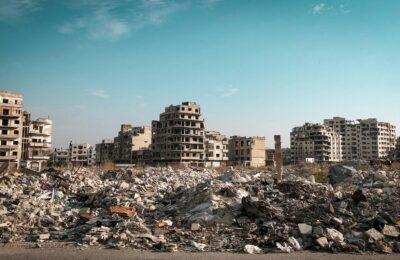
In Iraq and Syria, Easter 2026 carries a meaning that transcends religious observance — it is proof of survival itself. The Christian communities in both countries have suffered devastating losses over the past decade that constitute one of the greatest demographic shifts in modern Middle Eastern history:
- Iraq: The Christian population has plummeted from 1.5 million before 2003 to fewer than 200,000 today — an 87% decline. Cities like Mosul and Qaraqosh — Christian strongholds for centuries — were nearly emptied. Under ISIS occupation, churches were desecrated, converted to weapons depots, or demolished. But some families have returned. Churches have been rebuilt. And Easter 2026 is being celebrated in sanctuaries that were mere rubble just a few years ago.
- Syria: Aleppo, Damascus, and Homs — cities with ancient Christian heritage — still shelter small but resilient Christian communities. The Church of the Holy Belt (Um al-Zinnar) in Homs, partially destroyed during the war, has been restored and hosts Easter services again. The sound of hymns in churches that survived barrel bombs carries a weight that no written description can fully convey.
There is something deeply meaningful about holding an Easter service in a church rebuilt from rubble. It is a literal embodiment of “resurrection” — life emerging from death, hope from destruction. For these communities, Easter isn’t a metaphor. It’s their lived reality.
Jordan: Royal Protection and Ancient Heritage
The Jordan River: Where Christ Was Baptized
Jordan hosts one of Christianity’s most sacred sites — Bethany Beyond the Jordan (“Al-Maghtas”), believed to be where John the Baptist baptized Jesus. In Easter 2026, thousands of pilgrims visit the site despite regional tensions, and some wade into the Jordan River itself in a ritual that connects them directly to the Gospel narrative.
King Abdullah II — custodian of Islamic and Christian holy sites in Jerusalem under the 1994 peace treaty — consistently emphasizes the protection of Christian rights in the Holy Land. In 2026, the King issued a special Easter message calling for “guaranteeing Christians’ right to free access to their holy places in Jerusalem” — a pointed statement that carries diplomatic weight far beyond Jordan’s borders.
Jordanian Christians — approximately 4% of the population — celebrate Easter freely and openly. The city of Madaba (“City of Mosaics”), with its significant Christian population, hosts vibrant celebrations, and the famous Map Church holds a distinctive service. The Jordanian model demonstrates that small Christian minorities can thrive when the state actively protects their rights and celebrates their presence.
How War Has Changed Easter’s Meaning in 2026
From Ritual to Resistance
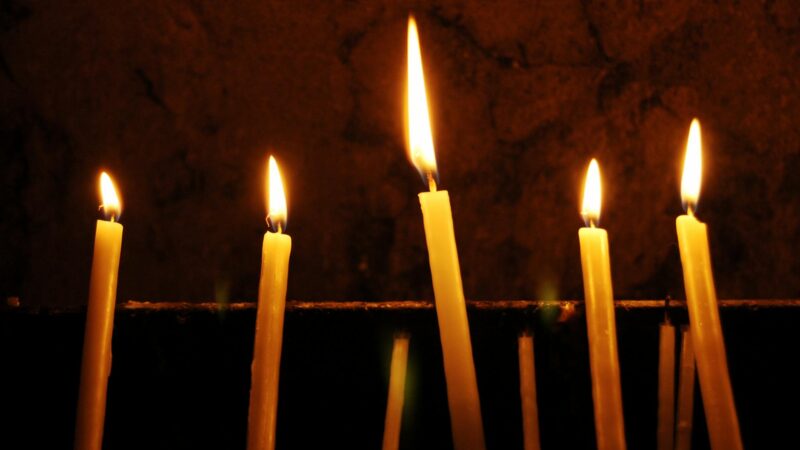
Across every country surveyed in this report, a common thread emerges: Easter 2026 has transformed from a religious ritual into an act of resistance. The celebration itself — lighting candles, chanting hymns, sharing bread, embracing family — has become an expression of insistence on life and hope amid death and destruction. Every lit candle is a small defiance against darkness. Every hymn is a refusal to be silenced.
Church leaders across the Middle East have unified their message this year around a single theme: peace. Pope Tawadros II in Egypt, Patriarch al-Rahi in Lebanon, the Greek Orthodox Patriarch in Jerusalem — all have called for a ceasefire and protection of civilians. The Financial Times noted that Middle Eastern church leaders have spoken with unusual coordination, suggesting behind-the-scenes diplomatic efforts to present a united Christian voice calling for de-escalation.
The Declining Numbers: An Existential Threat
Easter 2026 arrives against the backdrop of a deeply concerning trend: the continuous decline of Christian populations across the Middle East. The numbers speak starkly:
| Country | Christians (1900) | Christians (2026) | Current Percentage |
|---|---|---|---|
| Palestine | 11% | 1-2% | ~50,000 |
| Iraq | 5% | Under 1% | ~200,000 |
| Syria | 20% | 3-5% | ~500,000 |
| Lebanon | 80% | 30-35% | ~1.5 million |
| Egypt | ~10% | 10-15% | ~10-15 million |
| Jordan | ~6% | 4% | ~400,000 |
Egypt is the sole exception where Christians have maintained their approximate percentage — thanks to similar fertility rates to Muslims and government policies that actively support remaining. In every other country, emigration is draining the region of one of its oldest communities. If current trends continue, several countries may have no indigenous Christian communities within a generation — a loss of incalculable cultural and historical magnitude.
Israel Bars Access to Holy Sites: What’s Actually Happening
Restricting Religious Freedom
The most contentious issue in Easter 2026 is Israel’s decision to restrict Palestinian Christian access to Jerusalem. This isn’t new — but it has worsened dramatically this year:
- Gaza’s Christians (approximately 1,000 people) received fewer than 500 entry permits — the lowest number in recorded history
- West Bank Christians face prolonged checkpoint inspections lasting hours
- Some pilgrims arrived late and missed their Easter services entirely due to wait times
- Palestinian churches accused Israel of “attempting to empty Jerusalem of its Christians”
- Several prominent Christian clergy were denied entry or delayed at checkpoints
The Vatican issued a statement in March 2026 expressing “deep concern” about restrictions on access to Christian holy sites in Jerusalem. The statement called for “guaranteeing freedom of worship and unrestricted access to holy places for all Christians” — a position endorsed by numerous governments including France, Italy, Spain, and Ireland.
Under international law, freedom of access to holy sites is protected by multiple international agreements — including UN resolutions regarding Jerusalem’s status. The systematic restriction of this access raises serious questions about Israel’s compliance with its international obligations and the broader principle of religious freedom in the Holy Land.
Easter Traditions in the Middle East: Unparalleled Richness
Unique Traditions That Vary Country by Country
Easter in the Middle East features traditions found nowhere else in the world, reflecting two millennia of unbroken Christian presence in the land where Christianity was born:
Egypt: Sham el-Nessim the day after — fesikh (salted fish) and renga (smoked herring) and colored eggs in parks. Ka’ak el-Eid and ma’amoul (date-filled cookies). Family visits lasting a full week. The fast-breaking feast features dishes prepared only once a year.
Lebanon: Ma’amoul — pastries filled with walnuts or dates, made in every Lebanese Christian home using carved wooden molds passed down through generations. Good Friday processions in cities like Jounieh and Byblos reenact the Passion of Christ through the streets, with participants carrying a cross through the old town.
Palestine: Palm Sunday processions in Jerusalem where the faithful carry palm fronds through the Old City, retracing what they believe was Jesus’s triumphal entry. The Washing of the Feet ceremony on Holy Thursday at the Church of the Holy Sepulchre. The Way of the Cross procession along the Via Dolorosa every Good Friday — the actual path tradition holds Jesus walked to his crucifixion.
Jordan: Pilgrims visit Bethany Beyond the Jordan and wade into the river. Celebrations in Madaba and Salt feature an intimate, family-centered character with traditional foods and communal gatherings that feel unchanged across centuries.
Syria: In Maaloula — one of the last villages on Earth where residents still speak Aramaic (the language Jesus spoke) — the Easter liturgy is conducted in Aramaic, just as it has been for two thousand years. Hearing the resurrection proclaimed in Christ’s own language, in a village clinging to a cliff face where his earliest followers found refuge, is an experience of almost unbearable historical depth.
A Message of Hope: Why Easter 2026 Matters More Than Ever
At the end of this journey through the churches of the Middle East, one truth emerges clearly: the region’s Christians are not merely a dwindling minority — they are an essential part of the Middle East’s fabric, having contributed to its construction over two thousand years. From the Phoenician alphabet to the first universities to poetry, literature, and medicine, Eastern Christians have been at the heart of every chapter of the region’s history.
Easter 2026 — amid war, fear, and declining numbers — is a reminder that hope is not naivety. It is an act of will. Every candle lit in a church, every hymn chanted, every family gathered around a table, is a declaration that life is stronger than death — which is, at its core, not just a religious message but a universal human one.
To the Christians of the Middle East on Easter 2026: your presence matters. Your traditions enrich the region. Your resilience inspires the world. Christ is risen — and so, against all odds, are you.
Frequently Asked Questions
When is Easter 2026 in the Middle East?
Western Easter (Catholic and Protestant) falls on April 5, 2026. Eastern Orthodox and Coptic Easter falls on April 12, 2026. Most Middle Eastern Christians — including Egyptian Copts, Lebanese Orthodox, and Palestinian Orthodox — celebrate on the later date. Some communities celebrate both, with Catholic services on April 5 and Orthodox services on April 12.
Can Christians visit Jerusalem for Easter 2026?
Access has been severely restricted. Israeli authorities imposed strict permit requirements on Palestinian Christians, with fewer than 500 permits issued for Gaza Christians (down from 2,000-3,000 normally). International pilgrims can access the city but face heightened security screening. Church leaders and multiple governments have called for unrestricted access.
How are Coptic Christians celebrating Easter in Egypt in 2026?
Celebrations proceed with relative normalcy under enhanced security. The main liturgy takes place at the Cathedral of St. Mark in Abbasiya, Cairo, on Holy Saturday evening. The following day, all Egyptians — Muslim and Christian — celebrate Sham el-Nessim, a 4,500-year-old Pharaonic festival with fish, colored eggs, and family outings in parks.
Are Christians safe in the Middle East during Easter 2026?
Safety varies significantly by country. In Egypt, UAE, Jordan, and Oman, Christians celebrate openly with government-provided security. In Lebanon, the situation is tense but services continue. In Palestine, access restrictions and military activity make celebrations difficult. In Iraq and Syria, small but resilient communities mark Easter in partially rebuilt churches.
What is the Holy Fire ceremony in Jerusalem?
The Holy Fire ceremony occurs on Holy Saturday at the Church of the Holy Sepulchre. The Orthodox Patriarch enters the Edicule (Christ’s tomb) and emerges with a flame believed by the faithful to appear miraculously. The fire is passed to thousands of candles and then flown to Orthodox countries worldwide. In 2026, the ceremony proceeds under unprecedented security arrangements.
What is Sham el-Nessim and when is it celebrated?
Sham el-Nessim is an ancient Egyptian Pharaonic festival over 4,500 years old, celebrated the day after Coptic Easter. All Egyptians — Muslim and Christian — mark it by heading to parks and gardens to eat fesikh (salted fish), renga (smoked herring), and colored eggs. In 2026, it falls on April 13.
Last Updated: April 3, 2026