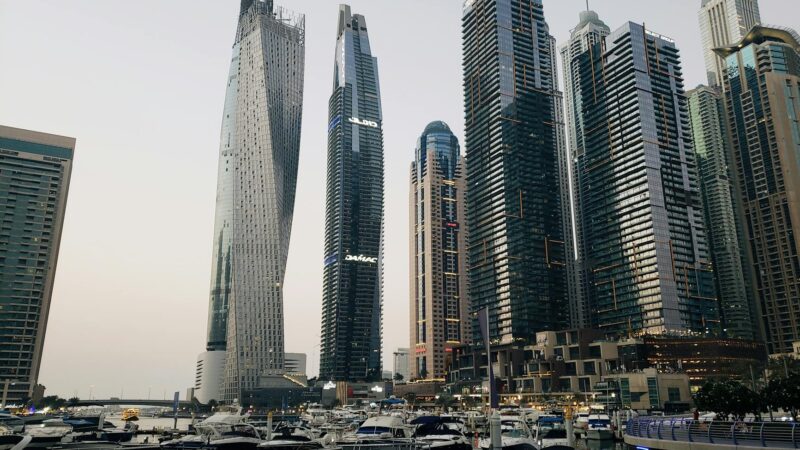
Dubai is home to roughly 3.6 million people, and around 85% of them were not born in the UAE. That statistic defines everything about the city — its energy, its contradictions, and its peculiar social fabric. People arrive from over 200 nationalities chasing tax-free salaries, year-round sun, and career acceleration. Some stay for decades. Many leave within two years.
This guide is the version of Dubai that recruitment brochures leave out. It covers the real costs, the cultural adjustments, the social dynamics, and the practical details that determine whether the experience works for you or wears you down.
Why People Move to Dubai
The pull factors are well-documented and genuinely powerful:

Tax-free income. The UAE has no personal income tax. For a professional earning $120,000 annually, this translates to roughly $25,000–$40,000 more in take-home pay compared to the US, UK, or Australia, depending on home-country rates.
Safety. The UAE consistently ranks among the safest countries globally. Violent crime is exceptionally rare. Women routinely walk alone at night without concern. Property crime exists but at far lower rates than most Western cities.
Career opportunities. Dubai functions as the commercial hub for the Middle East, Africa, and South Asia. Regional headquarters for multinationals, a booming startup ecosystem, and a government that actively courts foreign investment create opportunities that may not exist at home.
Lifestyle. World-class restaurants, beaches, desert adventures, malls that double as entertainment complexes, and a social scene that runs year-round (outside the summer heat). The infrastructure is modern, clean, and efficient.
Strategic location. Dubai sits within an 8-hour flight of two-thirds of the world’s population. For professionals with global clients or family spread across continents, the geography is unmatched.
The broader UAE economy underpins all of these advantages, and understanding its trajectory helps frame long-term career decisions.
The Visa System
Your legal status in Dubai is tied to your visa, which is tied to your employer (or your own company). Here are the main categories:
Employment Visa
The most common route. Your employer sponsors your residence visa, which is valid for 2–3 years and renewable. If you lose your job, you typically have 30–60 days to find a new sponsor or leave the country. Recent reforms have extended grace periods and introduced more flexibility, but employer-dependence remains the structural reality.
Golden Visa
A 10-year renewable residence visa for investors, entrepreneurs, specialized talent, scientists, outstanding students, and humanitarian pioneers. The UAE Golden Visa has been expanded significantly since its 2019 launch, with lower investment thresholds and broader qualification criteria. It decouples residency from employment — a significant advantage.
Freelancer Visa
Allows individuals to work independently without a traditional employer sponsor. Issued through various free zones and the Dubai Department of Economy and Tourism. Typically valid for 1–2 years. Costs range from AED 7,500 to AED 25,000 depending on the issuing authority and package.
Green Visa
A 5-year self-sponsored residence visa for skilled employees, freelancers, and investors. Provides more flexibility than traditional employment visas, including the ability to sponsor family members and longer grace periods if employment ends.
Cost of Living: The Real Numbers
Dubai is expensive, but the degree depends heavily on your choices. The following figures reflect 2025–2026 averages.
Rent by Area (Monthly, 1-Bedroom Apartment)
| Area | Monthly Rent (AED) | Monthly Rent (USD) | Profile |
|---|---|---|---|
| Dubai Marina | 8,000–12,000 | $2,180–$3,270 | Expat hub, walkable, nightlife |
| Downtown Dubai | 9,000–14,000 | $2,450–$3,810 | Luxury, Burj Khalifa views |
| JBR (Jumeirah Beach Residence) | 8,500–13,000 | $2,310–$3,540 | Beachfront, tourist-heavy |
| Business Bay | 6,500–10,000 | $1,770–$2,720 | Central, newer buildings |
| JLT (Jumeirah Lake Towers) | 5,500–8,500 | $1,500–$2,310 | Affordable alternative to Marina |
| Al Barsha | 4,500–7,000 | $1,225–$1,905 | Mid-range, near Mall of Emirates |
| Dubai Silicon Oasis | 3,500–5,500 | $950–$1,500 | Budget-friendly, suburban |
| International City | 2,500–4,000 | $680–$1,090 | Most affordable, far from center |
Rent is typically paid in 1–4 post-dated checks per year. Landlords increasingly accept monthly payments, but quarterly or annual payments often secure lower rates. A 5% housing fee to the municipality (DEWA) is charged on the annual rental value.
Average Monthly Costs (Single Professional)
| Expense | Monthly Cost (AED) | Monthly Cost (USD) |
|---|---|---|
| Rent (1-bed, mid-range area) | 7,000 | $1,905 |
| DEWA (utilities) | 500–800 | $135–$220 |
| Groceries | 1,500–2,500 | $410–$680 |
| Dining out (moderate) | 2,000–3,500 | $545–$950 |
| Transport (car payment + fuel + insurance) | 2,500–4,000 | $680–$1,090 |
| Transport (metro + taxi alternative) | 500–1,000 | $135–$270 |
| Mobile phone | 200–400 | $55–$110 |
| Internet (home) | 350–500 | $95–$135 |
| Health insurance (employer-provided) | 0 | $0 |
| Health insurance (self-purchased, basic) | 500–1,500 | $135–$410 |
| Gym membership | 250–500 | $70–$135 |
| Total (car, moderate lifestyle) | 14,800–19,700 | $4,030–$5,365 |
| Total (public transport, budget) | 10,800–14,200 | $2,940–$3,870 |
For a detailed breakdown, see our cost of living in Dubai guide.
Schooling
International school fees are one of the biggest financial shocks for families. The range is significant:
| School Tier | Annual Fees (AED) | Annual Fees (USD) |
|---|---|---|
| Budget international schools | 15,000–30,000 | $4,100–$8,200 |
| Mid-range international schools | 35,000–65,000 | $9,500–$17,700 |
| Premium international schools (GEMS, Taaleem) | 70,000–100,000 | $19,050–$27,200 |
| Top-tier (British/American curriculum, IB) | 100,000–150,000 | $27,200–$40,800 |
Most employers with family packages include school fee allowances, but rarely enough to cover top-tier institutions. Waitlists for popular schools can exceed a year.
Healthcare
Health insurance is mandatory for all Dubai residents. Employers must provide coverage for employees. Quality of care is generally high, with modern facilities and internationally trained doctors.
- Employer-provided insurance: Standard; covers basics, sometimes with co-pays of 10–20%
- Enhanced plans: $3,000–$8,000/year for comprehensive coverage with lower co-pays and broader hospital networks
- Out-of-pocket costs without insurance: A GP visit runs AED 200–500; specialist consultations AED 500–1,500; a hospital stay can cost AED 5,000+ per day
Social Life: The Revolving Door
The social dynamics of Dubai are unlike anywhere else. The city’s transient nature — people arriving and leaving constantly — creates a phenomenon expats call the “revolving door.”
You will make friends quickly. Dubai’s expat community is exceptionally open precisely because everyone is new, everyone is looking for connection, and nobody has childhood friends around the corner. Brunches are the social currency. Friday brunch (an hours-long, all-you-can-eat-and-drink affair at a hotel restaurant, typically AED 300–600 per person) is a ritual that bonds colleagues, neighbors, and strangers.
The flip side: people leave. Contracts end, visas expire, partners get relocated. The friend you met in January may announce their departure by June. Building a lasting social circle takes effort and tolerance for loss. Long-term expats consistently cite this as the most emotionally taxing aspect of Dubai life.
Clubs and communities help. Running groups, book clubs, nationality-based associations, professional networks, and religious congregations all provide social infrastructure. Dubai’s 200+ nationalities mean you can find a community from almost anywhere.
Work Culture
Dubai’s work culture varies dramatically by industry and company origin, but some patterns hold:
- Long hours are common. A 9-to-6 is the minimum; many professionals work 10–12 hour days, especially in finance, consulting, real estate, and construction
- Hierarchy matters. Decision-making tends to be top-down, particularly in government-linked and family-owned businesses. Titles carry weight
- Relationships drive business. Face-to-face meetings, personal connections, and trust-building are more important than in many Western work environments
- The work week runs Sunday to Thursday in government and many traditional sectors, though Monday to Friday is increasingly common in multinationals and free zone companies
- Ramadan reshapes the workday. Official working hours are reduced by two hours during the holy month. Business pace slows, meetings shift, and the rhythm of the city changes
Hidden Challenges: What the Brochures Skip
The Heat
From June through September, temperatures exceed 40°C (104°F) with humidity that can reach 90%. Outdoor activity becomes genuinely dangerous. The city moves indoors — connected by air-conditioned malls, cars, and metro. If you love hiking, cycling, or outdoor socializing, five months of the year will test you.
The Transient Community
As noted, people leave. Building roots is difficult when the population is in constant flux. This is particularly hard for trailing spouses who do not have the built-in social structure of a workplace.
Limited Rights
UAE labor law has improved significantly, but structural limitations remain. Work visa dependency means losing a job creates immediate legal pressure. Union organizing is not permitted. LGBTQ+ relationships are criminalized. Public criticism of the government or ruling families can have legal consequences. Freedom of speech, while generally respected in private settings, has boundaries that differ sharply from Western norms.
No Social Safety Net
There is no unemployment insurance, no public pension for expats, and no welfare system. If your employment ends, you are responsible for your own survival. End-of-service gratuity (roughly 21 days of basic salary per year for the first five years, 30 days per year thereafter) is the only mandated financial cushion.
The Comparison Trap
Dubai’s culture of visible wealth — supercars, designer brands, luxury brunches — can create financial and psychological pressure to overspend. Living within your means requires conscious effort in a city designed to make you spend.
Best Areas to Live
Choosing a neighborhood depends on your budget, lifestyle, and whether you have a family.
For singles and young professionals: Dubai Marina, JBR, and Business Bay offer walkability, nightlife, and social energy. JLT provides a cheaper alternative with similar access.
For families: Arabian Ranches, Jumeirah, Mirdif, and Dubai Hills Estate offer villas, green spaces, proximity to schools, and quieter environments. Al Barsha and Motor City are mid-range family options.
For budget-conscious expats: Dubai Silicon Oasis, International City, and Discovery Gardens offer the lowest rents but require longer commutes and fewer walkable amenities.
For entrepreneurs and freelancers: Business Bay and DIFC (Dubai International Financial Centre) put you near the commercial center. JLT and Barsha Heights offer proximity at lower cost.
For those considering the capital instead, our Dubai vs Abu Dhabi comparison breaks down the differences.
Cultural Adjustment
Alcohol
Alcohol is legal in licensed venues (hotels, bars, restaurants) and can be purchased for home consumption from licensed retailers. Public intoxication is illegal and enforced. During Ramadan, alcohol is served in hotels but typically behind screens and with reduced hours. The UAE loosened alcohol regulations in recent years, removing the requirement for a personal liquor license in some emirates.
Dress Code
Dubai is more liberal than other Gulf cities, but modesty in public spaces is expected. Beachwear is fine at the beach and pool. In malls, offices, and restaurants, shoulders and knees should generally be covered. During Ramadan, more conservative dress is expected in public.
Ramadan
The holy month (dates shift annually based on the lunar calendar) transforms daily life. Eating, drinking, and smoking in public during daylight hours is prohibited, even for non-Muslims. Working hours shorten. Evenings come alive with iftar gatherings and night markets. Most expats find Ramadan to be a meaningful cultural experience once they adjust to the rhythm.
Language
English is the de facto business and social language. Arabic is the official language and appears on all government documents, but daily life is entirely navigable without it. Learning basic Arabic phrases earns significant goodwill.
Driving and Commuting
Driving is the dominant mode of transport. A UAE driving license is obtainable by exchanging a license from select countries (US, UK, EU, Australia, Canada, and others) or by taking lessons and a test. Traffic is heavy during peak hours, particularly on Sheikh Zayed Road.
The Dubai Metro is modern, clean, and covers major commercial and residential corridors. It is efficient for commuters along its two lines but does not reach all residential areas. A car remains necessary for most residents.
Taxis and ride-hailing (Uber, Careem) are affordable and widely available.
For those considering life in the broader Middle East, Dubai’s infrastructure is among the most developed in the region.
Diversity: 200+ Nationalities
Dubai’s population breakdown roughly reflects:
| Nationality/Region | Approximate Share |
|---|---|
| South Asian (India, Pakistan, Bangladesh, Sri Lanka) | ~55–60% |
| Southeast Asian (Philippines, Indonesia) | ~10–15% |
| Arab (non-UAE, including Egyptian, Lebanese, Jordanian, Syrian) | ~10–12% |
| Western (European, American, Australian) | ~5–8% |
| Emirati (UAE nationals) | ~10–12% |
| African and other | ~5–7% |
This diversity means your daily interactions cross cultures constantly. Your taxi driver, doctor, colleague, and landlord may each be from a different continent. It creates a uniquely cosmopolitan environment, but also one with significant economic stratification between communities.
Frequently Asked Questions
How much money do you need to live comfortably in Dubai?
A single professional needs approximately AED 15,000–20,000 ($4,100–$5,450) per month for a moderate lifestyle including rent, food, transport, and social activities. A family of four should budget AED 30,000–45,000 ($8,200–$12,250) monthly, with schooling as the largest variable cost. Comfortable means different things to different people — Dubai can be done on less, but quality of life scales directly with income.
Is it easy to make friends in Dubai as an expat?
Yes, initially. Dubai’s transient population means people are open, social, and actively seeking connections. Brunches, meetups, sports clubs, and professional events make it easy to meet people. The challenge is keeping friends — the revolving door means your social circle requires constant rebuilding as people relocate.
What are the biggest downsides of living in Dubai?
The most commonly cited challenges are the extreme summer heat (5+ months of 40°C+), the transient nature of the community, the cost of living (particularly rent and schooling), limited employee rights compared to Western countries, and the absence of a social safety net. Cultural restrictions around speech, relationships, and public behavior also require adjustment.
Do you need a car in Dubai?
For most residents, yes. While the metro covers major commercial areas and ride-hailing is affordable, Dubai’s sprawling layout means a car provides essential flexibility, especially for families. Exceptions include residents of walkable areas like Dubai Marina or Downtown who work along the metro line.
Is Dubai safe for expats?
Dubai is one of the safest cities globally for residents. Violent crime is extremely rare, petty theft is uncommon, and public spaces are well-policed. The primary safety concerns are aggressive driving (Dubai has a high road accident rate) and the legal risks of behaviors that are legal in Western countries but restricted in the UAE (public intoxication, certain personal relationships, social media criticism of the state).
Key Takeaways
- Dubai’s population is ~85% expatriate, drawn from over 200 nationalities, making it one of the most diverse cities on earth
- Tax-free income is the primary financial draw, adding 20–35% to effective take-home pay compared to most Western countries
- Rent is the largest expense, ranging from AED 2,500/month (budget areas) to AED 14,000+ (premium neighborhoods) for a 1-bedroom apartment
- International school fees run $10,000–$40,000+ annually, making education a critical budget line for families
- The revolving door effect — constant arrivals and departures — defines social life and makes long-term friendships challenging
- Work culture trends toward long hours, hierarchical structures, and relationship-driven business
- Summer heat (June–September, 40°C+ with high humidity) forces life indoors for nearly half the year
- Health insurance is mandatory, and employer-provided coverage is standard
- Visa dependency on employment remains a structural reality, though Golden Visa and Green Visa options now offer alternatives
- There is no social safety net for expats — no unemployment insurance, public pension, or welfare system
This article is part of The Middle East Insider’s living abroad coverage. For related reading, see our guides to life in the Middle East, cost of living in Dubai, the UAE Golden Visa, the UAE economy, and our Dubai vs Abu Dhabi comparison.