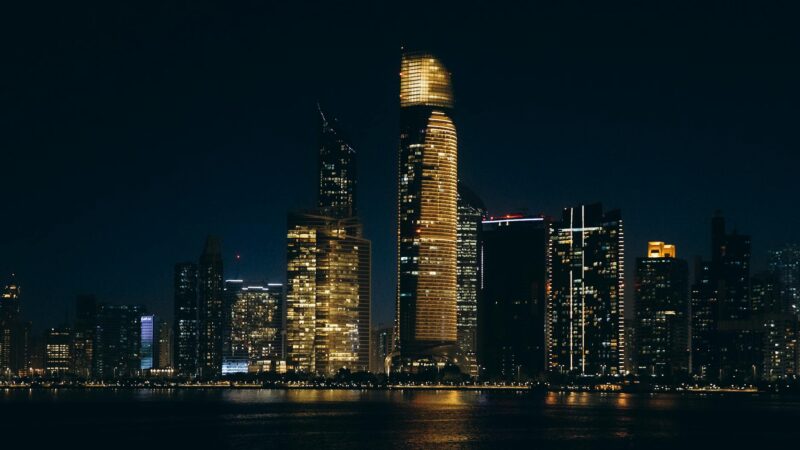
Dubai and Abu Dhabi are 130 kilometers apart, share a federal government, and could not feel more different. Dubai is the flashy commercial hub that dominates headlines. Abu Dhabi is the oil-rich capital that quietly holds the real power — and most of the money.
Choosing between them is not about which city is “better.” It is about which city fits your priorities: career path, family situation, lifestyle preferences, and financial goals. This comparison lays out the data across every dimension that matters.
The Fundamentals
Dubai has positioned itself as a diversified global business center. Tourism, trade, real estate, finance, logistics, and technology drive its economy. Abu Dhabi, home to roughly 6% of the world’s proven oil reserves, leverages that resource wealth to build sovereign funds, cultural institutions, and a more measured pace of development.

| Factor | Dubai | Abu Dhabi |
|---|---|---|
| Population | ~3.6 million | ~1.6 million |
| GDP contribution to UAE | ~30% | ~55–60% |
| Primary economic driver | Diversified (trade, tourism, finance, real estate) | Oil & gas, sovereign wealth, government |
| International reputation | Global city brand, tourism powerhouse | Political capital, cultural ambitions |
| Ruler | Sheikh Mohammed bin Rashid Al Maktoum | Sheikh Mohamed bin Zayed Al Nahyan (also UAE President) |
Understanding the broader UAE economy provides context for how these two cities complement each other within the federation.
Cost of Living: Abu Dhabi Is Cheaper
Abu Dhabi is consistently 20–30% more affordable than Dubai, primarily because of lower rents. The difference narrows for groceries and dining, but housing savings are significant.
| Expense | Dubai (AED/month) | Abu Dhabi (AED/month) | Difference |
|---|---|---|---|
| 1-bed apartment (city center) | 8,000–12,000 | 5,500–8,500 | Abu Dhabi ~25–30% cheaper |
| 1-bed apartment (outside center) | 4,500–7,000 | 3,500–5,500 | Abu Dhabi ~20–25% cheaper |
| 3-bed apartment (city center) | 14,000–22,000 | 10,000–16,000 | Abu Dhabi ~25–30% cheaper |
| Groceries (single person) | 1,500–2,500 | 1,400–2,300 | Roughly similar |
| Dining out (mid-range, 2 people) | 250–400 | 220–350 | Abu Dhabi ~10–15% cheaper |
| Monthly transport (car + fuel) | 2,500–4,000 | 2,000–3,500 | Abu Dhabi ~15% cheaper |
| International school (annual) | 35,000–100,000+ | 30,000–85,000+ | Abu Dhabi ~10–15% cheaper |
| Gym membership | 250–500 | 200–400 | Abu Dhabi ~15% cheaper |
For a full breakdown of Dubai costs, see our cost of living in Dubai guide.
Salaries: Abu Dhabi Often Pays More
This surprises many newcomers. For equivalent roles, Abu Dhabi salaries frequently exceed Dubai’s by 10–20%, particularly in government, oil and gas, finance, and engineering. The reason is straightforward — Abu Dhabi’s government and oil sector employers compete for talent against Dubai’s lifestyle appeal, so they offer higher compensation to offset the perception of a quieter city.
| Sector | Dubai Salary Range (AED/month) | Abu Dhabi Salary Range (AED/month) |
|---|---|---|
| Finance (mid-level) | 18,000–30,000 | 20,000–35,000 |
| Engineering (mid-level) | 15,000–25,000 | 18,000–30,000 |
| Marketing/Communications | 12,000–22,000 | 13,000–23,000 |
| IT/Technology | 15,000–28,000 | 16,000–30,000 |
| Teaching (international school) | 10,000–18,000 | 11,000–20,000 |
| Healthcare (doctor) | 30,000–60,000 | 35,000–70,000 |
Combining higher salaries with lower living costs means Abu Dhabi often delivers better savings potential. A mid-career professional in Abu Dhabi can realistically save 10–20% more of their gross income compared to an equivalent position in Dubai.
Lifestyle: Flash vs. Substance
Dubai
Dubai’s lifestyle is designed around spectacle. The tallest building, the biggest mall, the most extravagant brunch. The social calendar runs year-round with concerts, sporting events, art fairs, and restaurant openings. Nightlife is extensive, with bars and clubs operating until 2–3 AM across major hotel and entertainment districts.
The pace is fast. The city rewards those who want to be out, be seen, and be busy. It attracts a younger, single-skewing demographic — though families with larger budgets also thrive.
Abu Dhabi
Abu Dhabi is quieter, greener, and more deliberately paced. The Corniche — an 8-kilometer waterfront promenade — defines the city’s character better than any skyscraper. Parks, beaches, and low-rise neighborhoods give it a more residential feel. Cultural institutions like the Louvre Abu Dhabi (the first Louvre outside France) and the forthcoming Guggenheim Abu Dhabi signal a focus on substance over spectacle.
Nightlife exists but is more limited. Dining is excellent but less trend-driven. The social scene revolves more around family, community, and outdoor activities (particularly from October through April when temperatures are pleasant).
For a deeper look at Dubai specifically, see our expat life in Dubai guide.
Job Market
Dubai
Dubai’s job market is broader and more diversified. Key sectors include:
- Financial services and fintech
- Tourism and hospitality
- Real estate and construction
- Technology and startups
- Media and marketing
- Trade and logistics
- Retail and e-commerce
The free zone ecosystem is more developed, with DIFC, DMCC, Dubai Internet City, Dubai Media City, and dozens of others offering sector-specific clusters. Startups, SMEs, and multinational regional offices concentrate here.
Abu Dhabi
Abu Dhabi’s job market is more concentrated but often more stable:
- Oil and gas (ADNOC and its subsidiaries)
- Government and public sector
- Defense and aerospace (Tawazun, EDGE Group)
- Finance and banking (ADGM as the financial center)
- Healthcare
- Education and research (NYU Abu Dhabi, Sorbonne, Khalifa University)
- Sovereign wealth (ADIA, Mubadala, ADQ)
Government-linked employment in Abu Dhabi tends to offer higher job security, more structured benefits, and more predictable hours than the private sector hustle of Dubai.
Culture and Attractions
| Category | Dubai | Abu Dhabi |
|---|---|---|
| Landmark museums | Dubai Museum, Museum of the Future | Louvre Abu Dhabi, Qasr Al Hosn |
| Performing arts | Dubai Opera, various hotel venues | Emirates Palace concerts, cultural events |
| Sports | Dubai World Cup (horse racing), Dubai Tennis, Rugby 7s | Abu Dhabi Grand Prix (F1), UFC Fight Island |
| Theme parks | IMG Worlds, Motiongate, Legoland (nearby) | Ferrari World, Yas Waterworld, SeaWorld |
| Religious sites | Jumeirah Mosque | Sheikh Zayed Grand Mosque (iconic) |
| Natural attractions | Desert safaris, Hatta mountains | Mangrove kayaking, Sir Bani Yas Island |
| Art scene | Alserkal Avenue, Art Dubai | Louvre, Manarat Al Saadiyat, Cultural District |
Abu Dhabi’s investment in Saadiyat Island as a cultural district — with the Louvre already open and the Guggenheim and Zayed National Museum under development — positions it as the UAE’s cultural capital. Dubai’s arts scene is more grassroots and commercial.
Families, Singles, Entrepreneurs, and Retirees
Best for Families
Abu Dhabi wins. Lower costs (especially rent and schooling), safer driving conditions, more parks and open spaces, a calmer pace, and higher salaries create a compelling package for families. Schools are slightly less competitive to get into. The community is more settled and less transient.
Dubai works well for families with larger budgets who value variety and activity, but the cost premium is real.
Best for Singles and Young Professionals
Dubai wins. The nightlife, social density, dating scene, and career breadth are significantly greater. The transient population means constant new arrivals and social openness. Dubai Marina, JBR, and Business Bay offer walkable, socially active neighborhoods.
Abu Dhabi’s social scene for singles is growing — particularly around Saadiyat and Yas Island — but remains a fraction of Dubai’s.
Best for Entrepreneurs
Dubai wins, but it depends on the sector. Dubai’s free zone infrastructure, larger market size, networking density, and brand recognition make it the default choice for startups and SMEs. DIFC and DMCC are globally recognized.
Abu Dhabi is better for entrepreneurs in energy, defense, deep tech, or ventures that benefit from government partnerships. ADGM (Abu Dhabi Global Market) is a strong financial free zone with growing appeal.
Best for Retirees
Abu Dhabi wins. Lower costs, quieter environment, excellent healthcare, and a more relaxed pace suit retirees. The UAE’s retirement visa (available for those over 55 with adequate savings, property, or income) works in both cities, but Abu Dhabi’s cost advantage stretches retirement savings further.
Safety and Traffic
Both cities are exceptionally safe by global standards. Abu Dhabi’s roads are generally less congested and driving behavior is somewhat calmer than Dubai’s notoriously aggressive highway traffic. Dubai’s Sheikh Zayed Road during rush hour is an endurance test. Abu Dhabi’s commutes are shorter and less stressful.
Speed cameras are pervasive in both cities. Abu Dhabi’s camera network is among the densest in the world, which effectively enforces speed limits.
Weather
Both cities share the same climate: hot and humid summers, mild and pleasant winters. However, Abu Dhabi tends to be 1–3°C hotter than Dubai during peak summer months and has slightly higher humidity due to its flatter, lower-lying geography. Both cities are effectively unlivable outdoors from June through September.
The comfortable season (October through April) is when both cities come alive outdoors, with temperatures between 18°C and 30°C.
Beaches
Both cities have excellent beaches. Dubai’s JBR, Kite Beach, and La Mer are more developed and commercialized. Abu Dhabi’s Saadiyat Beach, Corniche Beach, and Yas Beach are cleaner, less crowded, and more natural. For pure beach quality, Abu Dhabi has the edge.
Healthcare
Both cities offer high-quality healthcare. Abu Dhabi was the first emirate to mandate health insurance (2006), and its Cleveland Clinic Abu Dhabi is one of the region’s premier facilities. Dubai’s healthcare infrastructure is broader, with more hospitals and specialist clinics, but quality is comparable. Both cities attract internationally trained medical professionals.
The Big Comparison Table
| Factor | Dubai | Abu Dhabi | Winner |
|---|---|---|---|
| Cost of living | Higher | 20–30% lower | Abu Dhabi |
| Salaries | Competitive | Often 10–20% higher | Abu Dhabi |
| Savings potential | Good | Better | Abu Dhabi |
| Job market breadth | Broader, more diverse | Concentrated, more stable | Dubai (breadth), Abu Dhabi (stability) |
| Nightlife | Extensive | Limited | Dubai |
| Family-friendliness | Good (at cost) | Excellent | Abu Dhabi |
| Culture & arts | Growing | Louvre, grand plans | Abu Dhabi |
| Beaches | Developed, busy | Cleaner, quieter | Abu Dhabi |
| Traffic | Heavy, aggressive | Moderate, calmer | Abu Dhabi |
| International schools | More options | Fewer, cheaper | Tie |
| Free zones | More, more diverse | Fewer, specialized | Dubai |
| Social scene | Vibrant, large | Quieter, growing | Dubai |
| Tourism appeal | Global destination | Emerging | Dubai |
| Summer heat | Very hot | Slightly hotter | Dubai (marginally) |
| Safety | Very safe | Very safe | Tie |
| Healthcare | Excellent | Excellent | Tie |
Frequently Asked Questions
Is Abu Dhabi really cheaper than Dubai?
Yes. Rent is 20–30% lower for comparable properties, schooling is 10–15% cheaper, and everyday expenses like dining and transport are modestly less expensive. Combined with often-higher salaries, Abu Dhabi delivers significantly better savings potential for most professionals.
Can you live in Abu Dhabi and work in Dubai (or vice versa)?
Yes, many people commute between the two cities. The drive is approximately 1.5 hours via the E11 highway, though traffic adds variability. A high-speed rail link has been discussed for years but remains in planning stages. Some professionals accept Abu Dhabi’s lower rent and commute to Dubai, though the daily round trip is taxing.
Which city is better for career growth?
It depends on your field. Dubai offers more opportunities in technology, media, hospitality, real estate, and startups. Abu Dhabi is stronger for oil and gas, government, defense, finance, and academia. For corporate ladder climbers in multinationals, Dubai’s broader market provides more options; for those seeking stable, well-compensated government-sector roles, Abu Dhabi is the clear choice.
Is Abu Dhabi boring compared to Dubai?
This is a common perception but increasingly inaccurate. Abu Dhabi has the Louvre, Formula 1, Ferrari World, a growing food scene, and beautiful beaches. It lacks Dubai’s volume of nightlife and constant novelty, but residents who prefer quality over quantity often find it more satisfying long-term. The “boring” label typically comes from people who equate nightlife density with quality of life.
Which city is safer?
Both are among the safest cities in the world. Crime rates are extremely low in both. Abu Dhabi edges ahead slightly in road safety due to less traffic congestion and aggressive driving. For practical purposes, both cities offer exceptional personal safety for residents and visitors.
Key Takeaways
- Abu Dhabi is 20–30% cheaper than Dubai for rent and offers 10–20% higher salaries for comparable roles
- Dubai has a broader, more diverse job market; Abu Dhabi offers more stable, government-linked employment
- Dubai is the better choice for singles, young professionals, and entrepreneurs seeking energy, variety, and networking
- Abu Dhabi is the better choice for families and retirees seeking lower costs, calmer pace, and higher savings
- Both cities are exceptionally safe with excellent healthcare and modern infrastructure
- Abu Dhabi is emerging as the UAE’s cultural capital with the Louvre and planned Guggenheim
- Dubai remains the UAE’s commercial and tourism hub with stronger global brand recognition
- The two cities are complementary, not competitive — many UAE residents experience both over the course of their stay
- Commuting between them is possible (1.5 hours by car) but not sustainable as a daily routine for most people
- For pure financial optimization, Abu Dhabi wins; for lifestyle and career breadth, Dubai wins
This article is part of The Middle East Insider’s living abroad coverage. For related reading, see our guides to life in the Middle East, the UAE economy, expat life in Dubai, cost of living in Dubai, and UAE free zones.