In the third week of March 2026, as Brent crude climbed past $110 and US carrier strike groups maneuvered through the Arabian Sea, Donald Trump raised a possibility that rattled oil markets and alarmed US allies simultaneously: seizing Kharg Island, Iran’s primary crude oil export terminal. “We could take Kharg and end their oil revenue overnight,” Trump said in remarks to reporters, according to pool reports from the White House press corps.
The statement was not policy. It may not even have been a considered option. But it forced a question that deserves a precise answer: what is Kharg Island, what would seizing it actually accomplish, and what happens to global oil markets — and US consumers — if it goes offline?
Key Takeaways
- 90% of Iran’s crude exports flow through Kharg — approximately 2.5 million barrels per day, generating an estimated $105 billion annually at $115/barrel Brent
- Strategically located — 25 km off Iran’s southwestern coast in the northern Persian Gulf, within range of Iranian shore-based anti-ship missiles, artillery, and drone systems
- T-shaped jetty infrastructure — can load up to 5 million barrels per day across multiple berths; currently operating at roughly half capacity due to sanctions constraints on buyers
- Military seizure would be extraordinarily costly — Kharg is defended by Revolutionary Guard naval and coastal defense units; any assault would require amphibious forces, sustained air superiority, and a plan for running the facility under fire
- Economic seizure could be more effective — a naval blockade preventing tankers from loading, rather than physical occupation, could achieve oil revenue denial with lower military risk
What Exactly Is Kharg Island?
Kharg Island (Persian: جزیره خارک, Jazireh-ye Khārk) is a small island approximately 25 kilometers off Iran’s southwestern coast in the northern Persian Gulf, near the port city of Bandar Imam Khomeini. The island is roughly 8 kilometers long and 4 kilometers wide — a T-shaped landmass that has been, for six decades, the central node of Iran’s oil export infrastructure.
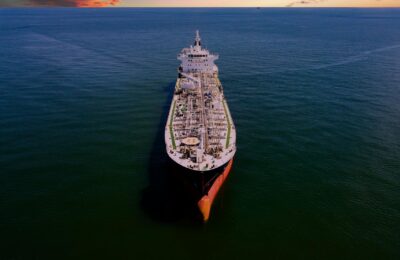
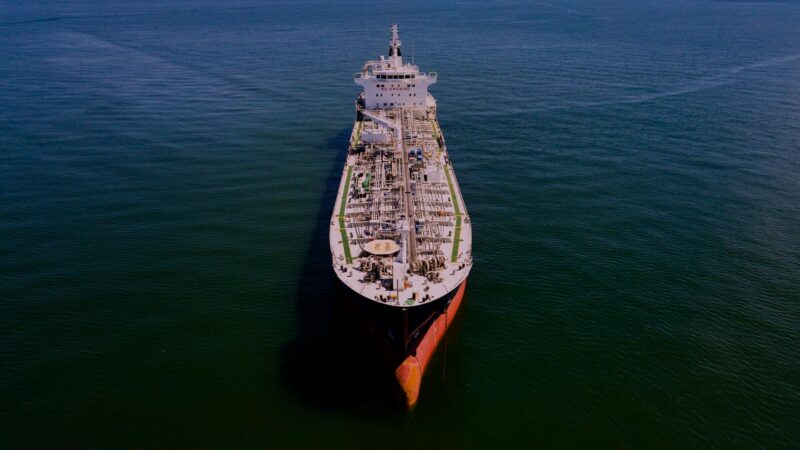
The island’s strategic importance is entirely a product of geography and engineering. In the 1950s and 1960s, as Iran expanded oil production under the National Iranian Oil Company (NIOC), Kharg was selected as the offshore loading terminal because its deep-water berths could accommodate supertankers that could not enter Iran’s shallow coastal ports. The T-shaped jetty system — the most distinctive physical feature of the island — can simultaneously berth multiple Very Large Crude Carriers (VLCCs), each capable of carrying 2 million barrels, for loading directly from onshore pipeline feeds.
Iran currently exports approximately 2.5 million barrels per day of crude oil, according to tanker tracking data compiled by Kpler and Vortexa. At current Brent prices of $115, that is $287.5 million per day or approximately $105 billion annually in gross export revenue. Virtually all of it flows through Kharg. The island also exports some condensate and processed products through separate facilities.
Who Buys Iran’s Oil and Who Benefits?
Iran’s primary crude export customers in 2026 are China (~1.7 million bpd), India (~400,000 bpd), and a collection of smaller buyers including Syria, Venezuela, and several Asian refiners who purchase through intermediary companies to avoid direct sanctions exposure. China accounts for approximately 68% of Iranian crude exports — a concentration that gives Beijing significant leverage over Tehran’s foreign exchange earnings and, by extension, its war-fighting capacity.
The proceeds from Iranian oil sales — primarily settled in Chinese yuan and Indian rupees rather than dollars — fund the Islamic Revolutionary Guard Corps (IRGC), Iran’s conventional military, missile development, and proxy networks across Lebanon, Yemen, Iraq, and Syria. The Houthi forces active in March 2026 are substantially funded through this revenue chain.
For the Trump administration, cutting that revenue chain is the core logic of the Kharg Island option. The argument: if you can deny Iran $105 billion per year in oil revenue, you can constrain its capacity to fight a sustained multi-front war.
What Is Kharg Island’s History During Previous Conflicts?
Kharg has been a military target before — and the historical record is instructive. During the 1980-1988 Iran-Iraq War, Saddam Hussein’s air force conducted repeated strikes on Kharg as part of the “Tanker War” strategy. Iraqi aircraft targeted the island’s loading infrastructure in 1985 and again in 1986-1988, attempting to reduce Iran’s oil export capacity and cut its war financing.
The results were sobering. Iraq’s best military technology of the era — Exocet missiles, French-supplied Super Étendard aircraft — damaged Kharg repeatedly and reduced its export capacity, but could never shut it down entirely. Iran repaired infrastructure rapidly, rerouted oil through secondary terminals at Sirri Island and Larak Island in the lower Gulf, and continued exporting throughout the war. At the conflict’s end, Kharg was still operational.
The lesson military planners draw from the Tanker War: Kharg is more resilient than it appears. The infrastructure can be damaged but is difficult to destroy comprehensively. Iran has also had 35 years since 1988 to harden the island’s defenses and develop alternative export pathways.
What Would a US Military Seizure of Kharg Island Actually Require?
This is where Trump’s casual suggestion collides with operational reality. Seizing and holding Kharg Island is not a Special Forces raid or an airstrike — it is an amphibious assault against a hardened military position, followed by an open-ended occupation of industrial infrastructure located inside Iranian territorial waters, 25 kilometers from the Iranian mainland.
The defensive picture: Kharg is protected by IRGC naval forces, coastal defense missile batteries (including Chinese-supplied C-802 and domestically produced Noor anti-ship missiles), coastal artillery, air defense systems, and a garrison of IRGC ground troops. The island is within range of shore-based drone and helicopter attack from the Iranian mainland in under five minutes.
The assault requirement: Seizing the island would require amphibious landing forces (the US has no assault-ready Marine Expeditionary Brigade currently in theater), sustained air superiority over the island and surrounding waters, suppression of mainland coastal defense systems across a 40-kilometer coastal arc, and a plan for operating the loading infrastructure under ongoing threat — presumably with US Navy personnel running an Iranian oil terminal while under fire.
Military planners at CENTCOM, speaking anonymously to Reuters, described the Kharg seizure option as “operationally feasible but strategically inadvisable” — achievable with sufficient force commitment but likely to trigger Iranian responses (Strait mining, mass missile salvos, proxy attacks on Gulf states) that would impose far larger costs than the revenue denial benefit.
What the Kharg Threat Means for US Investors
Every mention of Kharg by US officials adds a risk premium to oil prices — even if no action follows. The market logic: if Kharg’s 2.5 million bpd goes offline (whether via seizure, strike, or Iranian self-destruction to deny US control), global oil loses the equivalent of roughly 2.5% of world supply instantly, with no replacement available within 90 days. Goldman Sachs analysts estimated that a Kharg shutdown scenario would push Brent to $145-165 per barrel within two weeks. For US investors, this means oil exposure (XLE, CVX, XOM) is asymmetrically positioned — limited downside at current prices, significant upside in a Kharg escalation scenario. Oil at $112 is already the highest since 2014 — the Kharg premium is additive to that base.
The Naval Blockade Alternative: More Effective, Less Violent
Several senior US military officials and think tank analysts have argued that a naval blockade of Kharg — preventing tankers from loading rather than seizing the island — is a more achievable and potentially more effective option.
A blockade would position US naval vessels to intercept or turn away tankers approaching Kharg’s berths, effectively denying Iran the ability to export without the political and military costs of amphibious assault. The legal basis would be disputed — Iran would characterize it as an act of war under international maritime law — but the operational execution would be far simpler than physical seizure.
The complication: China’s 1.7 million barrels per day exposure means a Kharg blockade is effectively a direct confrontation with Chinese commercial interests. Beijing has made clear through diplomatic channels that interdiction of Chinese-flagged or Chinese-contracted tankers would constitute an escalation requiring response. The Hormuz shipping disruption already created insurance and transit crises — a Kharg blockade would compound them severely.
What Happens to Global Oil Supply If Kharg Goes Offline?
The global oil market in March 2026 has a limited ability to absorb a Kharg supply shock. OPEC spare capacity — the buffer that normally cushions supply disruptions — is estimated at approximately 3.2 million barrels per day, primarily held by Saudi Arabia (1.8M bpd) and UAE (800,000 bpd).
A full Kharg outage of 2.5 million bpd would consume roughly 78% of total OPEC spare capacity to replace — assuming Saudi Arabia and UAE chose to activate it, which would require a geopolitical calculation about whether helping the US war effort serves their interests. Saudi Arabia, already benefiting enormously from $112 Brent, has limited incentive to activate spare capacity that would push prices down.
The US Strategic Petroleum Reserve, partially replenished after the 2022 drawdown, holds approximately 400 million barrels — enough to replace Iranian exports for about 160 days at current rates. A coordinated IEA release could add additional buffer. But buffer mechanisms are temporary; the structural question is how long markets could absorb a sustained Kharg outage without permanent demand destruction through recession.
Frequently Asked Questions
What is Kharg Island and why is it important?
Kharg Island is a small Iranian island in the northern Persian Gulf, approximately 25 kilometers off Iran’s southwestern coast. It handles approximately 90% of Iran’s crude oil exports through a deep-water T-shaped jetty system capable of loading Very Large Crude Carriers. At current production rates of 2.5 million barrels per day and Brent prices of $115, Kharg generates approximately $105 billion in annual gross export revenue for Iran.
Could the US actually seize Kharg Island?
Militarily, yes — with sufficient force. But CENTCOM planners characterize it as “operationally feasible but strategically inadvisable.” The island is defended by IRGC coastal and naval forces, within range of mainland missile and drone attack, and physically occupying and operating an oil loading terminal under fire presents challenges beyond the assault itself. A naval blockade preventing tanker access is the more operationally practical alternative.
What would happen to oil prices if Kharg Island was destroyed or seized?
Goldman Sachs and JPMorgan analysts estimate a full Kharg outage would push Brent to $145-165 per barrel within two weeks. This is based on the 2.5 million bpd supply removal consuming roughly 78% of available OPEC spare capacity, with Saudi Arabia and UAE facing political pressure not to fully offset Iranian losses. US gasoline prices would rise an estimated $0.80-1.20 per gallon above current levels.
Has Kharg Island been attacked before?
Yes. During the 1980-1988 Iran-Iraq War, Iraqi aircraft struck Kharg repeatedly using Exocet missiles and French-supplied aircraft in what became known as the Tanker War strategy. Despite sustained attacks that damaged infrastructure and reduced capacity, Kharg was never fully shut down — Iran repaired damage rapidly and maintained exports through the conflict. The historical record suggests Kharg is more resilient than its apparent vulnerability implies.
Who buys Iran’s oil in 2026?
China is by far the largest buyer, purchasing approximately 1.7 million barrels per day — roughly 68% of total Iranian crude exports. India accounts for approximately 400,000 bpd. Remaining buyers include Syria, Venezuela, and various Asian refiners purchasing through intermediaries to manage sanctions exposure. Most Iranian oil is now settled in Chinese yuan or Indian rupees rather than US dollars, bypassing the dollar payment system.
What is the international law status of seizing Kharg Island?
Any military seizure of Kharg Island would constitute a violation of Iranian territorial sovereignty under the UN Charter, which prohibits the use of force against the territorial integrity of member states except in self-defense. The US could potentially argue anticipatory self-defense given Iranian attacks on US interests, but this legal theory is not universally accepted. Allies including the UK, France, and Germany have explicitly stated they would not participate in or sanction offensive operations against Iranian territory beyond direct defense of shipping.
Kharg Island is not a rhetorical device. It is a physical place — a small, T-shaped island in the northern Persian Gulf — that generates more revenue for Iran’s government and military than any other single piece of geography on earth. Whether Trump’s suggestion was strategy, theater, or improvisation, the question it raised is real: at what point does the US decide that denying Iran oil revenue is worth the military and diplomatic costs of acting on that impulse? The answer will depend on how this conflict evolves in April, what happens at the OPEC meeting on April 5, and whether the diplomatic back-channels that have so far prevented full-scale regional war remain viable.