Key Takeaways
- Trump’s statement — The president told the FT he wants to “take the oil in Iran,” the most direct seizure language used by any US president.
- Kharg Island is the target — The island handles 90% of Iran’s crude oil exports, making it the single most valuable piece of energy infrastructure in the conflict.
- Oil spiked to $116.12 — Markets reacted immediately, pricing in the prospect of a prolonged US military presence in the Persian Gulf.
- 3,500 additional US troops have arrived in the Middle East since the statement, bringing total regional deployment to its highest level since 2003.
- Extended occupation risk — US military planners acknowledge forces would need to remain for an “extended period” to secure and operate the facility.
President Donald Trump told the Financial Times on March 29 that he wants to “take the oil in Iran” — the starkest language any sitting US president has used about seizing a foreign nation’s sovereign energy resources. The remark sent Brent crude surging to $116.12 per barrel, a move that crystallized just how seriously markets are treating what had previously been dismissed as negotiating bluster.
The focal point of US planning, according to sources familiar with the discussions, is Kharg Island — a low-lying island in the northeastern Persian Gulf, roughly 25 kilometers off the coast of Iran’s Bushehr Province. It is not well known outside energy circles, but it is arguably the most strategically concentrated piece of oil infrastructure on the planet.
Why Kharg Island?
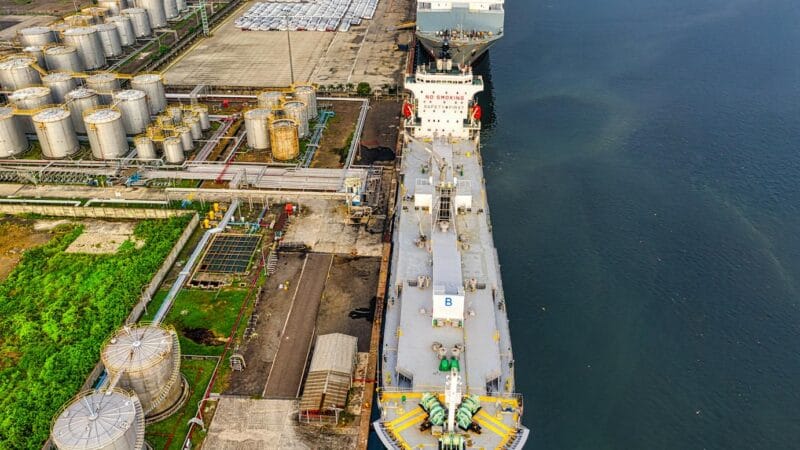
Kharg Island is Iran’s primary crude oil export terminal. Approximately 90% of Iran’s petroleum exports flow through the loading facilities on its southwestern shore. The island hosts crude oil storage tanks with a capacity exceeding 30 million barrels, multiple single-point mooring buoys capable of loading Very Large Crude Carriers (VLCCs), and the pipeline connections that feed Iran’s major onshore fields into the export system.

Iran’s oil production currently runs at approximately 3.3 million barrels per day, though exports have been suppressed by sanctions. Under a US-controlled scenario, that output — redirected away from Iranian state coffers — would represent roughly $130 billion in annual revenue at current Brent prices. That is the prize Trump is describing.
Seizing it would require something far more complex than an air campaign. The island is defended, the loading infrastructure is specialized, and operating it requires technical personnel. US military planners, according to multiple reports, have acknowledged that any seizure scenario would require US forces to remain for an “extended period” — a phrase that in military planning typically means years, not weeks.
What Would a Seizure Actually Require?
A military operation against Kharg Island would involve several sequential challenges that distinguish it from conventional strike missions:
Phase 1 — Neutralization: Iranian air defense systems, coastal missile batteries, and the Revolutionary Guard naval presence in the Gulf would need to be suppressed before any landing force could approach. Iran has invested heavily in anti-ship missile systems capable of threatening US naval assets at ranges exceeding 300 kilometers.
Phase 2 — Seizure and securing: Ground forces, likely Marine units supported by naval assets, would need to physically take and hold the island against potential Iranian counterattack. Iran has previously threatened to respond to any Kharg operation with attacks on Saudi and UAE energy infrastructure — a threat that would immediately pull Gulf Cooperation Council states deeper into the conflict.
Phase 3 — Operationalization: This is where the plan faces its most intractable problem. The specialized technical staff required to safely operate crude loading terminals, maintain pipeline pressure, and manage the storage tank farm are predominantly Iranian nationals. Finding, training, or importing replacement personnel would take months at minimum.
Phase 4 — Legal and commercial framework: Who buys the oil? US sanctions law, international maritime law, and the question of sovereign immunity over state energy assets create a legal labyrinth that no major oil trading house has yet indicated willingness to navigate.
The Market Response
Oil markets did not wait for legal analysis. Brent crude rose to $116.12 within hours of Trump’s FT interview being published, while WTI followed closely. The move reflects a specific market fear: not that the US will successfully seize and operate Kharg Island, but that the attempt — or Iranian preemptive action to deny it — will remove Iranian supply from markets entirely while simultaneously threatening Gulf Arab production.
The Strait of Hormuz remains the pressure point. Iran’s most credible retaliatory option is not a counter-invasion of Kharg — it is mining or blockading the strait through which 21 million barrels of oil per day flow to global markets. A successful Hormuz interdiction would be a supply shock several orders of magnitude larger than whatever the US might extract from Kharg.
Goldman Sachs analysts, in a note circulated March 29, raised their 90-day Brent price target to $125 per barrel in a Kharg seizure scenario, while flagging a tail risk of $150+ in the event of a Hormuz closure.
Geopolitical Reverberations
The Trump statement has created immediate diplomatic complications. 3,500 additional US troops have been deployed to the region since the weekend, the largest single troop movement since the conflict began on February 28. Saudi Arabia and the UAE have publicly maintained neutrality while privately expressing alarm about what a Kharg operation would mean for their own infrastructure.
Iran, for its part, has warned explicitly that any ground operation targeting Iranian territory — Kharg Island is administered as part of Bushehr Province — would trigger a response that “will not be limited to the battlefield.” That language is widely interpreted as a reference to attacks on Gulf Arab oil facilities and potentially on Israel.
Pakistan, meanwhile, has offered to host US-Iran talks “in the coming days” — a diplomatic opening that Washington has not publicly rejected. The juxtaposition of seizure rhetoric with back-channel diplomacy suggests the Kharg Island language may be a negotiating instrument as much as an operational plan. The problem is that in energy markets, the distinction between threat and intention matters far less than the probability weighting traders assign to each.
The Trump April 6 deadline for Iran now takes on additional weight — it arrives in one week, and markets are pricing the gap between diplomatic resolution and military escalation with increasing urgency.
What This Means for US Investors
Energy sector exposure is no longer a geopolitical hedge — it is a front-line position. XLE, the energy ETF, has outperformed the S&P 500 by over 28 percentage points since February 28. If the Kharg seizure scenario moves from rhetoric to planning, oil-linked equities, tanker stocks, and defense contractors are likely to see additional upside. The downside scenario — a Hormuz closure — is where portfolio construction becomes genuinely difficult: equities, bonds, and growth assets all suffer simultaneously. Investors should review their energy allocation before the April 6 deadline. See our analysis of Middle East ETFs for US investors for specific vehicles.
Frequently Asked Questions
Could the US legally seize Kharg Island?
Under international law, seizure of a sovereign nation’s territory absent UN Security Council authorization or a formal declaration of war is illegal. The US has not declared war on Iran. However, the US has previously asserted broad executive authority for military operations under the 2001 AUMF and related statutes. The legal framework would be contested — but enforcement of international law against a US military operation rests ultimately on political rather than legal mechanisms.
How long has Kharg Island been Iran’s main export terminal?
Kharg Island has been the centerpiece of Iranian oil exports since the 1950s, when British and later international oil companies developed its loading infrastructure. It was attacked multiple times during the Iran-Iraq War (1980-1988) and rebuilt each time, demonstrating both its strategic importance and Iran’s determination to protect it.
What would Iran do if the US attempted to seize Kharg?
Iran’s stated response posture includes: mining the Strait of Hormuz, attacks on Saudi Aramco facilities via missile and drone, activation of Hezbollah against US assets in the region, and accelerated nuclear enrichment. The IRGC Navy has pre-positioned assets specifically for Hormuz interdiction operations.
Is this the first time a US president has threatened to seize foreign oil?
Trump made similar remarks about Venezuela’s oil during his first term and about Iraq’s oil following the 2003 invasion. This is, however, the first time a sitting president has made the statement in the context of an active military engagement with the target country.