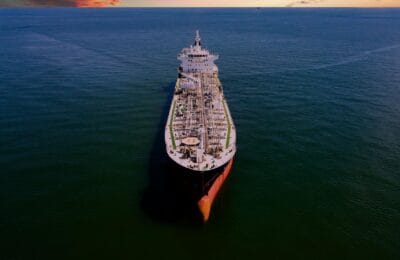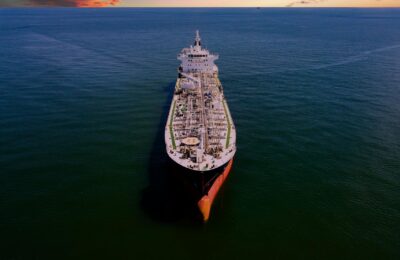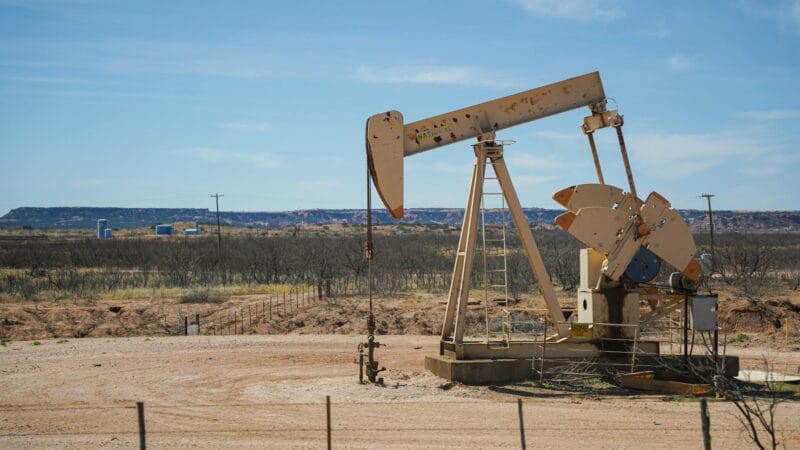
On April 5, 2026, OPEC+ ministers will convene in Vienna for what is unambiguously the most consequential energy policy meeting since the 2020 pandemic price war that briefly sent oil futures into negative territory. The backdrop is extraordinary: Brent crude at $115+ per barrel, the Strait of Hormuz effectively closed to commercial tanker traffic since mid-March, Houthi forces in active combat in the Red Sea theater, and a US administration openly lobbying for Iranian crude to flow — even as its own forces enforce Hormuz transit interdiction.
The meeting’s nominal agenda is the ratification of a 206,000 barrel-per-day (bpd) production increase that was pre-agreed in the March 3 ministerial communiqué. But the real questions confronting ministers are more fundamental: Can that increase actually be delivered into a market where the primary export route is blocked? Who has the physical spare capacity to produce it? And how does OPEC+ navigate a geopolitical environment where its largest member is simultaneously an economic beneficiary of high prices and the principal target of US political pressure to pump more?
- April 5, 2026: OPEC+ ministerial meeting in Vienna
- Brent crude price: $115+ per barrel (as of March 30)
- Pre-agreed increase: 206,000 bpd from May 2026
- Strait of Hormuz: effectively closed since March 15 to commercial traffic
- Saudi Arabia’s estimated spare capacity: 1.8–2.2 million bpd (but routing is the constraint)
- Paper vs. physical barrels: the meeting risks ratifying an increase that cannot reach markets
- Trump administration position: wants Iranian oil flowing to reduce prices ahead of November midterms
- If Hormuz remains blocked, Brent could reach $130–145 by June 2026
The Context: What $115 Oil Actually Means
To understand why this meeting is structurally different from every OPEC+ session of the past decade, you must understand the supply-demand picture at $115 Brent. This price level has historically been a demand destruction threshold — at $100+, US consumers shift behavior, airlines hedge forward aggressively, and industrial users accelerate efficiency investments. The IEA’s current demand growth model assumes an 800,000 bpd demand reduction by Q3 2026 as high prices bite.
But this is not a normal price surge. This is a supply disruption shock, not a demand-led price cycle. The difference matters enormously for policy response. In a demand-led surge, OPEC+ can pump more and prices will fall to equilibrium. In a supply disruption shock where the export route is blocked, pumping more barrels does not lower prices if those barrels cannot physically reach consuming markets.
The Hormuz closure — documented in detail in our Strait of Hormuz analysis — has effectively removed approximately 17–18 million bpd of crude and product exports from the market. This represents roughly 17% of global oil supply. No OPEC+ production increase of 206,000 bpd can offset a 17-million-bpd routing disruption.
The 206,000 bpd Increase: Paper Barrels vs. Physical Reality
The March 3 communiqué’s 206,000 bpd increase was agreed when Hormuz was still nominally open — before Iran escalated to active interdiction of commercial tankers in mid-March. What looked like a manageable phased production restoration has become, in the current routing environment, largely a paper exercise.
Here is the production and routing math:
Saudi Arabia accounts for the largest share of the agreed increase — approximately 80,000 bpd of its allocation. Saudi spare capacity is estimated at 1.8–2.2 million bpd, making the production itself trivially achievable. The routing problem: approximately 65% of Saudi crude exports transits Hormuz. The Yanbu and Rabigh terminals on the Red Sea coast (connected via the East-West Pipeline) offer an alternative — but that pipeline has a maximum throughput of 5 million bpd and is currently running near capacity after the Hormuz closure routing shift began in late February.
UAE faces a more acute constraint. The Habshan–Fujairah pipeline — built specifically to bypass Hormuz — has a capacity of 1.5 million bpd, but UAE’s current production plus the additional allocation would push volumes close to that ceiling. Fujairah itself is now the world’s most congested tanker anchorage, with vessel wait times of 8–12 days and ship-to-ship transfer limitations creating a practical cap on export velocity.
Iraq, Kuwait, and Qatar have no viable Hormuz bypass capacity at all. Their entire export base depends on Gulf port access that is currently under effective interdiction.
The conclusion: of the 206,000 bpd increase, realistically 80,000–110,000 bpd can actually reach consuming markets in the current routing environment. The remainder is a paper barrel — politically agreed, physically stranded.
Saudi Arabia’s Position: The Pivotal Calculation
Saudi Arabia enters April 5 in a position of extraordinary but uncomfortable power. At $115+ Brent, Saudi Aramco’s revenues are running approximately $380–420 million per day — nearly double the $62 oil price that Vision 2030’s budget requires to break even. The kingdom’s fiscal position has never been stronger, its sovereign wealth fund (PIF) is deploying capital globally at record pace, and its TASI equity market is near all-time highs.
At the same time, Riyadh is facing escalating pressure from two directions simultaneously. The Trump administration has made clear — through direct diplomatic communications that have leaked to the financial press — that the US expects Saudi Arabia to use its spare capacity to cap oil prices as a condition of continued military commitment to Gulf security. Simultaneously, the broader OPEC+ coalition’s smaller members are demanding that Saudi Arabia not use the crisis to capture market share at their expense.
The Saudi calculus is this: maximum $115–120 Brent is the comfort zone. High enough to generate the windfall revenue that funds Vision 2030. Low enough to avoid demand destruction that would structurally reduce the oil market Saudi Arabia dominates. The April 5 decision will be calibrated to that target range — not to maximize price, and not to collapse it.
The Trump Wild Card: Iranian Oil and the Political Dimension
No OPEC+ analysis in 2026 is complete without addressing the Trump administration’s Iranian oil gambit. Despite leading the military coalition enforcing Hormuz interdiction, the US has sent backchannel signals to both Oman (the traditional Iran-US back channel) and certain OPEC+ members indicating that a negotiated framework allowing partial Iranian crude exports to flow — perhaps 400,000–600,000 bpd through Omani intermediaries — would be tolerable as a price stabilization mechanism ahead of November’s US midterm elections.
The political logic: $115 gasoline prices are politically toxic in the US, where the average regular unleaded price has hit $5.87 per gallon as of March 28. Trump needs lower energy prices before November. Iranian oil flowing — even through a sanctions-adjacent mechanism — would add approximately 500,000 bpd to effective global supply, likely knocking $10–15 off Brent.
Whether OPEC+ April 5 formally accommodates this scenario is unclear. But the meeting’s communiqué language around “compliance monitoring” and “market stabilization mechanisms” will be watched extremely closely for signals that a back-channel Iranian oil arrangement is being structurally accommodated.
Price Scenarios from April 5
Scenario 1 — Full ratification, Hormuz partially reopens (probability: 25%): OPEC+ confirms 206,000 bpd, Iranian back-channel adds 400,000 bpd, Hormuz reopens to commercial traffic under a negotiated framework. Brent corrects to $90–100 by Q3 2026.
Scenario 2 — Full ratification, Hormuz stays closed (probability: 40%): OPEC+ confirms 206,000 bpd increase but routing constraints mean only 80,000–110,000 bpd reaches markets. Brent consolidates in the $110–125 range. Saudi and UAE bypass capacity at maximum. Market remains tight through Q2.
Scenario 3 — Increase deferred, escalation continues (probability: 25%): OPEC+ defers the increase citing routing uncertainty. Kuwait’s infrastructure attacks plus Houthi activity — as documented in our Houthi war analysis — escalate. Brent breaks toward $130–145.
Scenario 4 — Emergency increase, US pressure capitulated to (probability: 10%): Extraordinary political pressure from Trump produces an emergency increase of 500,000+ bpd from Saudi spare capacity, with Yanbu exports maximized. Brent falls to $85–95. Politically catastrophic for OPEC+ cohesion but financially rational for members needing US security guarantees.
What This Means for Energy Markets Through 2030
Beyond the immediate price decision, April 5 will reveal something more important: whether OPEC+ remains a functional cartel when its members face divergent security interests, routing constraints, and political pressures from their primary security guarantor. The Iran war’s economic pressure on Gulf states is straining the alliance architecture that underlies OPEC+ cohesion.
If Saudi Arabia uses April 5 to visibly accommodate US demands — even partially — it signals that the cartel’s production decisions are no longer purely commercial. That would accelerate energy transition investment in consuming nations, validate long-term demand destruction scenarios, and potentially bring forward the structural peak of Saudi oil power by a decade.
For US investors: the April 5 meeting is a binary catalyst event for energy portfolios. Scenario 2 (most probable) supports current long positions in US E&P companies, LNG exporters (Cheniere, New Fortress Energy), and tanker operators routing around Hormuz via Cape of Good Hope. Scenario 1 (Hormuz reopens) would trigger a sharp correction in energy equities — hedge with options on WTI or Brent-linked instruments. The Middle East ETF and equity analysis provides specific vehicle recommendations. At $5.87/gallon US gas prices, energy inflation is also the single most important variable in Fed rate expectations — connecting OPEC+ Vienna to every interest-rate-sensitive asset in your portfolio.
FAQ: OPEC April 5 Meeting 2026
What is the OPEC+ meeting on April 5, 2026 about?
The April 5 ministerial meeting will formally ratify (or revise) the pre-agreed 206,000 bpd production increase for May 2026. With Brent at $115+ and Hormuz closed, the meeting must also address whether that increase can physically reach consuming markets given routing constraints.
Why is oil at $115 per barrel in April 2026?
The primary driver is the effective closure of the Strait of Hormuz — which normally carries 17–18 million bpd of crude and product — due to Iranian interdiction activity since mid-March. This is a supply disruption shock, not a demand-driven price surge.
Does Saudi Arabia have enough spare capacity to lower oil prices?
Saudi Arabia has an estimated 1.8–2.2 million bpd of spare capacity. The production is not the constraint — routing is. With 65% of Saudi exports normally transiting Hormuz, bypass capacity via the East-West Pipeline and Yanbu terminal is near its limit and cannot fully replace Hormuz throughput.
What will happen to oil prices after April 5?
The most probable scenario (40% probability) is Brent consolidating in the $110–125 range through Q2 2026, as the agreed production increase partially reaches markets via bypass routes. A Hormuz reopening (25% probability) could correct prices to $90–100. Continued escalation (25%) could push Brent to $130–145.
How does the OPEC meeting affect US gas prices?
US regular unleaded is at $5.87 per gallon as of March 28. A Brent correction to $90–100 (Scenario 1) would reduce pump prices to approximately $4.20–4.60 within 6–8 weeks. The current $115+ Brent sustains pump prices above $5.50 through Q2 — the most politically significant energy price environment since 2022.