Key Takeaways
- Strike on Kuwait infrastructure — An Iranian strike hit a service building at a Kuwait power and desalination plant, causing significant damage to supporting systems.
- One fatality confirmed — An Indian national working at the facility was killed. Several other workers were injured.
- Desalination is existential for Kuwait — 90% of Kuwait’s drinking water is produced via desalination; the country has virtually no natural freshwater reserves.
- Relentless campaign — Iran has conducted attacks on Gulf infrastructure on nearly every day since February 28, including oil refineries, pipelines, and now civilian water infrastructure.
- Diplomatic red line crossed — Attacks on civilian water supplies cross a threshold under international humanitarian law and are likely to trigger a formal GCC response.
An Iranian strike hit a service building at a Kuwaiti power generation and water desalination complex on March 29-30, killing one Indian national and injuring several other workers. The attack marks a qualitative escalation in Iran’s month-long campaign against Gulf Cooperation Council infrastructure — one that crosses from energy assets into the territory of civilian water supply, a threshold with profound humanitarian and legal implications.
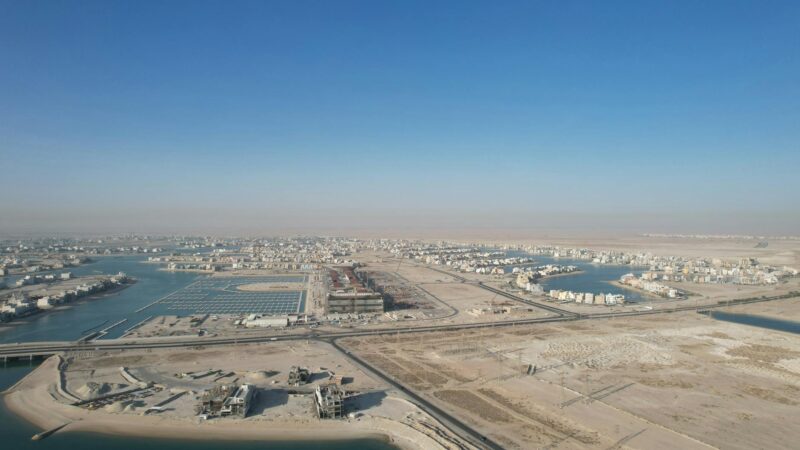
The targeted facility is one of Kuwait’s integrated power and water complexes, the backbone of a country that produces 90% of its drinking water through desalination. Kuwait is one of the world’s most water-stressed nations by natural resources, sitting atop vast oil reserves in a desert environment with almost no surface freshwater. Every glass of water drunk by Kuwait’s 4.7 million residents passes through a desalination plant.
The Infrastructure Being Targeted
Kuwait operates a network of multi-stage flash (MSF) and reverse osmosis (RO) desalination plants, most of which are co-located with power generation facilities along its coastline. The co-location is intentional — desalination is enormously energy-intensive, consuming roughly 10-15 kilowatt-hours per cubic meter of water produced. Disrupting power generation disrupts water production; disrupting water plant infrastructure creates immediate civilian supply crises.

Kuwait’s Ministry of Electricity and Water has confirmed the strike hit a “service building” rather than the core desalination or generation equipment — a distinction that likely reflects the precision limits of the projectile used rather than any restraint on Iran’s part. Structural damage to service buildings can disable monitoring, control, and maintenance systems essential to safe plant operation, forcing partial shutdowns even without direct hits on primary equipment.
Kuwait’s current desalination capacity stands at approximately 600 million gallons per day (MIGD). Any reduction in that capacity translates immediately into rationing — a public health and political crisis for the Kuwaiti government.
Pattern of Attacks Since February 28
The Kuwait strike is not an isolated incident. Since the conflict began on February 28, Iran has conducted a relentless campaign against Gulf infrastructure that has followed a clear pattern of escalating target selection:
Week 1-2 (Feb 28 — Mar 14): Strikes focused on US military assets, forward operating bases, and naval logistics. Gulf civilian infrastructure was avoided, suggesting Iranian preference for keeping GCC states as neutral bystanders.
Week 3 (Mar 15-21): First strikes on oil refinery infrastructure in the broader region. Pipeline support facilities targeted. Saudi Arabia intercepted multiple drone swarms.
Week 4 (Mar 22-30): Escalation to civilian infrastructure. Kuwait power and desalination hit. Multiple Gulf oil refineries targeted. Saudi Arabia intercepted a dozen drones in 72 hours. The pattern is consistent with a deliberate strategy of widening the economic cost to GCC states that are hosting, supplying, or enabling US military operations.
The strategic logic is clear: Iran cannot match the US militarily in direct exchange, but it can impose costs that are politically unbearable for Gulf governments — rising energy prices at home, water supply anxiety, and expatriate worker casualties (a particularly sensitive topic in Kuwait, where foreign nationals make up over 70% of the population).
The Indian Worker Dimension
The death of an Indian national carries significant diplomatic weight. India has maintained studied neutrality in the Iran-US conflict, pursuing its traditional multi-alignment policy while simultaneously importing oil from both Iran (through back-channel mechanisms) and Gulf Arab producers. New Delhi has large expatriate communities in Kuwait, the UAE, and Saudi Arabia — over 3.5 million Indian nationals work in Kuwait and the broader Gulf.
Iranian strikes that kill Indian workers create pressure on New Delhi to take a clearer position — something both the US and Gulf states would welcome, and something Iran is aware of. Expect diplomatic activity between Riyadh, Abu Dhabi, and New Delhi in the coming days.
International Humanitarian Law Implications
Attacks on civilian water infrastructure are prohibited under Protocol I of the Geneva Conventions, which prohibits attacks on “objects indispensable to the survival of the civilian population” — a category explicitly including food and water supply systems. Iran’s targeting of desalination infrastructure in a country where no alternative water supply exists creates a clear basis for international legal proceedings, regardless of the ultimate political outcome of the conflict.
The International Court of Justice has jurisdiction over such matters, and Kuwait — a state with significant legal resources and a history of pursuing international remedies (as it did against Iraq following the 1990 invasion) — is likely to be building a case. Whether that legal pathway runs parallel to or instead of a military response is the central question Kuwaiti leadership is now facing.
GCC Response and US Pressure
The GCC has maintained an uncomfortable posture throughout the conflict: not directly supporting the US military campaign, not condemning Iran, and absorbing strikes on its infrastructure with diplomatic protests rather than military response. The Kuwait attack makes that posture increasingly untenable.
Saudi Arabia’s interception of a dozen drones in 72 hours demonstrates that Riyadh is actively defending its airspace — but active defense is different from offensive retaliation. The question is whether Iran’s escalation to civilian water infrastructure will force GCC states to move from passive hosts of US operations to active participants.
For the US, Kuwait’s vulnerability is a strategic liability. The economic impact on Gulf states of sustained infrastructure attacks is beginning to affect the political calculus of governments that had hoped to stay on the sidelines. Washington is now facing pressure to either expand its air campaign to include Iranian launch sites targeting Gulf infrastructure, or accept that its regional partners will be progressively destabilized.
What This Means for US Investors
Attacks on civilian infrastructure in Kuwait signal that Iran is prepared to widen the conflict’s economic footprint significantly. For US investors, the key implications are: (1) Gulf sovereign wealth fund behavior — the Abu Dhabi sovereign funds may reduce new global investment commitments if domestic security costs rise; (2) water technology stocks — companies with desalination and water treatment exposure (IDE Technologies, Veolia, Xylem) could see increased demand; (3) insurance sector — political risk and infrastructure insurance underwriters face escalating liability across the entire Gulf region. The humanitarian dimension also increases the probability of broader international coalitions against Iran, which could accelerate the conflict timeline.
Frequently Asked Questions
Why does Kuwait rely so heavily on desalination?
Kuwait is a desert state with negligible natural freshwater — no rivers, minimal rainfall, and groundwater reserves that are brackish and limited. Desalination technology, powered by abundant natural gas from oil production, is the only viable large-scale water source. The country began building desalination capacity in the 1950s and has relied on it as its primary water source since the 1960s.
How quickly could a desalination plant outage affect Kuwait’s water supply?
Kuwait maintains strategic water reserves, but in a full plant outage scenario, reserves would sustain normal consumption for approximately 3-7 days. Partial outages trigger immediate rationing protocols. The psychological and political impact of water insecurity in a Gulf state is significantly greater than the actual physical shortage — water anxiety is deeply destabilizing in a region where water security is an existential concern.
Has Iran struck civilian infrastructure in previous conflicts?
During the Iran-Iraq War (1980-1988), both sides struck civilian infrastructure extensively, including power plants, water facilities, and urban centers. Iran has historically been willing to use civilian infrastructure targeting as a strategic instrument when it perceives itself under existential military pressure — which the current US campaign represents.
What is Kuwait’s military capability to respond?
Kuwait maintains a relatively small military force, sufficient for defensive operations but not for offensive retaliation against Iran. Kuwait hosts a significant US military presence, including air assets at Ali Al Salem Air Base. Any military response against Iran from Kuwaiti soil would necessarily involve and be coordinated with US Central Command.