Key Takeaways
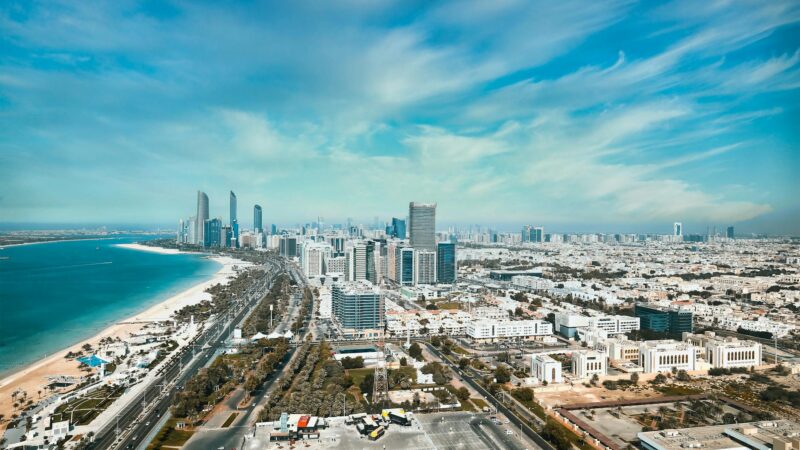
- UAE #1 overall — zero income tax, Golden Visa, 87% expat population, world-class infrastructure, and the most developed English-language professional environment in the region
- Oman #2 — cheapest Gulf country for expats, genuinely safe, stunning natural environment, growing digital nomad infrastructure
- Bahrain #3 — most socially liberal GCC state, strong financial services hub, lowest cost of the Gulf’s major expat destinations
- Qatar #4 — highest income potential, but expensive and least permissive socially among developed GCC states
- Saudi Arabia #5 — rapidly opening up, entertainment boom, Riyadh emerging as a genuine expat hub; visa access still improving
- Jordan #6 — most affordable ME country, cultural richness, English widely spoken, but lower salaries limit earning potential
Americans are moving to the Middle East. Not in enormous numbers — but the profile of those who do is striking: finance professionals priced out of New York and London, tech workers choosing Dubai over San Francisco, retirees discovering that their Social Security check stretches dramatically further in Amman or Muscat than in Phoenix or Miami.
What changed? A combination of post-pandemic remote work flexibility, Gulf government visa reforms that now make long-term residency accessible to foreigners without local employment, and the US-Middle East income tax situation — which for most Americans living abroad means zero local income tax in most Gulf states, with US tax obligations still applying but often offset by the Foreign Earned Income Exclusion (FEIE, currently $126,500 for 2026).
This ranking scores six countries across eight dimensions to answer a question that gets asked with increasing frequency: where in the Middle East should an American actually consider living?

The 8-Dimension Scoring Framework
Each country is scored 1–10 on: cost of living (lower is better), safety index, expat friendliness, healthcare quality, visa ease for Americans, English proficiency, internet speed/reliability, and income tax burden. Scores are then weighted toward the factors most relevant to a US professional or family making a relocation decision.
1. United Arab Emirates — Overall Score: 8.9/10
The UAE is the obvious first choice for most Americans considering a Middle East relocation — and for good reason. The country has spent three decades building infrastructure, legal systems, and social environments designed to attract exactly the kind of international professional talent that powers modern knowledge economies.
Cost of living: Higher than most of the region but significantly below comparable cities in the US. A family of four in Dubai spends approximately $4,500–$6,500/month (excluding rent) compared to $6,000–$9,000 in New York or San Francisco. Rent is the major variable — a two-bedroom apartment in Dubai Marina runs $35,000–$55,000/year, comparable to mid-tier US cities but below Manhattan or the Bay Area. Abu Dhabi runs 10–15% cheaper than Dubai for comparable accommodation.
Safety: The UAE consistently ranks among the world’s safest countries. The Global Peace Index places it in the top 30 globally. Violent crime against expatriates is extremely rare; petty crime is uncommon by any international standard.
Visa access: The UAE Golden Visa — available for investments, property purchases, professional qualifications, and entrepreneurship — offers 10-year renewable residency without a local employer sponsor. Property purchase above AED 2 million (~$545,000) qualifies. A simpler five-year freelancer/remote work visa is available at lower thresholds. As we detailed in our guide to Dubai real estate investment in 2026, property acquisition and residency are deeply linked in the UAE system.
Tax: Zero personal income tax. Corporate tax of 9% applies to businesses over AED 375,000 profit. VAT at 5%. Americans can exclude up to $126,500 of foreign-earned income from US federal tax under FEIE, making the UAE tax situation extremely favorable for high earners.
Healthcare: Dubai and Abu Dhabi private healthcare is genuinely world-class. The Cleveland Clinic Abu Dhabi operates at international standards; Mediclinic, American Hospital Dubai, and other JCI-accredited providers offer comprehensive care. Mandatory employer-provided health insurance is law for employees; self-employed residents must purchase private coverage.
English proficiency: Essentially universal in professional and commercial contexts. With 87% of the UAE’s population being expatriates, English functions as the operational lingua franca for business, healthcare, education, and most daily transactions.
Internet: Among the world’s fastest — consistently ranking in the global top 10. Etisalat (now e&) and du provide fiber connections at speeds averaging 300–500 Mbps in major urban areas. VoIP services including WhatsApp calls are unrestricted (earlier restrictions have been lifted).
Social environment: Alcohol is available in licensed venues (hotels, restaurants, select retailers). Dress codes are relaxed in cosmopolitan areas. The 2024 law changes made cohabitation between unmarried couples legally permissible. The UAE is by far the most socially permissive GCC state for Western lifestyles.
2. Oman — Overall Score: 7.8/10
Oman is the region’s most underrated destination. The Sultanate combines genuine safety, spectacular natural scenery (from Al Hajar Mountains to Wahiba Sands to unspoiled Indian Ocean coastline), an authentically welcoming local culture, and a cost of living significantly lower than the UAE.
Cost of living: A two-bedroom apartment in Muscat runs $12,000–$20,000/year — roughly 40–60% less than comparable Dubai accommodation. Groceries, restaurants, and transportation are proportionally cheaper. A comfortable family of four life in Muscat costs approximately $3,000–$4,500/month all-in.
Visa: Oman launched a Remote Work Visa in 2024 allowing digital nomads to live in the country for up to one year (renewable) with proof of remote income above approximately $1,500/month. Standard employment visas are available through Omani employers. A two-year Investor Visa requires a minimum investment of approximately OMR 500,000 (~$1.3 million) in real estate or business.
Tax: Zero personal income tax. No VAT until 2021 (now 5%). Corporate tax of 15% applies to businesses.
Lifestyle: Oman is conservative but tolerant. Alcohol is available in licensed hotels and a small number of retail outlets. The Omani people are widely described by expatriates as among the most genuinely hospitable in the Gulf. The pace of life is slower than Dubai or Riyadh — a major plus for many Americans seeking a different register of experience.
3. Bahrain — Overall Score: 7.5/10
Bahrain is the Gulf’s most liberal society and its most financially accessible expat destination. The island kingdom is physically small — roughly the size of Los Angeles — but punches above its weight in financial services, entertainment options, and cross-cultural dynamism.
Cost of living: The lowest of the major Gulf expat destinations. A two-bedroom apartment in central Manama runs $12,000–$18,000/year. Total monthly costs for a professional couple average $2,800–$4,000.
Visa: Bahrain’s Digital Nomad Visa (launched 2021, expanded 2024) offers one-year renewable residency for remote workers earning above $1,500/month from a non-Bahraini employer. Standard employment and investor visas are available through the Bahrain Economic Development Board, which actively courts foreign professionals.
US Free Trade Agreement: Bahrain’s 2006 FTA with the US provides preferential terms for US businesses and offers legal protections not available elsewhere in the Gulf. For Americans starting businesses in the region, Bahrain’s bilateral treaty protections are a meaningful differentiator.
Social environment: The most liberal in the GCC. Alcohol is freely available in supermarkets. Mixed-gender socializing is unrestricted. Entertainment options, while smaller in absolute scale than Dubai, include a vibrant nightlife scene, diverse restaurant culture, and cultural events. Many Dubai-based professionals weekend in Bahrain via the King Fahd Causeway.
4. Qatar — Overall Score: 7.1/10
Qatar is the wealthiest GCC state on a per-capita basis, and for professionals in energy, finance, education, and healthcare who secure employment through Qatari institutions, income potential is exceptional. The challenge is access — Qatar’s visa pathways for non-employed foreigners remain limited, and the social environment is more conservative than the UAE or Bahrain.
Cost of living: High by Gulf standards. A two-bedroom apartment in Doha runs $24,000–$40,000/year. Monthly costs for a professional couple average $4,000–$6,500.
Visa: Qatar’s Permanent Residency Card — accessible to long-term residents, investors, and exceptional talent — provides a pathway to long-term stay. A recently introduced Tourist Visa for extended stays (90 days renewable) allows initial exploration. Employment-based visas remain the primary pathway for most foreign residents.
Salaries: Tax-free compensation packages at Qatar-based institutions — particularly Qatar Foundation, Hamad Medical Corporation, and Qatar Petroleum — can reach $200,000–$400,000+ annually for senior professionals, making the high cost of living acceptable relative to savings potential.
5. Saudi Arabia — Overall Score: 6.8/10
Saudi Arabia is undergoing the fastest social transformation in its history, and for Americans willing to engage with a country in transition, the opportunity set is expanding rapidly. The entertainment, hospitality, and technology sectors are generating genuine demand for international talent that was entirely absent five years ago.
Cost of living: Riyadh is cheaper than Dubai but more expensive than Manama or Muscat. A two-bedroom apartment in Riyadh runs $18,000–$30,000/year. Monthly costs average $3,500–$5,500 for a professional couple.
Visa: Saudi Arabia’s Premium Residency (launched 2019, expanded) offers long-term residency for investors and professionals paying approximately $26,700/year or $106,700 for lifetime residency. An Employment Visa remains the most common pathway. Tourist visas now allow 90-day stays, removing the requirement for employer sponsorship for initial exploration.
Social changes: Women can now drive, attend sports events, and work in mixed-gender environments. Concerts, cinemas, and entertainment venues that didn’t exist five years ago are now widespread across Riyadh and Jeddah. Alcohol remains prohibited — the most significant lifestyle adjustment for Western expats — though enforcement of social conservatism rules has relaxed considerably. As we analyzed in our coverage of Vision 2030’s social transformation, the pace of change has surprised even optimistic observers.
6. Jordan — Overall Score: 6.4/10
Jordan is the Middle East’s most affordable country for Westerners seeking a culturally rich, English-friendly environment without Gulf salary expectations. Amman has a growing digital nomad community, a world-class archaeological heritage (Petra, Wadi Rum), and a genuinely cosmopolitan urban culture shaped by its large Palestinian, Iraqi, and Syrian diaspora communities.
Cost of living: A two-bedroom apartment in Amman’s upscale Abdoun or Sweifieh districts runs $8,000–$14,000/year. Monthly costs for a professional couple average $2,000–$3,200 — roughly equivalent to a mid-size US city but with significantly more cultural richness and domestic help affordability.
Visa: Jordan offers relatively straightforward residency for foreigners investing JD 200,000+ (approximately $280,000) in Jordanian businesses or property. Standard one-year renewable residency visas are accessible. Americans can enter visa-free for 30 days.
Limitation: Jordan lacks the tax-free salary packages available in Gulf states. Income from Jordanian employment is taxed at rates up to 20%. The primary appeal is cost of living and quality of life for those with remote income sources, not local salary maximization.
What This Means for US Investors and Movers
Americans considering a Middle East relocation should start with the UAE if professional career progression and maximum lifestyle optionality are the priority. For cost-conscious remote workers with location flexibility, Oman or Bahrain offer dramatically lower costs with strong quality of life. The US Foreign Earned Income Exclusion ($126,500 in 2026) means a US professional earning $150,000+ in the Gulf effectively pays US tax only on the amount above the exclusion — making Gulf residency a significant tax optimization opportunity compared to equivalent US income. Note: Americans remain subject to US federal tax regardless of residency; the exclusion reduces but does not eliminate US tax liability for high earners. Consult a US expat tax specialist before relocating.
Frequently Asked Questions
Which Middle East country is easiest for Americans to live in?
The UAE offers the easiest overall pathway for American residents: English is effectively the operational language, Golden Visa residency is accessible via property purchase or professional qualification, lifestyle accommodations for Western preferences are extensive, and the legal and banking infrastructure is well-adapted to foreign residents. Bahrain ranks a close second for ease, particularly for Americans seeking a smaller-scale but highly livable Gulf environment.
Do Americans pay US taxes if they live in the Middle East?
Yes — the United States taxes its citizens on worldwide income regardless of residency. However, the Foreign Earned Income Exclusion (FEIE) allows Americans living abroad to exclude up to $126,500 (2026) of foreign-earned income from US federal tax. For Americans earning Gulf tax-free salaries below this threshold, US federal tax liability can be significantly reduced or eliminated. High earners above the exclusion threshold still owe US tax on the excess amount. State tax obligations vary by state of domicile.
Is Saudi Arabia safe for American expats in 2026?
Saudi Arabia has one of the world’s lowest violent crime rates, and American expatriates — particularly those in corporate compounds, major cities, and established professional communities — report feeling extremely safe. The primary risks are related to regional geopolitical conditions rather than domestic crime. The US State Department maintains a Level 2 advisory (exercise increased caution) for Saudi Arabia in 2026, primarily referencing terrorism risk and regional conflict spillover rather than crime against foreigners.
What is the cheapest Middle East country for expats?
Jordan is the most affordable country in the region for Western expatriates, with monthly all-in costs for a professional couple starting around $2,000–$3,200 in Amman’s better neighborhoods. Among Gulf states, Bahrain and Oman are the most affordable, with monthly costs 30–40% lower than equivalent Dubai lifestyles. Qatar is the most expensive Gulf destination for comparable lifestyle standards.
Can Americans get permanent residency in the Middle East?
Long-term renewable residency — functionally equivalent to permanent residency — is accessible in several countries. The UAE Golden Visa offers 10-year renewable residency accessible via property investment, professional talent designation, or business ownership. Saudi Arabia’s Premium Residency provides indefinite residency for significant investors. Qatar’s Permanent Residency Card is available to long-term residents and exceptional talent. True citizenship is rarely granted — only the UAE offers a naturalization pathway, and it is exceptional rather than systematic.