Key Takeaways
- ~1,500 troops from the 82nd Airborne Division approved for Middle East deployment under verbal Pentagon orders as of March 25, 2026
- 5,000 Marines across two Marine Expeditionary Units (MEUs) are arriving in the region within days, significantly expanding US combat presence
- Kharg Island seizure scenario has been discussed at the Pentagon level — the island handles 90% of Iran’s oil exports, making it the single most valuable economic pressure point
- No AUMF yet — Congress has not authorized offensive ground operations against Iran, creating a constitutional flashpoint
- Escalation signal: the 82nd Airborne is a rapid-reaction force, not a peacekeeping unit — its deployment indicates Washington is preparing for combat contingencies, not just deterrence
American boots may soon be on the ground near Iran. On March 25, 2026 — Day 26 of the Iran-Israel conflict — the Trump administration has approved the deployment of troops from the 82nd Airborne Division to the Middle East theater, with verbal orders already issued at the Pentagon level. Two Marine Expeditionary Units are arriving in the region within days. For American families, taxpayers, and investors, this is no longer a distant regional conflict: the United States is moving toward direct military involvement at a scale not seen since the 2003 Iraq invasion.
The critical question for Americans is not whether troops are moving — they are. The question is what they are being positioned to do, and whether Congress will be given any say in the matter before the shooting starts.
What Forces Are Being Deployed — and Why Does the 82nd Airborne Matter?
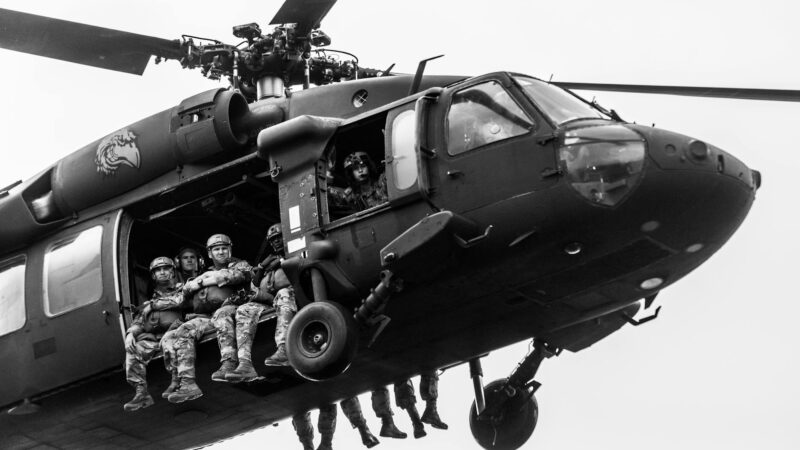
The 82nd Airborne Division, headquartered at Fort Liberty, North Carolina, is the US military’s premier rapid-deployment force. Unlike heavy armored divisions that require weeks of logistics to move, the 82nd can put combat-ready paratroopers on the ground anywhere in the world within 18 to 72 hours of receiving orders. That speed is the entire point.

Current deployment figures, according to reporting as of March 25, 2026:
- Two battalions plus enabling units from the 82nd Airborne — approximately 1,500 troops total
- Headquarters company: roughly 250 personnel providing command-and-control infrastructure
- Two Marine Expeditionary Units (MEUs): approximately 5,000 Marines with organic air, armor, and amphibious assault capability
A Marine Expeditionary Unit is not a logistics convoy. Each MEU is a self-contained combined-arms force capable of amphibious assault, direct action raids, and sustained combat operations. Two MEUs arriving simultaneously represents serious offensive capability — not a show of force.
The 82nd Airborne deployment adds roughly 1,500 paratroopers whose core mission is seizing airfields and key terrain ahead of larger follow-on forces. Analysts at the CENTCOM level have identified over 9,000 Iranian targets in current operational planning frameworks.
What Is the Kharg Island Scenario?
Kharg Island, located in the northern Persian Gulf approximately 25 kilometers off Iran’s southwestern coast, is the linchpin of Iran’s oil export infrastructure. The island processes and exports approximately 90% of Iran’s crude oil — roughly 1.5 to 1.8 million barrels per day even under current sanctions pressure.
Seizing or disabling Kharg Island would effectively end Iran’s ability to fund its military operations. It would also:
- Collapse Iran’s primary foreign currency earning mechanism
- Force a rapid depletion of Tehran’s foreign exchange reserves
- Create immediate pressure on the Revolutionary Guard’s operational budget
- Send a signal to China — Iran’s largest oil customer — that the conflict has entered a new phase
The scenario has been discussed at senior Pentagon levels. The Marine MEUs’ amphibious assault capability makes them the logical instrument for such an operation. The 82nd Airborne would provide the rapid airfield seizure capacity needed to secure air corridors over the Gulf.
For context on the energy stakes, the IEA has warned this is already the worst energy crisis in history, worse than the 1970s oil shocks. A Kharg Island operation would remove Iranian supply from global markets permanently for the duration of the conflict.
Has Congress Authorized This? The AUMF Question
No. As of March 25, 2026, Congress has not passed an Authorization for Use of Military Force (AUMF) specifically covering offensive operations against Iran. The Trump administration has operated under broad executive authority claims and the existing 2001 and 2002 AUMFs — neither of which was written with Iran ground operations in mind.
The constitutional tension is significant. Article I, Section 8 of the US Constitution reserves the power to declare war to Congress. The War Powers Resolution of 1973 requires the President to notify Congress within 48 hours of committing forces to hostilities and limits unauthorized engagements to 60 days without congressional approval.
Key fault lines in the current debate:
- Hawkish Republicans argue existing AUMF language plus the President’s Article II commander-in-chief authority covers defensive and retaliatory operations
- Democrats and libertarian Republicans are calling for a formal AUMF vote before any ground engagement begins
- Senate leadership has not scheduled an AUMF vote as of this writing
The precedent matters. Every major US ground war since Korea has involved some form of congressional authorization. A ground war in Iran without one would be legally and politically unprecedented in its scale.
How Much Would a Ground War in Iran Cost?
The Iraq War (2003-2011) cost the United States an estimated $2.4 trillion in direct expenditures and over $3 trillion when veteran care and interest on debt is included. Afghanistan (2001-2021) added another $2.3 trillion. Iran presents a substantially more complex military environment:
- Iran’s military is approximately 5 to 8 times larger than Iraq’s was in 2003 in terms of active personnel
- Iran’s Revolutionary Guard Corps (IRGC) has decades of asymmetric warfare experience
- Iran’s geography — mountainous interior, urban coastal cities — is far more defensible than Iraq’s flat terrain
- Iran has proxy networks in Iraq, Syria, Yemen, and Lebanon that would activate immediately
Defense budget analysts quoted in early March 2026 estimate a sustained Iranian ground campaign could cost between $400 billion and $800 billion annually in the first phase — significantly higher per-year than either Iraq or Afghanistan at their peaks.
The current US defense budget stands at approximately $895 billion for FY2026. A major ground war would require emergency supplemental appropriations of a scale Congress has not voted on.
Air Campaign vs. Ground War: What Are the Options?
The US has three broad military options on the current table, in ascending order of commitment:
Option 1 — Sustained Air Campaign: Continue and expand the air strikes already underway. CENTCOM has identified over 9,000 targets. An air campaign can degrade Iran’s military infrastructure, nuclear facilities, and command-and-control without requiring ground forces. Risk: Iran can absorb air strikes and continue proxy operations indefinitely.
Option 2 — Strategic Asset Seizure (Kharg Island): Use the MEUs and 82nd Airborne for a limited amphibious and airborne operation to seize Kharg Island, cutting Iran’s oil revenue. Risk: Iran would likely respond with mass missile salvos and Strait of Hormuz mining, triggering a global energy crisis. See our analysis of oil price forecasts for March 24-28 and the Trump 5-day clock.
Option 3 — Full Ground Invasion: Commit ground forces to regime change. Requires 150,000 to 300,000 troops at minimum, according to military planning estimates. Cost: tens of thousands of casualties and trillions of dollars. This option appears off the table for now but becomes more likely if peace talks fail.
VP Vance and Secretary Rubio are currently leading diplomatic negotiations — but Iran has denied that any talks are taking place, calling Trump’s statements “deceitful.”
What This Means for US Investors
The 82nd Airborne deployment is a market-moving event that has not yet been fully priced in. Defense contractors — Raytheon (RTX), Lockheed Martin (LMT), L3Harris (LHX), and Northrop Grumman (NOC) — stand to benefit from any escalation in procurement. Energy stocks and oil ETFs will react sharply to any Kharg Island operation, given its potential to remove 1.5-1.8 million barrels per day of Iranian crude from the market. Treasury yields may rise if emergency defense supplementals are passed, adding to deficit concerns. Avoid over-leveraged positions in airlines and shipping companies with Gulf exposure. The March 28 deadline Trump set for Iranian capitulation remains the critical near-term catalyst — if it passes without resolution, expect significant market volatility.
Frequently Asked Questions
Why is the 82nd Airborne specifically significant?
The 82nd Airborne is the US military’s Global Response Force — designed to deploy within 18-72 hours to any global flashpoint. Its selection signals the Pentagon is preparing for a scenario requiring rapid, forcible entry rather than a gradual buildup. It is not a unit typically associated with peacekeeping or advise-and-assist missions.
What is Kharg Island and why does it matter?
Kharg Island is Iran’s primary crude oil export terminal, handling approximately 90% of the country’s oil exports. Seizing or disabling it would collapse Iran’s main source of foreign currency revenue almost immediately, making it the single highest-value economic target in any campaign to pressure Tehran into negotiations.
Does Congress need to authorize a ground war in Iran?
Constitutionally, yes — Congress holds the war declaration power. Practically, the Trump administration is relying on existing AUMF language and executive authority. A formal AUMF vote has not been scheduled as of March 25, 2026, creating a significant legal and political controversy that could constrain operations or trigger court challenges.
How does this affect oil prices?
A Kharg Island seizure would immediately remove approximately 1.5-1.8 million barrels per day from global supply. Combined with existing Strait of Hormuz tension, analysts estimate Brent could spike to $130-$150 per barrel in such a scenario. Current Brent pricing around $104 does not fully reflect this risk premium.
What is the March 28 deadline?
President Trump set a 5-day deadline around March 23-24 for Iran to begin meaningful negotiations or face intensified military action. March 28 is the critical threshold. Markets are pricing in elevated uncertainty around this date, with oil, gold, and defense equities all showing elevated volatility.
The 82nd Airborne deployment represents the most significant escalation in direct US military involvement since the conflict began. Whether it ends in a limited Kharg Island operation, a sustained air campaign, or — in the worst case — a full ground engagement, the trajectory is clear: the United States is no longer on the sidelines of the Iran war. The next 72 hours, as the March 28 deadline approaches, will determine whether diplomacy led by VP Vance and Secretary Rubio can pull the situation back from the edge.