Key Takeaways
- Saadiyat Island up 18% YoY — Abu Dhabi’s premier luxury district is appreciating faster than Dubai’s premium segment
- Yas Island driving mid-market demand — Entertainment infrastructure (Ferrari World, Warner Bros., F1 circuit) sustains a premium rental market
- Reem Island anchors investor yields at 7-9% net, among the Gulf’s highest for residential property
- Lower entry points than Dubai — Quality 2BR apartments in Abu Dhabi available from AED 1.2-1.8M vs AED 1.8-2.5M in comparable Dubai locations
- 10-year Golden Visa available for property purchases of AED 2M+, a key driver of international investor demand
Abu Dhabi’s real estate market has spent years in Dubai’s shadow. That narrative is changing in March 2026. Abu Dhabi’s property market is delivering capital appreciation rates in premium districts that match or exceed Dubai’s current performance, while offering entry-level price points 20-35% below comparable Dubai locations. For US investors who have been priced out of — or are reassessing — Dubai exposure, Abu Dhabi represents the Gulf’s most compelling underpriced opportunity.
The capital of the UAE is also the seat of the world’s largest sovereign wealth funds — ADIA, Mubadala, and ADQ — which collectively manage over $1.5 trillion in assets. That institutional weight creates a structural floor under Abu Dhabi’s economy and real estate market that does not exist in Dubai, which relies more heavily on trade, tourism, and private capital flows.
Saadiyat Island: Abu Dhabi’s Premium Address in March 2026
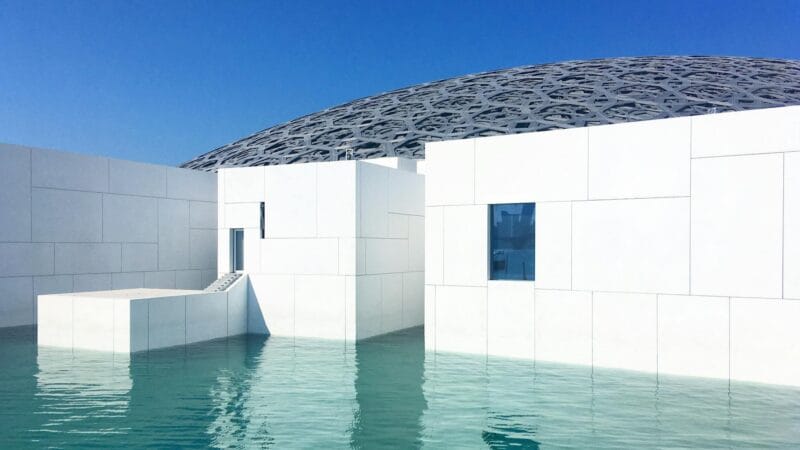
Saadiyat Island is the undisputed prestige address in Abu Dhabi’s real estate hierarchy. Home to the Louvre Abu Dhabi, the under-construction Guggenheim Abu Dhabi, and NYU Abu Dhabi, it is a cultural and academic anchor that attracts a sophisticated international resident profile distinct from the transactional tourism of Dubai’s luxury districts.

Price performance through Q1 2026:
- Villas: Average AED 3,800-5,500/sqft, up approximately 18% year-over-year
- Apartments (luxury): AED 2,200-3,200/sqft, up approximately 14-16% YoY
- Beachfront plots: Effectively off-market at this point — remaining freehold inventory is extremely limited
The Louvre Abu Dhabi tourism effect is real and measurable. The museum drew over 1.4 million visitors in 2025, creating sustained demand for short-term rental accommodation near the cultural district. Saadiyat villa owners with beach access are achieving AED 800-1,200/night on short-term rental platforms, generating gross annual yields that can reach 8-10% even at elevated capital values — a combination rarely seen in luxury real estate globally.
The planned Guggenheim Abu Dhabi (completion expected 2025-2026) will add another world-class cultural anchor, likely driving a further appreciation wave when it opens. This is a legible catalyst — identifiable in advance, with a clear timeline — of the type that sophisticated real estate investors seek.
Yas Island: The Mid-Market Powerhouse
If Saadiyat is Abu Dhabi’s premium play, Yas Island is its mid-market engine. The island’s entertainment infrastructure — Ferrari World, Warner Bros. World, Yas Waterworld, and the Yas Marina Circuit (F1) — creates year-round demand from domestic and regional visitors that sustains a robust rental market.
Price metrics in March 2026:
- Apartments (1-2BR): AED 950-1,400/sqft, up approximately 11-13% YoY
- Townhouses/Villas: AED 1,200-1,800/sqft
- Net rental yields: 7-8% for apartments, 5-6% for villas
Yas Island’s F1 Grand Prix (Abu Dhabi Grand Prix, annually in November/December) is an annual demand spike event. Short-term rental rates during race weekend can reach 3-5x normal nightly rates, and properties in viewing distance of the circuit carry a persistent year-round premium. The F1 calendar’s Abu Dhabi slot is the final race of each season, giving it prestige that translates into above-average visitor spend and stay duration.
Reem Island: The Investor’s Yield Play
Reem Island is the go-to destination for investors prioritizing rental yield over capital appreciation prestige. Located adjacent to Abu Dhabi’s central business district and connected by a short bridge, it offers an established residential community with consistent tenant demand from government employees, ADNOC contractors, and financial sector professionals working in ADGM (Abu Dhabi Global Market).
Price and yield data for March 2026:
- 1BR apartments: AED 700-950/sqft, total values AED 700K-1.1M
- 2BR apartments: AED 1.1-1.6M total
- Net rental yields: 7-9% — among the highest in any established residential community in the Gulf
- Vacancy rates: Under 5% in established towers
ADGM, Abu Dhabi’s international financial center — modeled on DIFC in Dubai — has been growing steadily, with registered entity numbers increasing approximately 20-25% annually through 2024-2025. Each new ADGM-registered firm brings professional staff who need residential accommodation, directly supporting Reem Island demand. ADGM’s regulatory framework for digital assets and fintech has attracted a wave of financial sector firms, further broadening the tenant base.
Al Raha Beach and Other Key Districts
Al Raha Beach occupies a unique position — waterfront living at mid-market prices. Located between Abu Dhabi city and Yas Island, it offers:
- Average apartment prices: AED 1,100-1,500/sqft
- Net yields: 6-7%
- Strong family-segment demand due to international school proximity
Khalifa City — Abu Dhabi’s suburban family enclave — is seeing renewed interest from Abu Dhabi government employees seeking more space at lower prices than island communities. Villa prices have appreciated approximately 8-10% YoY in Q1 2026.
Masdar City — Abu Dhabi’s sustainable urban experiment — remains a niche market but is gaining relevance as ESG-conscious investors and international sustainability professionals (Masdar hosts renewable energy research institutions and COP28’s legacy programming) seek Abu Dhabi residential options.
Abu Dhabi vs. Dubai: The 2026 Investment Comparison for Americans
The question US investors ask most frequently: Abu Dhabi or Dubai? The honest answer is that they serve different investment objectives:
Choose Abu Dhabi if: You prioritize yield (7-9% net vs. 4-8% in Dubai depending on area), prefer a lower entry price point, want sovereign wealth fund-backed economic stability, or are investing for long-term capital preservation. The Abu Dhabi economy is anchored by ADNOC oil revenues and government spending in a way that gives it recession resilience that Dubai — more dependent on private sector activity — cannot match.
Choose Dubai if: You want maximum liquidity (Dubai’s DLD transaction volume is 4-5x Abu Dhabi’s), are targeting the short-term rental market (Dubai’s tourism volumes are far higher), or are accessing the market opportunistically and need a clear exit path within 3-5 years.
For US investors comparing to our earlier Dubai real estate analysis, the key differentiator is risk profile: Abu Dhabi offers lower upside volatility but also lower downside risk. Dubai offers more torque in both directions.
The Golden Visa Driver: Why It Changes the Investment Math
The UAE’s 10-year Golden Visa — available to property purchasers of AED 2 million or more — fundamentally changes the investment calculus for US buyers. Abu Dhabi property in the AED 2-3 million range (mid-Saadiyat, better Yas Island, waterfront Reem Island) qualifies, and the Golden Visa provides:
- 10-year residency renewable indefinitely
- Right to sponsor family members
- No income or capital gains tax in the UAE
- A legal UAE residency status that facilitates UAE bank account opening and business activity
For US nationals with significant business or investment activities in the Gulf, UAE residency simplifies banking, corporate structuring, and operational logistics considerably. The Golden Visa’s minimum investment threshold in Abu Dhabi is achievable at price points that represent 20-35% discounts to equivalent qualifying properties in Dubai, making Abu Dhabi the more capital-efficient path to UAE residency.
Note: UAE residency does not terminate US tax obligations. US citizens and green card holders remain subject to worldwide income taxation regardless of residency. The FBAR threshold ($10,000 in foreign financial accounts) applies to any UAE bank accounts opened. Consult a US-licensed tax professional before structuring UAE real estate investments.
Industrial and Commercial Zones: The Overlooked Play
Abu Dhabi’s industrial zones — KIZAD (Khalifa Industrial Zone Abu Dhabi) and the broader Khalifa Port ecosystem — are generating commercial real estate demand from manufacturing, logistics, and petrochemical firms relocating or expanding UAE operations. KIZAD offers freehold land and warehouse units to foreign investors, with yields in the 8-12% range for logistics facilities — significantly above residential property returns in most markets globally.
This is a less accessible market for individual US investors (minimum investments are larger, transactions more complex) but represents an institutional opportunity that US-listed UAE-focused funds and private equity vehicles are beginning to exploit.
What This Means for US Investors
Abu Dhabi offers the Gulf’s best combination of yield (7-9% net on Reem Island), lower entry point (20-35% below Dubai comparables), sovereign wealth fund economic backing, and Golden Visa accessibility at reasonable price thresholds. For US investors who missed the 2022-2023 Dubai entry window or who find current Dubai premium pricing stretched, Abu Dhabi presents a reset opportunity. The Saadiyat Island appreciation trajectory (+18% YoY) suggests the market is no longer significantly underpriced — but it is still priced below equivalent cultural-address real estate in cities like Singapore, London, or New York. The Louvre Abu Dhabi and upcoming Guggenheim are durable tourism and cultural drivers. Reem Island’s ADGM-driven tenant demand is structural, not cyclical. The risk is concentration in a small market — Abu Dhabi’s transaction volumes are a fraction of Dubai’s, meaning exit liquidity is thinner if conditions deteriorate.
Frequently Asked Questions
What are current property prices in Abu Dhabi in March 2026?
Saadiyat Island luxury villas average AED 3,800-5,500/sqft; Yas Island apartments run AED 950-1,400/sqft; Reem Island apartments AED 700-950/sqft for 1BR. Overall median prices are up 8-12% year-over-year across Abu Dhabi, with Saadiyat Island the standout performer at +18% YoY. Entry price points are 20-35% below equivalent Dubai locations.
Is Abu Dhabi or Dubai better for US investors in 2026?
Abu Dhabi wins on yield (7-9% net vs. Dubai’s 4-8%), entry price point, and economic stability backed by sovereign wealth funds. Dubai wins on liquidity, short-term rental income potential (higher tourism volumes), and breadth of exit options within 3-5 year hold periods. Risk-tolerant investors seeking capital gains favor Dubai; yield-focused or longer-horizon investors favor Abu Dhabi.
How does the Abu Dhabi Golden Visa work for property buyers?
US nationals purchasing UAE property valued at AED 2 million+ qualify for a 10-year UAE Golden Visa, renewable indefinitely. The visa covers the buyer and immediate family members, provides UAE residency rights, facilitates UAE bank account opening, and enables UAE business activity. US citizens retain full US tax obligations regardless of UAE residency status — worldwide income remains taxable by the IRS.
What rental yields can I expect from Abu Dhabi property in 2026?
Reem Island delivers the highest residential yields: 7-9% net for established apartments with sub-5% vacancy rates. Yas Island yields 7-8% for apartments. Saadiyat Island has compressed to 4-6% net for apartments (higher capital values) but can reach 8-10% gross on beachfront villas operated as short-term rentals during high season. Al Raha Beach averages 6-7% net.
Is there a minimum investment for Americans buying property in Abu Dhabi?
There is no minimum for property purchase in designated freehold zones (Saadiyat, Yas, Reem, Al Raha Beach, and others). The Golden Visa threshold is AED 2 million. Practical minimum for a quality investment in established freehold areas is approximately AED 700,000-800,000 for a 1BR apartment in Reem Island, which provides access to the market without the Golden Visa benefit.