Key Takeaways
- UAE ranks #1 — best overall combination of safety, infrastructure, tax-free income, and Western expat ease in 2026
- Qatar ranks #2 — highest median expat salary ($8,200/month) and world-class healthcare, but restrictive social environment
- Bahrain ranks #3 — most liberalized Gulf state, cheapest GCC cost of living, and easiest long-term visa for Americans
- Saudi Arabia’s ranking has risen sharply — now #4 globally competitive for expats thanks to Vision 2030 reforms and Premium Residency
- Zero income tax applies in all six GCC states — the single biggest financial advantage for US-citizen relocators (though US citizens still owe IRS on worldwide income)
More Americans are asking a question that would have seemed exotic a decade ago: which Middle Eastern country should I live in? The combination of zero income tax, world-class infrastructure in Gulf cities, increasingly accessible long-term visa programs, and a USD-pegged or dollar-adjacent currency environment has made the region genuinely compelling for remote workers, finance professionals, retirees, and entrepreneurs.
In March 2026, the question has added urgency. The Iran-related tensions that have affected oil markets and regional sentiment have also, counterintuitively, sharpened the focus of foreign residents on where exactly they feel most secure and well-served in the MENA region. This ranking provides a data-grounded answer.
Methodology: Each country is scored 1–10 across seven categories. Scores are weighted: Safety (20%), Quality of Life (20%), Visa Ease for Americans (15%), Healthcare (15%), Cost of Living (15%), Salary Levels (10%), Expat Friendliness (5%). Final composite score determines rank.

#1 — United Arab Emirates: The Gold Standard for Gulf Expats
Composite score: 8.6/10
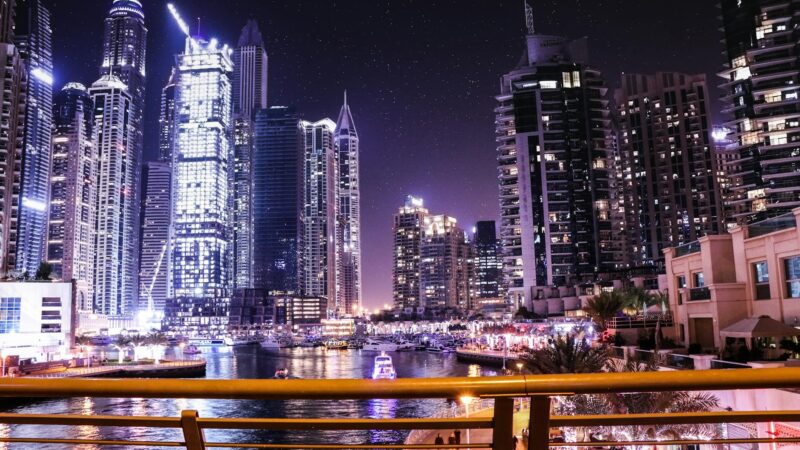
Cost of Living: Dubai is expensive — a furnished 2-bedroom apartment in Dubai Marina averages AED 18,000/month (~$4,900). Abu Dhabi is 15-20% cheaper. However, the absence of income tax, sales tax on most items (only 5% VAT), and property tax means take-home pay is dramatically higher than comparable US cities. A $150,000 salary in Dubai is broadly equivalent after-tax to $210,000 in New York. Score: 6.5/10.
Safety: UAE ranks among the world’s 10 safest countries by homicide rate (0.5 per 100,000 — comparable to Iceland). Dubai’s crime rate is among the lowest of any major global city. The Iran conflict has elevated background security awareness, but Dubai proper has seen zero direct security incidents. Score: 9.5/10.
Healthcare: Dubai Healthcare City is one of the world’s most sophisticated medical free zones. US-trained physicians are abundant. Private insurance (mandatory for most expats) runs $200–400/month for comprehensive coverage. Waiting times for specialist appointments average 3–7 days vs. 3–6 weeks in the US. Score: 8.5/10.
Visa Ease for Americans: UAE’s Golden Visa (10-year renewable) is obtainable via a AED 2 million (~$545,000) real estate investment, a SR 600,000 salary threshold, or through the “talented individuals” stream for professionals in specific fields. A simpler 2-year Freelance Visa costs ~AED 7,500. Score: 8.5/10.
Expat Friendliness: English is the de facto business language. 89% of Dubai’s population is expatriate. American cultural norms are broadly accommodated. Alcohol is legal in licensed venues. Score: 9/10.
Salary Levels: Finance, technology, and management roles in Dubai typically command 20-40% salary premiums over equivalent London roles, reflecting the expat talent pool competition. Score: 8.5/10.
For detailed UAE real estate investment analysis, see our Abu Dhabi real estate market report and the Dubai property market analysis.
#2 — Qatar: Highest Salaries, World-Class Infrastructure
Composite score: 7.9/10
Cost of Living: Doha is significantly cheaper than Dubai for rent — a furnished 2-bedroom in a premium Doha area averages QAR 12,000/month (~$3,300). Score: 7.5/10.
Safety: Qatar has one of the world’s lowest crime rates. The Iran missile strike on Qatar’s North Field LNG terminal in early March 2026 was an infrastructure event, not a threat to Doha residents, who experienced no direct security impact. Score: 9/10.
Healthcare: Hamad Medical Corporation operates one of the most advanced public hospital networks in the Arab world, free to Qatar residents. The Sidra Medicine hospital (built with $8 billion in investment) is rated among the top 10 pediatric and women’s facilities globally. Score: 9/10.
Visa Ease for Americans: Qatar’s permanent residency scheme is narrower than UAE’s Golden Visa — primarily available to long-term employees of Qatari government-affiliated entities. New investor residency pathways announced in 2025 have not yet been fully operationalized. Score: 6.5/10.
Salary Levels: Qatar’s oil and gas sector drives the highest expat salaries in the Gulf. Senior engineering, finance, and management roles average $8,200/month including housing allowance — the highest median on this list. Score: 9.5/10.
Social Environment: Qatar is more conservative than UAE. Alcohol is restricted to licensed hotels and the Qatar Distribution Company (QDC). Public displays of affection are discouraged. Score: 5.5/10.
#3 — Bahrain: The Most Underrated Gulf Destination
Composite score: 7.6/10
Bahrain is the Gulf’s most frequently overlooked expat destination — and perhaps its best-kept secret. The small island nation of 1.5 million (population including expatriates) offers the most liberalized social environment in the GCC, the cheapest cost of living, and one of the easiest long-term visa pathways for Americans.
Cost of Living: Manama is dramatically cheaper than Dubai or Doha. A furnished 2-bedroom in a good Manama neighborhood runs BHD 600–800/month ($1,590–$2,120). Dining, groceries, and utilities are all 30–50% cheaper than Dubai equivalents. Bahrain has no VAT on food, and overall cost of living is estimated at 40% below Dubai. Score: 9/10.
Safety: Bahrain’s sectarian tensions of the 2011–2014 period have significantly subsided. Crime rates are low. The proximity to Saudi Arabia (connected by the King Fahd Causeway) makes it a common commuter base for Aramco employees. Score: 7.5/10.
Expat Friendliness: Bahrain is the only GCC state with a majority-Bahraini social acceptance of non-Muslim religious practices, a visible Western expat bar and restaurant scene without hotel restrictions, and a published non-Muslim residency rights framework. Score: 9/10.
Visa Ease for Americans: Bahrain’s Golden Residency Visa (10-year) requires a minimum property investment of BHD 50,000 (~$133,000) — the lowest threshold in the GCC. Remote workers can also obtain a 1-year renewable “Work from Bahrain” visa requiring only proof of $24,000/year income. Score: 9.5/10.
#4 — Saudi Arabia: Vision 2030’s Expat Transformation
Composite score: 7.2/10
Saudi Arabia in 2026 is a country in rapid transformation. The reforms of Vision 2030 have fundamentally altered the expat experience since 2019 — entertainment venues have opened, women drive and work in nearly all sectors, cinemas operate, and the Premium Residency program offers a direct path to long-term legal residency outside the traditional employment-tied Iqama.
Cost of Living: Riyadh and Jeddah are mid-range by Gulf standards. A furnished 2-bedroom in a good Riyadh compound runs SR 6,000–9,000/month ($1,600–$2,400). Compounds (gated Western-style communities) offer a significantly more familiar environment for American families, with amenities including pools, gyms, and alcohol-permitted social spaces. Score: 7.5/10.
Salary Levels: Saudi Arabia’s compensation packages for senior expats — particularly in oil, gas, engineering, and finance — remain highly competitive. Aramco’s expat packages include housing, schooling allowances, business class annual flights, and salaries averaging $120,000–$180,000/year for senior roles. Score: 8.5/10.
Social Environment Caveats: Public alcohol consumption remains illegal. Religious observance norms are present but far less restrictive than a decade ago. NEOM and Red Sea Project employment zones are experimenting with more permissive frameworks. Score: 6/10.
Premium Residency Visa: Saudi Arabia’s Premium Residency (permanent, transferable) costs SR 800,000 (~$213,000) one-time or SR 100,000/year annually — giving holders the right to reside, work, and invest without Kafala (employer sponsorship). A significant policy advancement. Score: 7/10.
#5 — Oman: Quality of Life’s Hidden Champion
Composite score: 7.0/10
Oman consistently ranks as the most genuinely pleasant Gulf country to live in among long-term expats who have experienced multiple GCC postings. The combination of natural beauty (mountains, wadis, pristine beaches), a relaxed pace, exceptionally friendly Omani culture, and a lower cost of living than UAE or Qatar makes it compelling for a specific type of relocator.
Cost of Living: Muscat is 25–35% cheaper than Dubai. A furnished 2-bedroom in Al Mouj (Muscat’s premium expat neighborhood) runs OMR 600–800/month ($1,560–$2,080). Score: 8.5/10.
Salary Levels: Lower than UAE or Qatar for most roles — Oman’s economy is smaller and less oil-intensive. Score: 6.5/10.
Quality of Life: Oman’s traffic (low), pollution (minimal), stress (low), and social warmth are consistent highlights in expat surveys. The country scores highest of all Gulf states on the Mercer Quality of Living survey for “personal safety” and “natural environment.” Score: 9/10.
Visa: Oman’s investor residency requires OMR 500,000 (~$1.3 million) property purchase — higher threshold than Bahrain. A standard 2-year residency is tied to employment. Score: 6/10.
#6 — Kuwait: High Salaries, Low Lifestyle
Composite score: 6.4/10
Kuwait offers the Gulf’s most conservative social environment alongside some of its highest public-sector salaries. The country has no permanent residency or Golden Visa equivalent — all expat residents must be sponsored by an employer or Kuwaiti national. Alcohol is strictly prohibited. The result: Kuwait is a high-earning posting for specific sectors (oil, banking, government contracting), but a poor quality-of-life option for lifestyle-seeking relocators.
Salary Levels: Kuwait National Petroleum Company and government ministry postings offer salaries 15–25% above UAE equivalents in technical fields. Score: 8/10.
Expat Friendliness: The Kafala system is more strictly enforced than in UAE or Bahrain, creating dependency on the employer relationship. Score: 5/10.
No Long-Term Visa for Americans: Kuwait offers no investor or retiree residency pathway — residency requires active employment. This is a fundamental limitation for US relocators not on a direct employment contract. Score: 3/10.
#7 — Jordan: The Budget Option with Cultural Richness
Composite score: 6.1/10
Jordan occupies a different category from the GCC states — it is lower income, but culturally rich, genuinely warm toward Westerners, and dramatically cheaper. Amman has emerged as a growing hub for digital nomads, NGO workers, and retirees seeking an Arabic-speaking environment with a relatively liberal lifestyle and accessible residency.
Cost of Living: Amman is by far the cheapest capital on this list. A furnished 2-bedroom in Abdoun (Amman’s premier neighborhood) runs JOD 500–700/month (~$700–$990). Dining, healthcare, and domestic services are all 60–75% cheaper than Dubai equivalents. Score: 9.5/10.
Healthcare: Jordan’s private healthcare sector is surprisingly sophisticated — it is a medical tourism destination for patients from across the Arab world and increasingly from Europe. Private hospital care costs approximately 30% of US equivalents. Score: 7.5/10.
Tax Note: Jordan has an income tax (14–20% on most income). This is a meaningful difference from the GCC’s tax-free environment. Score: 5/10.
Long-Term Residency: Jordan offers a Property Owners Residency for purchases above $75,000. Digital nomad frameworks are under development. Score: 6.5/10.
What US Citizens Need to Know About Middle East Taxation
A critical point for American relocators: the United States taxes citizens on worldwide income regardless of where they live. Moving to Dubai or Doha does not eliminate your US tax obligation. However, the Foreign Earned Income Exclusion (FEIE) allows US citizens living abroad to exclude up to $126,500 (2026 figure) of earned income from US federal tax. Combined with the Foreign Tax Credit (applicable for Jordan’s income tax), most US expats in the Middle East can significantly reduce — and in GCC states, nearly eliminate — their federal income tax burden while still being US tax compliant.
For specifics on UAE investment and residency, see our guides on Abu Dhabi real estate investment 2026. The richest countries in the Middle East provides additional economic context.
What This Means for US Investors and Relocators
For Americans considering Middle East relocation in 2026, the optimal choice depends on profile: (1) Finance/tech professionals maximizing take-home pay: UAE (Dubai/Abu Dhabi) — tax-free income, English-language business environment, Golden Visa from $545K real estate; (2) Senior energy/engineering professionals: Qatar or Saudi Arabia — highest salaries in the GCC, world-class employer packages; (3) Remote workers and digital nomads: Bahrain — cheapest GCC cost of living, easiest visa (Work from Bahrain at $24K income threshold), most liberalized social environment; (4) Retirees and lifestyle seekers: Oman or Amman — safety, natural beauty, cultural richness at 40-60% of UAE cost. All GCC states are zero-income-tax — but US citizens must still file IRS returns and use FEIE to exclude Gulf earnings.
Frequently Asked Questions
Which Middle Eastern country is easiest for Americans to get long-term residency in 2026?
Bahrain is the easiest: its Golden Residency requires only a BHD 50,000 (~$133,000) property investment, or a “Work from Bahrain” visa for remote workers earning $24,000/year. UAE’s Golden Visa (from $545,000 real estate) is more expensive but offers a deeper infrastructure ecosystem. Jordan offers residency from $75,000 property purchase but levies income tax, unlike GCC states.
Do Americans pay US taxes if they live in Dubai or Qatar?
Yes — the US taxes citizens on worldwide income. However, the Foreign Earned Income Exclusion (FEIE) allows exclusion of up to $126,500 in earned income for 2026, and the GCC’s zero local income tax means there is no foreign tax credit to claim — making the FEIE the primary tool. Many US expats in the GCC pay minimal or zero federal income tax on Gulf salaries under $126,500, while filing annual IRS returns and FBAR.
Is it safe for Americans to live in the Middle East given the Iran conflict in March 2026?
The GCC states have remained physically safe for residents throughout the Iran-Hormuz conflict in March 2026. Dubai, Abu Dhabi, Doha, Manama, and Muscat have all had normal daily life. The conflict’s economic effects (oil prices, security premiums) are significant, but the risk to civilian expat residents in GCC cities has remained low. Jordan, being outside the Hormuz zone, is entirely unaffected geopolitically.
What is the best Middle Eastern country for healthcare as an American?
Qatar’s Hamad Medical Corporation and Sidra Medicine represent the region’s highest-quality public healthcare infrastructure, available free to Qatari residents. UAE’s private healthcare system (mandatory private insurance) provides faster access to specialist care with US-trained physicians. Jordan is the region’s medical tourism hub and offers excellent private hospital care at 30% of US costs — particularly relevant for retirees prioritizing medical affordability.
Can Americans retire in the Middle East? Which country is best?
Yes. Bahrain and Oman are the two best retirement destinations for Americans in 2026. Bahrain offers a low cost of living (40% below Dubai), liberal social environment, and Golden Residency from $133K property investment. Oman offers exceptional natural beauty, low stress, very low crime, and a cost of living 25-35% below Dubai. Both have English widely spoken in professional and commercial contexts. Note: US citizens must still file IRS returns regardless of country of residence.