Key Takeaways
- Gulf states import 85–90% of food — one of the highest food import dependency ratios of any major economic bloc globally
- Hormuz tanker traffic down ~95% — alternative routes add 10–14 days and 30–40% freight cost increases
- Strategic reserves cover 3–6 months depending on the country — Qatar is most exposed with no open land borders
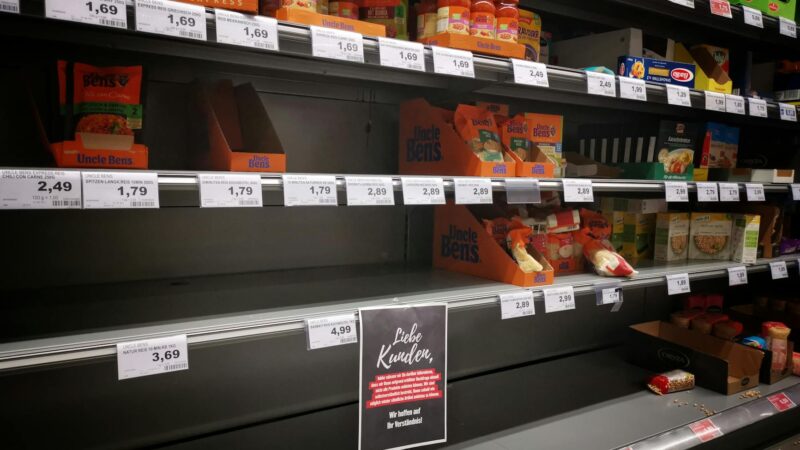
- Wheat, rice, and cooking oil prices up 15–25% across GCC retail in the first two weeks of the blockade
- US agri-exporters ADM, Bunge, Cargill face logistics chaos but potential price windfalls if Gulf demand holds
The Gulf Cooperation Council has built some of the most impressive physical infrastructure on earth — gleaming airports, world-class ports, air-conditioned malls. What it has not built is food self-sufficiency. The six GCC states collectively import 85–90% of their food supply, making them among the most food-import-dependent economies on the planet. In normal times, this dependency is managed efficiently through deep port infrastructure and well-functioning global commodity supply chains. In the third week of March 2026, as the Hormuz Strait remains effectively closed to commercial tanker traffic, those supply chains are under stress that policymakers have war-gamed but never before confronted in real time.
For US investors and agricultural companies, the Hormuz food crisis is both a humanitarian concern and a material market event. ADM, Bunge, Cargill — the three largest US agricultural commodity traders — all have exposure to Gulf food export flows. US wheat and corn futures are already reflecting the logistics disruption. And the question of whether Gulf strategic reserves can bridge a multi-week Hormuz closure without significant food inflation or social unrest is one that carries implications far beyond the GCC.
How Much Food Does the Gulf Actually Import Through Hormuz?
The dependency ratios are stark. The UAE imports approximately 90% of its food by volume. Qatar’s import dependency is similarly high at 85–90%. Saudi Arabia, despite its size and some domestic agricultural production (wheat, dates, vegetables), still imports roughly 80% of its caloric needs. Kuwait and Bahrain are near-total import-dependent at 90%+. Oman, with its southern coastline and some non-Hormuz port access, has slightly more routing flexibility.

Not all of this food transits the Strait of Hormuz directly. The UAE’s Jebel Ali port — the largest in the Middle East by container volume — sits just outside the Strait, and some cargo can be routed via the Gulf of Oman without entering Hormuz waters. But the reality is that the vast majority of GCC food imports are affected either directly (transit through the Strait) or indirectly (through shipping insurance costs and tanker availability constraints that make the entire regional logistics system more expensive).
The categories most at risk are bulk commodities — wheat, rice, cooking oil, and animal feed — which are too high-volume and low-margin to reroute by air freight. Premium and perishable goods have shifted partly to air cargo at enormous cost premiums, but the bulk commodity backbone of Gulf food security is a shipping story, not an air freight story.
What Are Alternative Routes and How Much Do They Cost?
With Hormuz effectively closed, shippers serving the Gulf face three alternatives, all of them more expensive and slower:
1. Cape of Good Hope routing: Shipping from major food exporters (US Gulf, Brazil, Black Sea, India) around the southern tip of Africa adds approximately 10–14 additional days for vessels serving UAE and Saudi ports via the Gulf of Oman. Fuel cost per voyage increases by 25–35%. Insurance surcharges for Gulf-adjacent routing add another 5–10%. Net result: a cost increase of approximately 30–40% per ton of food delivered via this route.
2. Trans-Arabian Pipeline and UAE land corridors: The UAE’s Hormuz bypass infrastructure — primarily designed for crude oil — has limited applicability for food imports. There are no equivalent food pipeline alternatives. Some bulk goods can be trucked from Oman’s southern ports, but Oman’s own supply chain is under stress and trucking capacity is finite.
3. Red Sea routing to Saudi Arabia’s western ports: Saudi Arabia has significant port capacity on the Red Sea — Jeddah Islamic Port is the second-largest port in the Middle East. Food destined for Riyadh and central Saudi Arabia can be rerouted via Jeddah and trucked east. This is logistically viable but adds transit time and cost. It is partly why Saudi Arabia’s food inflation trajectory in Week 3 is slightly better than Qatar’s — it has western port optionality that Qatar does not.
Which Country Is Most Vulnerable? Why Qatar Stands Apart
Qatar is the most food-exposed GCC member state for a structural reason: it has no open land borders. Saudi Arabia closed the Qatar-Saudi land border in 2017 during the diplomatic blockade, and while it was technically reopened in 2021, the current conflict has created a de facto closure of that route again due to military logistics priorities. Qatar has no alternative land-border access — it is a peninsula connected to the Arabian mainland by one border crossing.
This means Qatar cannot use the Saudi land corridor for food rerouting in the way that, for example, the UAE can route via Oman. Qatar’s strategic food reserve — expanded significantly after the 2017 blockade to approximately 3–4 months of supply for most key commodities — is the primary buffer. The government has been drawing down those reserves since Week 1 of the Hormuz disruption, and the pace of drawdown is the key variable to watch. At current consumption rates and with partial air freight supplementation, most analysts estimate Qatar’s reserves can bridge 10–14 additional weeks before rationing measures become necessary.
For context on the broader Iran-Israel conflict dynamics that are driving this situation, see our analysis of the economic impact of the Iran war on Gulf states.
What Food Price Increases Are Actually Being Recorded Across the GCC?
Retail price data from the first two weeks of the Hormuz blockade is showing consistent patterns across GCC consumer markets:
Wheat and bread products: Up 15–20% in UAE supermarkets. Saudi Arabia has activated government price controls on subsidized bread to prevent panic buying, but specialty and imported bread products are up sharply. Kuwait’s government-subsidized bread program is absorbing cost increases through the budget rather than passing them to consumers — a fiscally manageable approach given Kuwait’s sovereign wealth resources.
Rice: Up 20–25% across most GCC markets. The Gulf is heavily dependent on Indian and Pakistani basmati rice varieties, and the Indian government has suspended some export licenses as a precautionary measure — adding supply-side pressure on top of the logistics disruption.
Cooking oils: Up 18–22%. Palm oil (primarily from Malaysia and Indonesia) and sunflower oil (from Ukraine and the Black Sea region) both transit Hormuz or Red Sea routes. The cooking oil supply chain was already tight from 2022–2024 Ukraine-related disruptions; the Hormuz closure is a second shock.
Chicken and poultry: Up 10–15%. Much of the GCC’s poultry supply is domestically produced (Saudi Arabia, UAE), but animal feed — primarily corn and soybean meal — is imported. Higher feed costs are flowing into poultry prices with a 2–3 week lag.
What Does the Hormuz Food Crisis Mean for US Agricultural Companies?
What This Means for US Investors
ADM (Archer-Daniels-Midland), Bunge Global, and Cargill (private) collectively handle a significant share of the wheat, corn, and soybean meal that flows into Gulf food supply chains. The Hormuz disruption creates a paradox for these companies: higher commodity prices (good for trading margins) combined with logistics chaos (bad for execution and contract fulfillment costs). US wheat futures have risen approximately 8–12% since the blockade began, benefiting US prairie wheat growers in Kansas, Oklahoma, and the Dakotas. Corn futures are up 6–9%. For equity exposure, ADM and Bunge are the most directly tradeable US agri-companies with Gulf export exposure. Both have seen share price appreciation since the Hormuz closure began. The risk scenario: a negotiated Hormuz reopening within weeks would reverse commodity price gains quickly. The bull scenario: an extended closure drives Gulf sovereign buyers to lock in forward purchase contracts at elevated prices, providing earnings visibility for US agri-traders through 2026–2027.
The logistics chaos dimension cannot be overstated. US agricultural exporters typically ship from Gulf Coast ports (Houston, New Orleans, Mobile) with delivery windows of 20–35 days to GCC ports. The Hormuz disruption has extended those effective delivery windows by 10–14 days, creating contract timing issues, storage cost increases at destination ports, and demurrage charges where vessels are waiting outside closed Hormuz approaches. The financial impact of these logistics disruptions on US agri-company Q1-Q2 2026 earnings is likely to be material — expect significant charges and guidance revisions in upcoming earnings calls.
How Long Can Gulf Strategic Reserves Last?
The GCC states have invested heavily in strategic food reserves since the 2007–2008 global food price crisis and more recently since the 2017 Qatar blockade demonstrated the vulnerability of single-route food dependency. Current estimated reserve coverage by country:
UAE: Approximately 5–6 months for most key commodities. The UAE has the most developed strategic reserve infrastructure in the GCC, including purpose-built government warehousing in Jebel Ali free zone and Abu Dhabi industrial areas.
Saudi Arabia: Approximately 4–5 months for wheat, rice, and sugar. The Saudi Grains Organization (SAGO) manages the kingdom’s strategic grain reserves and has been expanding capacity under Vision 2030 food security initiatives. See our coverage of Vision 2030’s progress for context on Saudi food security investments.
Qatar: Approximately 3–4 months, expanded from pre-2017 levels of roughly 1 month. Qatar’s Hassad Food Company (a QIA subsidiary) manages strategic reserves and has diversified sourcing to reduce single-country dependency.
Kuwait and Bahrain: Approximately 3 months each, with Kuwait’s reserve management benefiting from its large sovereign wealth fund financing flexibility.
Oman: Approximately 4 months, with some supplementary routing flexibility via its non-Hormuz-adjacent southern coast.
The consensus assessment among Gulf food security analysts is that a Hormuz disruption lasting less than 8 weeks can be managed without significant rationing measures in the wealthier GCC states. Beyond 8 weeks, measures escalate: purchasing prioritization, government price controls, export restrictions on domestically-produced goods, and potentially emergency imports via air freight for critical commodities. The conflict entered Week 3 as of March 19, 2026 — the clock is running.
Frequently Asked Questions
Why do Gulf states import 85–90% of their food?
The Gulf states have desert climates with minimal arable land and scarce freshwater. Agricultural production is limited to niche crops (dates, some vegetables, limited poultry) that cannot meet the caloric needs of rapidly-growing urban populations. The economic model has been to use oil wealth to purchase food internationally rather than attempt large-scale domestic food production in an inherently unsuitable climate.
Which Gulf country is most vulnerable to a Hormuz food blockade?
Qatar is the most exposed. It has no open land borders to reroute supply chains through, no Red Sea port access, and strategic reserves of approximately 3–4 months. The UAE and Saudi Arabia have more routing optionality — UAE via Omani land corridors, Saudi Arabia via Jeddah’s Red Sea port — giving them somewhat more resilience during an extended Hormuz closure.
How do Hormuz disruptions affect US wheat and corn prices?
Gulf demand for US wheat and corn does not disappear during a Hormuz disruption — it gets redirected through more expensive routes or deferred. The logistics cost increases and supply uncertainty create near-term price premiums in US futures markets. Since the Hormuz blockade began in early March 2026, US wheat futures are up approximately 8–12% and corn futures are up 6–9%.
What are US agricultural companies doing about Gulf logistics disruption?
ADM and Bunge are rerouting shipments via Cape of Good Hope where contracts allow flexibility. Both companies are also booking forward contracts with Gulf sovereign buyers who want to lock in supply at current prices before reserves run lower. The logistics cost increases are being partially passed through to buyers and partially absorbed as margin compression — expect earnings guidance revisions in Q2 2026 calls.
How long could the Hormuz food crisis last?
Gulf strategic reserves provide a 3–6 month buffer depending on the country. The political and military dynamics of the Iran-Israel conflict suggest de-escalation pressure will intensify before reserves are critically depleted. Most scenario analyses put the high-risk period at weeks 6–10 of a continuous closure — beyond that, social and political pressure for Hormuz reopening becomes overwhelming for all regional parties.
The Gulf’s food security crisis in March 2026 is a real-time demonstration of a vulnerability that economists and policymakers have studied for decades: when you import nearly everything you eat through a single chokepoint, that chokepoint becomes your most existential risk. The $66 billion Ramadan consumer economy can absorb higher retail prices for a few weeks. Strategic reserves buy months. But a Hormuz closure measured in quarters — not weeks — would represent a food security challenge that no amount of sovereign wealth can easily solve. The urgency of de-escalation is not measured only in oil barrels. It is measured in the contents of every supermarket shelf in Dubai, Riyadh, and Doha.