Key Takeaways
- February 2026 sanctions round — US Treasury designated 30+ entities and 12 shadow fleet vessels, the largest single tranche since Trump’s NSPM-2 directive
- Maximum pressure doctrine — Trump’s February 4, 2025 National Security Presidential Memorandum set a framework that is now structurally irrelevant as kinetic war supersedes economic coercion
- Frozen assets — approximately $80 billion in Iranian sovereign assets remain frozen across US, EU, and South Korean jurisdictions
- Larijani paradox — Ali Larijani was sanctioned by the US in January 2026, then killed by Israel in March — illustrating the redundancy of financial tools when military operations are active
- Post-war reconstruction — the $80B in frozen assets and Iran’s oil sector represent the largest single emerging-market reconstruction opportunity in a generation, contingent on conflict resolution
The United States Treasury sanctioned more than 30 entities and 12 shadow fleet vessels on February 25, 2026 — one of the largest single-tranche designations in the history of the Iran maximum pressure campaign. Three weeks later, Israel had assassinated the Iranian Intelligence Minister, killed a senior Basij commander, and struck the South Pars gas field. The sanctions had not stopped any of it.
This is not an argument that sanctions failed. It is an observation that they have become a secondary instrument in a conflict where kinetic action is the primary variable. For American companies, investors, and compliance officers, that shift has concrete implications — some overlooked, some creating unexpected opportunity.
What Did the February 2026 Sanctions Round Actually Target?
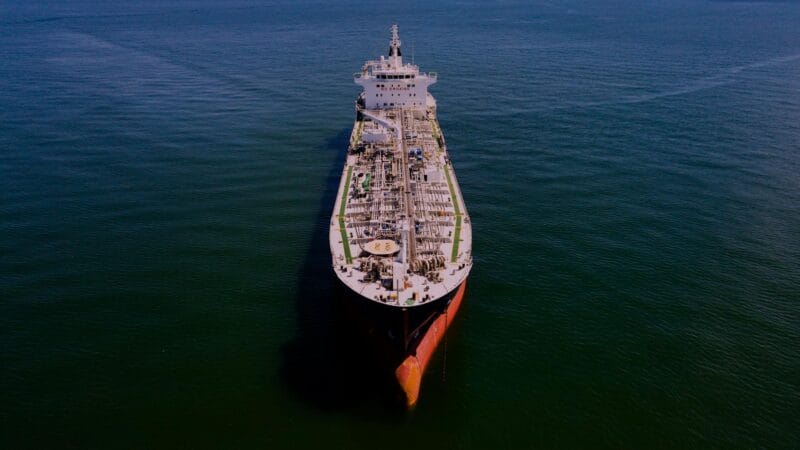
The February 25 designation package targeted entities across multiple jurisdictions involved in facilitating Iranian oil exports through what the Treasury Department calls the “shadow fleet” — a network of vessels operating under obscure flag registries, shell company ownership structures, and obfuscated payment routing to move Iranian crude to buyers in Asia, primarily China.
The 12 vessels designated in the February package brought the total shadow fleet designations under the current administration to over 80 vessels since Trump’s February 4, 2025 National Security Presidential Memorandum (NSPM) directed the Treasury and State Departments to reimpose and expand maximum pressure on Iran’s energy sector.
Earlier, in January 2026, Treasury had designated 18 additional entities in a shadow banking package targeting financial intermediaries — money service businesses, currency exchange operators, and front companies — used to convert Iranian oil revenues into hard currency and move them across the sanctions perimeter. One of those January designations, notably, was Ali Larijani — who was killed by an Israeli strike in March. The convergence of US financial designation and Israeli military targeting of the same individual underscores how comprehensively Iran’s leadership class was under pressure from multiple directions simultaneously.
Why Has Maximum Pressure Become Structurally Irrelevant?
The honest answer is that maximum pressure was designed for a different problem. Economic coercion works when the target has something it wants to preserve — access to the global financial system, trade relationships, sovereign credit ratings — and when the coercing party has credibility about escalation. Iran in March 2026 is fighting a war. Its leadership is being assassinated. Its gas infrastructure is under attack.
In that environment, Treasury designations function as bureaucratic record-keeping, not behavioral modification. The economic cost of the conflict to Iran vastly exceeds the marginal impact of any new sanctions tranche. The shadow fleet keeps moving oil. The designations add compliance friction for the global financial system without materially altering Iranian behavior.
This is not a failure of the current administration’s policy design — it is an inherent limitation of financial tools during active kinetic conflict. The same dynamic played out in Russia after February 2022: unprecedented Western sanctions did not stop the war, though they did impose meaningful long-term structural costs.
What Is the Shadow Fleet and Why Does It Matter to US Companies?
The shadow fleet is approximately 700-900 vessels globally (across Russia, Iran, and Venezuela sanctions evasion operations) that operate outside the normal international shipping compliance ecosystem. They use aged tonnage, obscure flag states (Palau, Cameroon, Gabon), shell company ownership chains across multiple jurisdictions, and payment routing through non-SWIFT financial intermediaries.
For US companies, the compliance risk is not direct — most large American firms are nowhere near Iranian oil. The risk is indirect: secondary sanctions exposure. Any company with relationships in jurisdictions that interact with shadow fleet operations — certain Chinese banks, specific Dubai-based commodity traders, Singaporean ship managers — faces potential secondary designation risk if those relationships can be linked to Iranian oil flows.
The February 2026 round specifically targeted entities in the UAE and Hong Kong — two jurisdictions with heavy US corporate presence. Any American company using UAE-based financial services, trade finance, or logistics intermediaries should be conducting enhanced due diligence on counterparty exposure to the shadow fleet network.
What Happens to $80 Billion in Frozen Iranian Assets After the War?
What This Means for US Investors
Two scenarios deserve pricing. In the conflict-continuation scenario: shadow fleet designations keep compressing Iranian oil export volumes, keeping Brent elevated and benefiting US energy majors and LNG exporters. In the post-conflict scenario: unfreezing $80 billion in Iranian assets and rehabilitating Iran’s oil sector (pre-war capacity: ~3.8 million barrels/day, currently ~2.5 million) would add meaningful supply to a tight market, potentially pushing Brent down $15-20/barrel from conflict-elevated levels. Oil majors with Iran rehabilitation expertise — TotalEnergies, Shell, and potentially ExxonMobil if sanctions fully lift — would compete for reconstruction contracts. The $80B asset unfreeze would flow significantly into oil infrastructure, creating a one-time investment boom. US investors in energy companies should model both scenarios now, because the transition between them could happen faster than markets currently price.
Approximately $80 billion in Iranian sovereign assets are frozen across three primary jurisdictions: the United States (via OFAC-administered freezes and litigation holds), the European Union (primarily Belgium through the Euroclear clearing system), and South Korea (under US secondary sanctions pressure on Korean financial institutions holding Iranian oil payment receivables).
These assets are not a monolith — they represent a mix of central bank reserves, sovereign wealth fund holdings, government-owned corporate equity, and oil payment receivables accumulated over years of restricted settlement. Their unfreezing in a post-conflict scenario would not be instantaneous: legal processes, sanctions architecture rollback, and asset verification would take months to years.
But the economic significance is substantial. $80 billion represents approximately 17% of Iran’s pre-war GDP. Released into a post-conflict reconstruction environment, it would fuel an investment boom in Iran’s energy sector (the most immediate recipient), infrastructure, and consumer economy. Iran’s economic impact on the Gulf states would shift dramatically from threat to opportunity in that scenario.
What Does Iran’s Oil Sector Look Like After Wartime Disruption?
Iran’s oil production capacity before the March 2026 conflict began was approximately 3.8 million barrels per day, of which roughly 2.5 million barrels per day was being exported, primarily to China through shadow fleet operations. The South Pars gas field strike has added uncertainty to the production trajectory — South Pars is not primarily an oil field, but it is the anchor of Iran’s energy revenue base and its disruption sends ripple effects through the entire petroleum sector.
Post-conflict reconstruction of Iran’s energy sector — depending on conflict resolution terms — could restore and potentially expand production capacity toward 4.5-5 million barrels per day within three to five years if international investment is permitted. That would represent a meaningful addition to global supply, with direct implications for OPEC’s production strategy and global oil price trajectories.
How Does the Larijani Paradox Define the Current Moment?
Ali Larijani — former Speaker of the Iranian Parliament, one of the Islamic Republic’s most senior political figures — was designated by the US Treasury in January 2026 as part of the shadow banking enforcement package. He was killed by an Israeli strike in March 2026.
The sequence is worth dwelling on. The most powerful economic coercion tool available to the United States — OFAC designation — was applied to Larijani while he remained active and influential inside Iran. The most permanent coercion tool — lethal military force, applied by a US ally — removed him from the equation entirely within weeks.
This is not a moral argument. It is a strategic observation: when a conflict reaches the level of assassinating senior officials, financial sanctions have been superseded as the primary coercive instrument. The sanctions remain legally operative and compliance-relevant for the global financial system. But their behavioral impact on Iranian decision-making is effectively zero in the current environment.
What Should US Companies Do Right Now?
Three immediate actions are warranted for any US firm with Middle East or Asia-Pacific exposure:
1. Shadow fleet counterparty audit. Review all shipping, logistics, and trade finance counterparties — particularly in UAE, Singapore, Hong Kong, and Turkey — for potential exposure to the 80+ designated vessels and their management companies. The February 2026 package added new entity names that should be cross-referenced against existing counterparty lists.
2. Secondary sanctions screening. Firms using Chinese financial institutions for any trade finance should assess whether those institutions have exposure to the Iranian oil payment flows that Treasury’s January 2026 shadow banking package targeted. Secondary sanctions exposure does not require direct contact with Iran.
3. Scenario planning for asset unfreeze. Investment teams with energy sector exposure should model the post-conflict oil supply scenario. Current Brent prices above $112 embed significant conflict premium. Unfreezing $80 billion and rehabilitating Iranian production would compress that premium over a 12-36 month horizon.
Frequently Asked Questions
What did the February 25, 2026 US sanctions on Iran target?
The February 25 package designated 30+ entities and 12 shadow fleet vessels involved in facilitating Iranian oil exports. Targets included entities in the UAE and Hong Kong operating as financial intermediaries, vessel management companies, and front companies used to route Iranian oil revenue through non-SWIFT payment channels to buyers primarily in China.
What is Iran’s shadow fleet and how large is it?
The Iranian shadow fleet is an estimated 200-300 vessels (as a subset of a broader 700-900 vessel global sanctions-evasion fleet) operating under obscure flag registries, shell company ownership structures, and non-standard payment routing to move Iranian crude to sanctioned-sensitive buyers. Treasury has designated over 80 Iranian-connected vessels since Trump’s February 2025 NSPM directive.
How much in Iranian assets is currently frozen?
Approximately $80 billion in Iranian sovereign assets are frozen across US, EU (primarily via Euroclear in Belgium), and South Korean jurisdictions. The assets represent a mix of central bank reserves, sovereign wealth fund holdings, and oil payment receivables accumulated over years of restricted settlement under successive sanctions regimes.
What would unfreezing $80 billion in Iranian assets mean for oil markets?
Released into a post-conflict reconstruction environment, $80 billion would primarily flow into Iran’s energy sector, infrastructure, and consumer economy. Rehabilitated Iranian oil production could reach 4.5-5 million barrels per day within 3-5 years, adding meaningful supply to global markets and compressing Brent prices by an estimated $15-20/barrel from conflict-elevated levels over a multi-year horizon.
Why are Iran sanctions described as “irrelevant” during wartime?
Maximum pressure was designed for behavioral modification through economic coercion — effective when a target has things to preserve (trade access, financial system connectivity). During active military conflict with ongoing leadership assassinations, Iran is not making decisions based on financial cost calculations. Sanctions remain legally operative and compliance-relevant for the global financial system, but their behavioral impact on Iranian strategic decision-making during wartime is effectively zero.
Conclusion: Sanctions as Documentation, Not Deterrence
The Iran maximum pressure campaign of 2025-2026 has achieved measurable results in the pre-war period — compressing Iranian oil export volumes, adding friction to shadow fleet operations, and isolating Iranian financial intermediaries from the global banking system. Those are real, if partial, achievements.
But the March 2026 conflict has moved the relevant variable from economic pressure to military outcome. The $80 billion in frozen assets, the 80+ designated vessels, and the 30-entity February 2026 package are now footnotes to a war. They remain legally operative and compliance-critical for US companies. They no longer define the strategic trajectory of Iran’s behavior or the conflict’s resolution.
For investors, the more forward-looking question is not whether sanctions worked — it is what happens to $80 billion in frozen assets and 3.8 million barrels per day of production capacity when the shooting stops. That is where the real economic opportunity and risk reside.