Key Takeaways
- USD/EGP at 52.34 — The pound has weakened 10.19% against the dollar in the past month, trading in a range of 51.81–52.79.
- Inflation at 13.4% — Egypt’s official CPI reading for February 2026 came in at 13.4%, with food inflation running materially higher.
- $30B remittances at risk — Egypt’s 9 million workers in the Gulf send home approximately $30 billion per year; regional instability is already disrupting transfer flows and employment stability.
- Suez Canal revenues ~$10B/year — Rerouting of commercial vessels away from Red Sea transit routes due to Houthi activity and the broader conflict threatens a key hard-currency earner.
- IMF disbursed $5.2B — The Fund has released $5.2 billion under Egypt’s extended arrangement, but conditionalities require sustained fiscal consolidation that is harder to deliver under crisis conditions.
For Americans, Egypt matters more than most realize. It is the Arab world’s most populous nation, a major recipient of US foreign aid, a critical node in global shipping via the Suez Canal, and — increasingly — a canary in the coal mine for emerging market stress. When the pound falls this sharply this fast, it tells you that investors, businesses, and ordinary Egyptians are betting that things are about to get harder. They are almost certainly right.
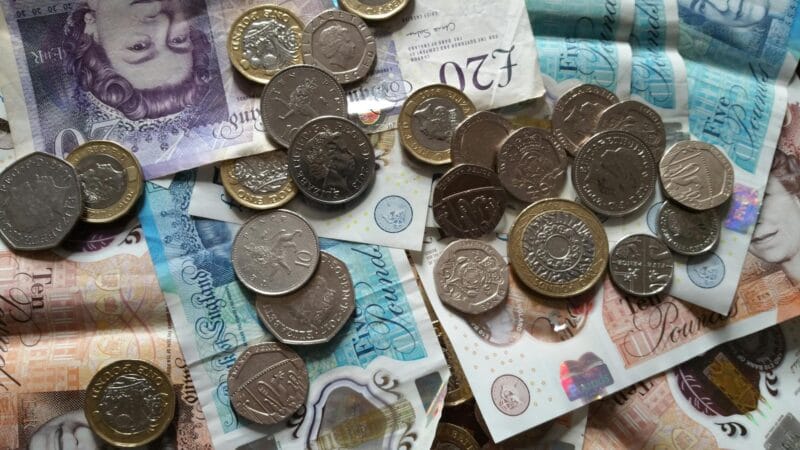
The USD/EGP rate hit 52.34 in mid-March 2026, representing a 10.19% depreciation in a single month from a rate around 47.50. The 30-day trading range of 51.81–52.79 signals that the currency is not in freefall but is under sustained, directional selling pressure. The question is whether existing shock absorbers — the IMF program, Gulf bilateral support, Suez revenues — can hold the line or whether Egypt is heading toward a second wave of the currency crisis that triggered a 40%+ pound devaluation between 2022 and 2024.
What Is Driving the Pound Lower?
Three forces are compounding simultaneously:
1. The Iran conflict’s ripple effects on the Gulf labor market. Egypt has approximately 9 million nationals working across GCC countries — the largest Arab diaspora workforce in the Gulf. Remittances from these workers totaled roughly $30 billion in fiscal year 2025, making it Egypt’s single largest source of hard currency, exceeding both tourism revenue and Suez Canal receipts. As Gulf economies enter their own contraction phase due to the conflict — with tourism collapsing, construction slowing, and business investment freezing — the employment security of Egyptian workers is directly threatened. Even a 10% reduction in remittance flows would cost Egypt $3 billion per year in foreign exchange.
2. Suez Canal revenue disruption. The Canal generates approximately $10 billion per year in transit fees — Egypt’s second-largest hard currency earner after remittances. Houthi attacks on Red Sea shipping, which began in late 2023, had already caused a significant rerouting of commercial vessels around the Cape of Good Hope. The broader 2026 conflict with Iran has deepened this rerouting trend. Suez transits were running at approximately 60% of pre-Houthi levels as of March 2026, implying an annualized revenue shortfall of roughly $4 billion versus 2023 peak revenues.
3. Food import disruption. Egypt is the world’s largest wheat importer, sourcing approximately 60% of its grain from Black Sea and Eastern Mediterranean suppliers. Logistics chains that pass through or near Gulf waters are disrupted; insurance costs for shipping to Egyptian ports have risen sharply. This is directly feeding into the 13.4% February inflation reading, with bread and staple food prices rising at multiples of the headline rate in informal markets.
Is the IMF Program Enough to Stabilize Egypt?
Egypt entered 2026 with an active IMF Extended Fund Facility, under which the Fund has disbursed $5.2 billion across multiple tranches. The program required significant painful reforms: unification of the exchange rate (achieved in March 2024), energy subsidy rationalization, and monetary tightening. Egypt’s central bank raised rates aggressively through 2024–2025 to anchor the pound.
The problem is that the 2026 conflict is creating exactly the conditions — slowing growth, higher import costs, reduced hard currency inflows — that make IMF conditionality hardest to fulfill. Egypt’s primary surplus target, a core program requirement, becomes more difficult to achieve when growth slows and social spending pressures mount. The Fund is aware of this: IMF managing director statements in early March 2026 acknowledged that “external shocks beyond Egypt’s control” were complicating program implementation.
Gulf bilateral support remains a critical backstop. Saudi Arabia and the UAE together have provided Egypt with approximately $35 billion in deposits, investments, and direct grants since 2022. But with Gulf governments now managing their own conflict-related fiscal pressures, the appetite for additional Egyptian bailout tranches may be constrained. Saudi Arabia’s Vision 2030 spending commitments leave limited fiscal headroom for regional aid at scale.
What Does the Currency Data Actually Tell Us?
The 51.81–52.79 trading band in March 2026 is revealing. The Central Bank of Egypt (CBE) is not defending a fixed peg — it abandoned that stance in 2024 — but it is clearly intervening to prevent disorderly depreciation. The pace of weakening (roughly 0.5 EGP per dollar per week in March) suggests managed depreciation rather than panic selling.
The risk scenario: if remittance flows drop materially or Suez revenues fall further, the CBE may lack sufficient reserves to maintain even this managed pace. Egypt’s net international reserves stood at approximately $47 billion as of February 2026 — adequate but not comfortable given the country’s import bill and external debt service schedule. A reserves drawdown of $5–8 billion over the next two quarters would begin to flash amber on sovereign risk monitors.
What About US Foreign Aid to Egypt?
The United States provides Egypt with approximately $1.3 billion per year in foreign military financing and roughly $150 million in economic support funds. This aid has been a constant since the Camp David Accords of 1978 and is one of the most durable bilateral assistance programs in US foreign policy. The conflict context complicates this: Egypt has maintained studied neutrality on the Iran conflict, neither condemning Iranian actions nor supporting Western responses, consistent with its historically non-aligned stance. US congressional scrutiny of this neutrality is likely to intensify if the conflict deepens.
What This Means for US Investors
Egypt is the second-largest country weight in most EM bond and equity indices for the Middle East and North Africa region. US investors with exposure via funds tracking the MSCI Frontier Markets or JP Morgan EMBI indices have direct Egyptian exposure. The pound’s 10.19% depreciation in a month is a significant FX headwind for USD-denominated returns on EGP-priced assets. However, Egyptian local-currency bond yields — currently above 25% — are providing a partial offset for investors who stayed in. The strategic question: is this a temporary shock with a V-shaped recovery, or the beginning of a second structural devaluation cycle? The answer depends almost entirely on how long the Gulf conflict runs and whether remittance flows stabilize. For a broader view of regional investment exposure, see our guide to Middle East ETFs for US investors.
Frequently Asked Questions
Why is the Egyptian pound falling so fast in March 2026?
Three simultaneous shocks: the Iran conflict threatens Gulf employment for Egypt’s 9 million diaspora workers (risking $30B in annual remittances); Suez Canal revenues are already depressed by Houthi rerouting and the broader conflict deepens this; and food import costs are rising due to logistics disruption. The CBE is managing depreciation but cannot stop the directional trend without large reserve drawdowns.
What is Egypt’s inflation rate and why does it matter for Americans?
Egypt’s CPI was 13.4% in February 2026, with food inflation running higher. For Americans, this matters because rising food prices in a country of 105 million people create social instability risks that affect regional security dynamics — an area where the US has $1.3B/year in military aid commitments and deep strategic interests dating to the Camp David peace framework.
Will the IMF bail Egypt out again?
Egypt already has an active IMF Extended Fund Facility with $5.2B disbursed. A program augmentation is possible if reserves fall significantly, but would require additional conditionality. The IMF has limited appetite for repeated program failures; Egypt’s ability to meet fiscal targets under current crisis conditions is genuinely uncertain, making a fourth major support package within five years a realistic but politically complex possibility.
How exposed are US EM bond funds to Egypt?
Egypt is a meaningful weight in JP Morgan’s EMBI Global index and several MENA-focused frontier market indices. Funds tracking these benchmarks hold Egyptian sovereign and quasi-sovereign debt. The pound’s depreciation affects local-currency bond returns when translated to USD; hard-currency (USD-denominated) Egyptian Eurobonds are more insulated from FX moves but are sensitive to credit spread widening on sovereign risk concerns.
What is Egypt’s Suez Canal revenue and how is it affected?
The Suez Canal generated approximately $10B in transit revenues in fiscal year 2023 — Egypt’s peak year. Houthi attacks on Red Sea shipping since late 2023 have caused significant vessel rerouting to the Cape of Good Hope, cutting transit volumes. The 2026 conflict has deepened this trend; analysts estimate annualized Suez revenue is running at roughly $6B, a $4B annual shortfall that directly pressures Egypt’s foreign exchange position.
The Bottom Line: Egypt as a Stress Test
Egypt’s economic vulnerabilities — import dependence, Gulf labor market exposure, canal revenue sensitivity — make it uniquely exposed to the current regional crisis. The pound at 52.34 is not yet a catastrophe, but the directional trend is unambiguous. What Egypt needs most is what it cannot control: a de-escalation of the Gulf conflict that restores remittance security, Canal traffic, and Gulf tourism spending power.
For the Cairo government, the immediate priority is reserve management: don’t spend dollars defending a rate that market forces will eventually overcome. For US policymakers and investors, Egypt is the most important early-warning indicator of whether the 2026 Gulf conflict will produce spillover instability in the Arab world’s most consequential state. Watch the weekly CBE reserve data closely — it will tell you more than any diplomatic statement about how serious this really is.
For the broader context on regional structural reform pressures, see Egypt’s IMF reform package implementation and the March 2026 oil price forecast, both of which directly shape Cairo’s fiscal mathematics.