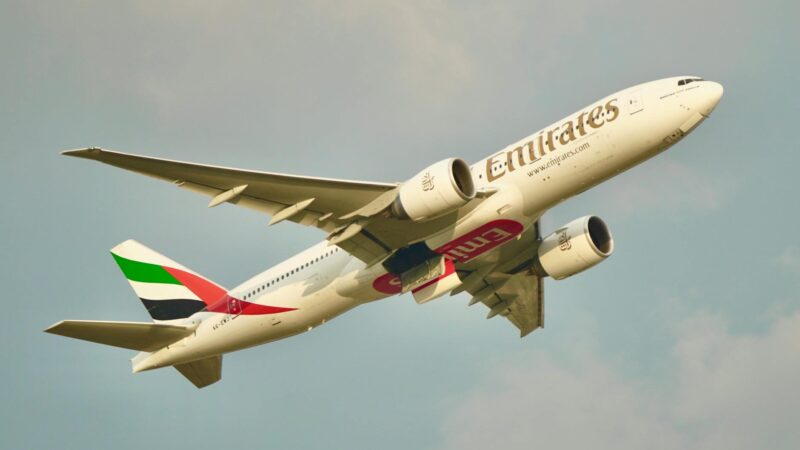
The Gulf aviation sector is experiencing an exceptional season during Ramadan 2026, despite the geopolitical challenges sweeping the region. Major carriers — Emirates, Qatar Airways, and Saudia — are operating at maximum capacity to accommodate surging travel demand, driven by Umrah pilgrimage traffic, family visits, and seasonal holidays.
But this is no ordinary season. The closure of Iranian and Iraqi airspace due to armed conflict, combined with soaring jet fuel prices linked to elevated oil prices, are imposing unprecedented operational and financial pressures on Gulf carriers in March 2026.
Passenger Numbers: Growth Despite Challenges
Emirates
Emirates announced carrying more than 4.8 million passengers during the first half of Ramadan 2026, a 9% increase over the same period last year. The UAE carrier added 340 extra flights across its network during the holy month, with special reinforcement for routes to Jeddah and Madinah to accommodate Umrah demand.

Emirates’ load factor reached 87.3% in March 2026 — a high level reflecting strong demand. Estimated revenue for the month exceeds 4.2 billion dirhams ($1.14 billion), supported by higher ticket prices and increased business and first-class traffic.
Qatar Airways
Qatar Airways expanded its Ramadan network to cover 170 destinations in March 2026. The Qatari carrier transported 3.2 million passengers during the first half of the month, with emphasis on Southeast Asian and Indian subcontinent routes that see elevated demand during Ramadan.
Qatar Airways announced the launch of 5 new temporary destinations during Ramadan, including direct flights from Doha to secondary cities in Pakistan, India, and Bangladesh to serve large expatriate communities wishing to visit families during the holy month.
Saudia (Saudi Arabian Airlines)
Saudia plays a pivotal role in the Ramadan season as the national carrier of the country hosting the Two Holy Mosques. The airline announced operating more than 2,800 additional flights during the month, including 1,200 flights on Jeddah and Madinah routes alone. Total expected passengers for the month reach 5.5 million.
Flynas, Saudi Arabia’s low-cost carrier, also recorded strong performance, transporting 2.1 million passengers with a load factor of 91% — the highest among Gulf carriers.
Umrah Traffic: The Primary Driver
Umrah pilgrimage traffic is the strongest driver of Gulf aviation during Ramadan. Saudi Arabia’s Ministry of Hajj and Umrah announced issuing more than 10 million Umrah visas since the start of the current Umrah season, with intense flows during the last ten days of Ramadan.
King Abdulaziz International Airport in Jeddah is operating near 95% capacity during peak hours, while Prince Mohammad bin Abdulaziz Airport in Madinah receives record numbers. Air traffic from Indonesia, Malaysia, Pakistan, Egypt, and Turkey represents more than 60% of total Umrah air traffic.
The Airspace Closure Challenge
Operational Impact
The closure of Iranian and Iraqi airspace due to armed conflict imposes significant operational challenges on Gulf airlines. Europe-bound flights now use longer alternative routes via Saudi Arabia, Egypt, and Turkey, adding between 45 minutes and 2 hours to flight times.
This rerouting means a 12% to 18% increase in fuel consumption on affected flights — an additional financial burden at a time when jet fuel (Jet A-1) trades at $128 per barrel, up 35% from pre-conflict levels.
Ticket Prices
These operational pressures have translated into higher ticket prices. Average economy class fares on Gulf airlines have risen 22-28% compared to Ramadan 2025:
- Dubai — London: Average 3,800 AED (round trip), compared to 3,100 AED last year
- Riyadh — Cairo: Average 2,200 SAR, compared to 1,750 SAR
- Doha — Kuala Lumpur: Average 4,500 QAR, compared to 3,600 QAR
- Jeddah — Istanbul: Average 3,400 SAR, compared to 2,700 SAR
Financial Performance: Profits Under Pressure
Strong Revenue, Elevated Costs
Gulf carriers are achieving record revenues thanks to higher prices and demand, but profit margins face pressure from fuel costs and alternative routing. Analyst estimates suggest Gulf carrier operating margins in Q1 2026 could decline by 3-5 percentage points compared to the same quarter in 2025.
Total Gulf aviation sector revenue during Ramadan 2026 is estimated at approximately $12.5 billion, but net profits may fall below earlier expectations due to cost pressures.
Hedging Strategies
Financial reports reveal that Emirates hedged 45% of its 2026 fuel needs at prices ranging from $85 to $95 per barrel — providing partial protection from current price spikes. Qatar Airways hedged a lower 30%, while Saudia has not disclosed details of its hedging strategy.
Future Expansion: Beyond Ramadan
Despite immediate challenges, Gulf carriers continue pursuing ambitious expansion plans:
- Emirates: Awaiting delivery of 95 A350s and 35 777X aircraft over the next five years
- Qatar Airways: Preparing to launch 12 new destinations in 2026 as its network expands beyond 180 destinations
- Saudia: The national carrier is advancing a $35 billion fleet modernization plan to achieve Vision 2030 aviation targets
- Riyadh Air: The new Saudi carrier is preparing to begin operations in 2026 with 72 aircraft on order
What This Means for Travelers and Investors
For Travelers
Ticket prices are likely to remain elevated at least until the regional conflict ends and normal air routes through Iran and Iraq resume. Early booking for Eid Al-Fitr flights has become essential, with reports of seats selling out on popular routes weeks before Eid.
For Investors
Listed Gulf airline stocks present a mixed picture. Flynas shares have risen 12% since the start of 2026 on strong results, while Jazeera Airways shares trade near flat levels. The sector remains attractive long-term thanks to structural growth in Gulf air traffic, but short-term risks related to fuel prices and geopolitics warrant caution.
Ramadan 2026 proves that the Gulf aviation sector possesses sufficient resilience to grow even under the most difficult circumstances. Rising travel demand, driven by Umrah, tourism, and expatriate movement, provides a solid revenue foundation. The real challenge lies in managing escalating costs and converting strong revenues into sustainable profits in an unprecedentedly complex operating environment.
Follow The Middle East Insider for Gulf aviation and travel sector analysis.