In a notable diplomatic development during March 2026, Iran’s Supreme Leader assigned senior adviser Ali Larijani to a regional diplomatic mission aimed at opening new communication channels with several capitals across the Middle East. The move comes at a time when tensions between Iran and Israel have escalated to unprecedented levels, while Gulf Arab states seek to preserve their economic stability amid mounting geopolitical risks.
Details of the Diplomatic Mission
According to sources familiar with the Iranian diplomatic file, Larijani carries messages from Supreme Leader Ali Khamenei to regional leaders, containing proposals to de-escalate military tensions and reactivate diplomatic channels that have been frozen since the intensification of Iranian-Israeli confrontations in the second half of 2025. The selection of Larijani is significant — a former parliament speaker, he is widely regarded as a pragmatic negotiator capable of building bridges with parties holding divergent positions.
Reports indicate that Larijani’s tour includes stops in Oman — which has historically played a mediator role between Tehran and the West — as well as Qatar and Iraq. Diplomatic sources also suggest indirect contacts with Saudi Arabia through back channels, extending the Saudi-Iranian rapprochement trajectory that began with the Beijing Agreement in 2023.
Regional Context: Why Now?
Larijani’s mission cannot be separated from the broader geopolitical landscape in March 2026. Recent months have witnessed a marked escalation on several fronts:
- The Iranian-Israeli Front: Limited exchange of strikes and escalating threats to expand military operations, raising fears of a comprehensive regional conflagration.
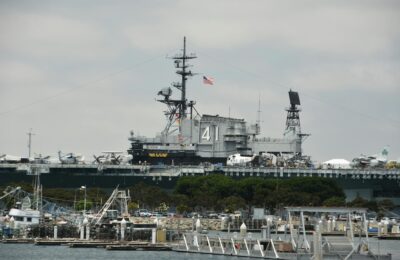
- USS Gerald Ford Deployment: The U.S. Navy’s redeployment of the aircraft carrier to the region sent multi-directional messages about deterrence and readiness.
- Rising Oil Prices: Brent crude surpassed $88 per barrel in March 2026 due to the geopolitical risk premium, placing pressure on energy-importing economies in the region.
- Domestic Economic Pressures: The Iranian economy faces mounting challenges with the rial declining more than 15% since the start of 2026 and inflation approaching 45%.
Analysis: Iran’s Real Motivations
Analysts of Iranian affairs see Tehran moving diplomatically for several intertwined reasons. First, the economic cost of escalation has become exhausting. Tightened U.S. sanctions imposed in late 2025 have reduced Iranian oil exports to an estimated 1.2 million barrels per day, compared to a peak of 1.8 million barrels in mid-2024. Economic sources estimate that Iran loses approximately $15 billion annually in potential oil revenues due to sanctions and escalation.
Second, Iran’s leadership recognizes that continued escalation could push Gulf states to deepen their security alliances with Washington and Tel Aviv — counter to Iran’s long-term strategic interests. Third, Larijani represents a pragmatic current within Iranian decision-making centers that views diplomatic gains as more sustainable than military ones.
Implications for Gulf Markets
Gulf financial markets remain sensitive to any signals of escalation or de-escalation in the region. Upon news of Larijani’s mission, the Saudi Tadawul All Share Index (TASI) registered a 0.8% gain in a single session, while sovereign credit default swap (CDS) spreads for Gulf states narrowed slightly.
Market analysts suggest that even partial success of the diplomatic mission could lead to:
- A decline in the geopolitical risk premium on oil prices by $5 to $8 per barrel.
- Improved foreign investor appetite for Gulf equity markets, particularly in infrastructure and tourism sectors.
- A reduction in maritime shipping insurance costs through the Strait of Hormuz, which have surged more than 200% over the past six months.
Conversely, failure of the mission could mean further escalation and oil prices rising above $95 per barrel, with corresponding inflationary pressures on regional economies.
Regional and International Reactions
Oman welcomed the Iranian diplomatic initiative, reaffirming its willingness to facilitate dialogue between concerned parties. The United States exhibited measured caution, with State Department officials indicating they are “monitoring developments” without offering explicit endorsement.
Israel has not issued an official comment on Larijani’s mission, though Israeli media reports indicated that Tel Aviv views any Iranian diplomatic initiative with skepticism, considering it a “maneuver to buy time.”
Oil Markets: Winners and Losers
Global oil markets are treating Larijani’s mission as an additional uncertainty factor. While Brent crude fell roughly 1.5% in the trading session following the announcement, analysts warn that any real progress toward de-escalation could negatively affect revenues for producing nations benefiting from elevated prices.
The International Energy Agency estimates that the geopolitical risk premium currently adds between $8 and $12 per barrel. Any genuine de-escalation could return prices to the $78-82 range — positive for importing countries like Egypt, Jordan, and Lebanon, but potentially straining budgets of exporting nations that planned around higher price assumptions.
What Lies Ahead
The critical question remains: does Larijani’s mission represent a genuine shift in Iranian foreign policy, or is it merely a tactical maneuver? The answer will become clearer in the coming weeks, but initial indicators suggest Tehran is serious — at least in the short term — about exploring diplomatic options.
Key factors to monitor include:
- Iran’s willingness to offer tangible concessions regarding its nuclear program or regional activities.
- The response of the Islamic Revolutionary Guard Corps (IRGC), which represents a more hardline current than the diplomatic establishment.
- The impact of upcoming U.S. elections on the calculations of all parties.
- Developments on the ground in Lebanon, Syria, and Yemen.
Regardless of the outcome, Larijani’s assignment sends a clear signal that internal Iranian calculations are shifting, and that the economic cost of escalation has become a decisive factor in shaping Tehran’s foreign policy in March 2026.
Follow The Middle East Insider for in-depth analysis on Iranian diplomatic developments and their impact on regional markets.