The Middle East sits at the intersection of three continents, controls roughly a third of global oil supply, and hosts some of the world’s most consequential geopolitical rivalries. Understanding how power operates in this region is not optional for anyone following global affairs, energy markets, or international security.
This guide breaks down the region’s power structure, maps the alliances and rivalries that define it, examines the conflicts that remain unresolved, and looks at how external powers are reshaping the board. Whether you are an investor, analyst, journalist, or student of geopolitics, this is your reference point.
The Five Poles of Regional Power
Middle East geopolitics revolves around five major poles, each with distinct strategic assets, ideological frameworks, and spheres of influence. No single power dominates. Instead, the region operates through a shifting balance where alliances form, fracture, and re-form based on threat perception and economic interest.
Saudi Arabia
Saudi Arabia anchors the Sunni Arab order. As the custodian of Islam’s two holiest cities and the world’s largest oil exporter, Riyadh wields both religious legitimacy and energy leverage. Under Crown Prince Mohammed bin Salman (MBS), the Kingdom has pursued an increasingly assertive foreign policy while simultaneously pushing Vision 2030 economic diversification.
Key strategic assets include OPEC+ leadership, a $930 billion sovereign wealth fund (PIF), massive defense spending ($75 billion annually, the fifth-highest globally), and growing diplomatic weight through initiatives like the 2023 China-brokered rapprochement with Iran.
Iran
Iran represents the Shia pole and the primary revisionist power in the region. Tehran’s strategic doctrine centers on asymmetric warfare and a network of allied non-state actors — what analysts call the “Axis of Resistance.” Iran’s conventional military is outdated, but its ballistic missile program, drone technology, and proxy network give it disproportionate influence across Iraq, Syria, Lebanon, and Yemen.
Iran’s economy remains constrained by sanctions, with GDP around $400 billion (PPP-adjusted), but its strategic position at the Strait of Hormuz — through which 20% of global oil transits — ensures it cannot be ignored.
Turkey
Turkey operates as a NATO member with Ottoman-era ambitions. Under President Erdogan, Ankara has pursued a multi-vector foreign policy, maintaining ties with Russia while remaining in the Western alliance, projecting military power in Syria, Libya, and the Eastern Mediterranean, and positioning itself as a leader of political Islam through the Muslim Brotherhood network.
Turkey’s defense industry has become a geopolitical asset in its own right. The Bayraktar TB2 drone reshaped conflicts in Libya, Nagorno-Karabakh, and Ukraine, turning Ankara into a sought-after defense partner.
Israel
Israel possesses the region’s most advanced military, an undeclared nuclear arsenal (estimated at 80-90 warheads by the Stockholm International Peace Research Institute), and the most sophisticated intelligence apparatus. The Abraham Accords fundamentally altered Israel’s regional position, moving it from isolation to normalized relations with four Arab states and counting.
Israel’s tech sector (the “Startup Nation” narrative) adds economic heft, with the Tel Aviv Stock Exchange reaching record highs and Israeli companies attracting $10+ billion in annual venture capital investment.
Egypt
Egypt is the Arab world’s most populous country (110+ million people) and controls the Suez Canal, through which 12-15% of global trade passes. Cairo’s geopolitical weight has diminished relative to the Gulf states, but it remains indispensable for any regional security architecture. Egypt receives $1.3 billion annually in US military aid and serves as a mediator in Israeli-Palestinian affairs.
| Power | Population | GDP (Nominal) | Military Spending | Key Strategic Asset | Primary Rival |
|---|---|---|---|---|---|
| Saudi Arabia | 36M | $1.1T | $75B | Oil reserves (267B barrels) | Iran |
| Iran | 88M | $400B* | $7B (official) | Proxy network + Strait of Hormuz | Saudi Arabia / Israel |
| Turkey | 86M | $1.1T | $16B | NATO membership + defense industry | Multiple (context-dependent) |
| Israel | 10M | $530B | $24B | Nuclear deterrent + tech sector | Iran |
| Egypt | 110M | $400B | $5B | Suez Canal + population weight | Limited (internal focus) |
*PPP-adjusted figures significantly higher. Iran’s military spending is likely understated.
Alliances, Rivalries, and the Relationship Matrix
Middle East alliances are rarely binary. States maintain multiple overlapping relationships that shift based on the issue at hand. The following matrix captures the primary relationships as of early 2026.
| Saudi Arabia | Iran | Turkey | Israel | Egypt | UAE | Qatar | |
|---|---|---|---|---|---|---|---|
| Saudi Arabia | — | Detente (fragile) | Warming | Normalization talks | Allied | Close ally | Reconciled |
| Iran | Detente (fragile) | — | Pragmatic | Hostile | Cold | Cold | Cordial |
| Turkey | Warming | Pragmatic | — | Strained | Strained | Reconciled | Allied |
| Israel | Normalization talks | Hostile | Strained | — | Cold peace | Abraham Accords | No relations |
| Egypt | Allied | Cold | Strained | Cold peace | — | Allied | Reconciled |
| UAE | Close ally | Cold | Reconciled | Abraham Accords | Allied | — | Reconciled |
| Qatar | Reconciled | Cordial | Allied | No relations | Reconciled | Reconciled | — |
The GCC as a Bloc
The Gulf Cooperation Council — Saudi Arabia, UAE, Kuwait, Qatar, Bahrain, and Oman — functions as the region’s most important multilateral grouping, though it has faced internal fractures. The 2017-2021 Qatar blockade exposed deep fissures, but the Al-Ula Declaration of January 2021 formally ended the dispute.
Today, the GCC operates with reasonable cohesion on economic integration but diverges on foreign policy. Saudi Arabia and the UAE increasingly pursue independent strategic agendas: Riyadh prioritizes its Vision 2030 transformation and OPEC+ leadership, while Abu Dhabi focuses on becoming a global logistics, finance, and AI hub. These parallel ambitions create subtle competition even within the alliance.
The GCC’s collective GDP exceeds $2.1 trillion, and its combined sovereign wealth fund assets top $4 trillion, making it one of the world’s most consequential economic blocs despite its small combined population of approximately 60 million.
Iran’s Regional Influence Network
Iran’s most distinctive geopolitical feature is its network of allied non-state actors, which Tehran uses to project power far beyond what its conventional military capabilities would allow.
Hezbollah (Lebanon): The most capable non-state military force in the Middle East. Hezbollah maintains an estimated arsenal of 130,000-150,000 rockets and missiles, a standing force of approximately 30,000 fighters, and significant political power within Lebanon’s sectarian system. The 2024 escalation with Israel severely degraded Hezbollah’s leadership cadre and military infrastructure, raising questions about the group’s future capacity.
Houthi Movement (Yemen): Ansar Allah, commonly known as the Houthis, controls much of northern Yemen including the capital Sanaa. Since late 2023, Houthi attacks on Red Sea shipping disrupted global trade routes, forcing major container lines to reroute around the Cape of Good Hope and adding $1 million+ in fuel costs per voyage. This demonstrated how a relatively modest armed group can impose outsized economic costs on the global system.
Iraqi Militias: The Popular Mobilization Forces (PMF) include multiple Iran-aligned factions, notably Kata’ib Hezbollah and Asa’ib Ahl al-Haq. These groups are formally part of Iraq’s security architecture but operate with significant autonomy, giving Iran strategic depth and leverage over Iraqi politics.
Syria: Iran’s military and financial support was instrumental in preserving the Assad government through the civil war. Syria provides Iran with a land corridor connecting Tehran to Beirut through Iraq, though this corridor remains contested and operationally challenging.
The cumulative effect of this network is that Iran can impose costs on adversaries across multiple theaters simultaneously without direct state-on-state confrontation, a strategy that complicates deterrence for Iran’s rivals.
The Abraham Accords and Their Aftermath
The Abraham Accords, signed in September 2020, normalized relations between Israel and the UAE, Bahrain, Morocco, and Sudan. This represented the most significant shift in Arab-Israeli relations since the Egypt-Israel peace treaty of 1979.
The economic impact has been measurable. Bilateral trade between Israel and the UAE reached $3.4 billion by 2024, up from near zero. Tourism, fintech, and defense cooperation have flourished. The accords also facilitated intelligence-sharing arrangements and joint exercises that would have been unthinkable a decade ago.
However, the accords remain incomplete without Saudi Arabia. Riyadh has signaled willingness to normalize but has linked any deal to conditions including progress on Palestinian statehood, a US defense pact, and access to civilian nuclear technology. The events of October 2023 and the subsequent Gaza conflict complicated this trajectory but did not end the broader normalization trend.
The strategic logic underlying the accords — a shared perception of Iran as the primary threat — remains intact, even as the tactical timeline has shifted.
The Changing Role of External Powers
The United States: Pivot, Decline, or Recalibration?
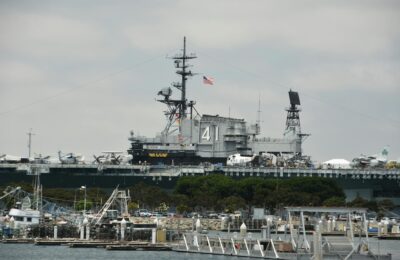
The US remains the region’s dominant external military power, with approximately 45,000 troops deployed across the Middle East, the Fifth Fleet headquartered in Bahrain, and major air bases in Qatar (Al Udeid) and the UAE (Al Dhafra). American security guarantees underpin the Gulf monarchies’ defense posture.
But the relationship is shifting. Several trends are evident:
- Energy independence has reduced urgency. US domestic oil production exceeds 13 million barrels per day, diminishing (though not eliminating) the strategic imperative to secure Gulf oil flows.
- The “pivot to Asia” is real. Since the Obama administration, successive US presidents have signaled that the Indo-Pacific, not the Middle East, is the priority theater.
- Trust deficits have grown. Gulf leaders cite the 2015 Iran nuclear deal (JCPOA), the muted US response to the 2019 Aramco attacks, and perceived unreliability as reasons to diversify partnerships.
The result is not US withdrawal but a recalibration in which Washington expects regional partners to bear more of the security burden while the US maintains over-the-horizon capabilities and strategic assets.
China: The Economic Superpower Arrives
China’s Middle East engagement is overwhelmingly economic but increasingly strategic. Key dimensions include:
- China is the region’s largest trading partner. Total China-Middle East trade exceeds $350 billion annually. China imports over 40% of its oil from the Gulf.
- The China-brokered Saudi-Iran deal (March 2023) was Beijing’s most significant diplomatic intervention in the region, signaling that China is willing to play a political role when its economic interests are at stake.
- Belt and Road investments span ports (Khalifa Port in Abu Dhabi, Haifa in Israel), industrial zones, and 5G networks across the region.
- Currency diplomacy: Saudi Arabia has conducted limited oil trades in Chinese yuan, though the dollar remains dominant. The symbolism matters more than the volume.
China’s limitation is that it cannot (and does not seek to) replace the US security umbrella. Beijing is a free-rider on American-provided stability in the Gulf while building economic leverage that gives it growing political influence.
Russia: Diminished but Not Gone
Russia’s Middle East influence peaked during its 2015 military intervention in Syria, which preserved the Assad government and gave Moscow its first significant military footprint in the region since the Cold War. However, the Ukraine war has consumed Russian military and diplomatic bandwidth.
Russia’s remaining leverage centers on OPEC+ cooperation with Saudi Arabia, arms sales to regional clients (Egypt, Algeria, Iran), and its Syrian bases (Tartus naval facility and Hmeimim air base). Moscow’s long-term trajectory in the region is one of managed decline unless the Ukraine situation changes dramatically.
The IMEC Corridor: Infrastructure as Geopolitics
The India-Middle East-Europe Economic Corridor (IMEC), announced at the September 2023 G20 summit, represents one of the most ambitious infrastructure-as-geopolitics projects currently in play.
IMEC envisions a rail and shipping network connecting India to Europe via the UAE, Saudi Arabia, Jordan, and Israel, with undersea cables and pipelines running alongside transport links. The corridor is explicitly designed as an alternative to China’s Belt and Road Initiative and would position the Gulf states as critical transit nodes in East-West trade.
Key challenges include the unresolved Israeli-Palestinian conflict (the corridor routes through or near contested territory), the massive capital investment required ($20 billion+ estimated), and the need for political stability across all participating states. Progress has been slow but the strategic logic remains compelling for all participants.
Key Ongoing Conflicts
Yemen
The Yemen conflict, now entering its eleventh year, has killed an estimated 377,000 people (UN estimate) and created the world’s worst humanitarian crisis. A tentative truce between the Saudi-led coalition and the Houthis has held in modified form since 2022, but no permanent political settlement exists. The Houthis’ Red Sea campaign has added an international dimension that complicates diplomacy.
Syria
Syria remains fractured. The fall of the Assad government in late 2024 created a power vacuum that continues to be contested. Turkey maintains military presence in the north, Kurdish forces control the northeast with diminishing US support, and various factions compete for influence in the post-Assad landscape. Reconstruction costs are estimated at $400 billion+ by the World Bank, and no international consensus exists on how or whether to fund it.
Iraq Stability
Iraq has achieved a measure of political stability under Prime Minister al-Sudani, but the country remains caught between Iranian influence and US partnership. The formal end of the US combat mission has been repeatedly negotiated, with the transition to a bilateral security relationship ongoing. Iraq’s economy remains dangerously dependent on oil (95%+ of government revenue), making it vulnerable to price shocks.
Israeli-Palestinian Conflict
The Israeli-Palestinian conflict entered a catastrophic new phase after October 7, 2023, with the subsequent military campaign in Gaza resulting in unprecedented destruction and civilian casualties. As of early 2026, the political horizon for resolution remains unclear. The conflict has strained the Abraham Accords framework and complicated Saudi-Israeli normalization, though it has not reversed the broader trend.
Water, Climate, and the Next Geopolitical Frontier
The Middle East is the world’s most water-stressed region. Fourteen of the world’s 33 most water-stressed countries are in the Middle East and North Africa, according to the World Resources Institute. This reality is becoming a geopolitical variable in its own right.
Key pressure points:
- Euphrates-Tigris system: Turkish dam construction (the GAP project) has reduced water flows to Iraq and Syria, creating tension and agricultural collapse downstream. Iraq’s water ministry has warned that the Tigris and Euphrates could effectively dry up by 2040 without cooperative management.
- Nile Basin: Egypt views Ethiopia’s Grand Ethiopian Renaissance Dam (GERD) as an existential threat. Negotiations remain stalled, and Cairo has not ruled out military options.
- Desalination dependence: Gulf states now produce over 40% of the world’s desalinated water, an energy-intensive process that creates its own environmental pressures. Saudi Arabia alone operates 35+ desalination plants.
Climate projections suggest the region will face temperature increases of 2-4 degrees Celsius above the global average by 2050, with peak summer temperatures potentially exceeding the threshold for sustained human outdoor activity in parts of the Gulf. This will drive urbanization, migration, and investment in climate adaptation infrastructure.
How Geopolitics Affects Oil and Markets
The relationship between Middle East geopolitics and energy markets operates through several channels:
Supply disruption risk: Any serious conflict involving the Strait of Hormuz (21 million barrels per day transit volume), the Bab el-Mandeb strait (Red Sea entry, 8.8 million bpd), or the Suez Canal would send oil prices sharply higher. The 2024 Houthi campaign demonstrated this when freight and insurance costs spiked despite no major supply disruption.
OPEC+ production decisions are inherently geopolitical. Saudi Arabia’s willingness to cut production reflects both market management and strategic calculations about revenue needs, relationships with Russia, and pressure from Washington. Read more in our OPEC explainer.
Investment flows: Geopolitical risk perception directly affects foreign direct investment (FDI). The UAE attracted $30.7 billion in FDI in 2024 partly because it is perceived as the region’s most stable jurisdiction. Saudi Arabia’s FDI has grown but remains below Vision 2030 targets, partly due to geopolitical risk perceptions.
Currency and reserves: Gulf currencies are pegged to the US dollar, linking regional monetary policy to Federal Reserve decisions. Any serious move toward de-dollarization (currently more discussed than enacted) would have massive implications for both regional economies and the global financial system.
| Geopolitical Risk Factor | Impact on Oil | Impact on Markets | Probability (2026-2028) |
|---|---|---|---|
| Strait of Hormuz disruption | +$30-50/barrel | Severe global recession risk | Low (5-10%) |
| Expanded Red Sea attacks | +$5-15/barrel | Shipping/insurance cost spike | Moderate (20-30%) |
| Saudi-Iran tensions escalation | +$10-20/barrel | Gulf market selloff | Low-Moderate (10-20%) |
| OPEC+ collapse | -$15-25/barrel | Energy sector repricing | Low (5-10%) |
| Successful Saudi normalization | Neutral to slight negative | Regional market rally | Moderate (25-35%) |
Outlook: 2026-2030
Several trends will shape Middle East geopolitics over the next five years:
1. Economic transformation as the primary driver. Saudi Arabia and the UAE are spending hundreds of billions on economic diversification. The success or failure of these programs will determine whether the Gulf can sustain its geopolitical weight as the energy transition progresses. The Saudi economy’s transformation is the single most consequential domestic development in the region.
2. Multipolar external engagement. The era of exclusive US patronage is over. Gulf states will continue deepening ties with China, India, and other powers while maintaining the US security relationship. This multi-alignment strategy gives them leverage but also creates complexity.
3. Normalization momentum. Despite setbacks, the economic and strategic logic of Arab-Israeli normalization remains strong. A Saudi-Israeli deal, if and when it materializes, would fundamentally reshape regional dynamics.
4. Iran’s trajectory. Iran faces severe internal challenges — economic stagnation, demographic pressures, and legitimacy questions. The weakening of its proxy network (particularly Hezbollah) reduces Tehran’s regional leverage. How Iran adapts will be one of the defining questions.
5. Climate and water as conflict multipliers. Environmental pressures will increasingly interact with political instability, migration, and resource competition, particularly in Iraq, Yemen, Jordan, and Egypt.
6. Technology as a new competitive arena. AI, defense technology, cybersecurity, and space are becoming domains of regional competition. The UAE’s AI strategy, Saudi Arabia’s tech investments through PIF, and Israel’s defense-tech ecosystem represent new dimensions of geopolitical competition.
The Middle East is not becoming less important. It is becoming differently important — less about oil dependency alone, more about the intersection of energy transition, capital flows, technological competition, and the reordering of global power. Understanding the geopolitics is essential for anyone engaged with the region’s future.
Key Takeaways
- The Middle East operates through five major power poles — Saudi Arabia, Iran, Turkey, Israel, and Egypt — each with distinct strategic assets and ambitions
- The GCC bloc commands $2.1 trillion in GDP and $4 trillion in sovereign wealth fund assets, giving it outsized economic leverage
- Iran’s proxy network (Hezbollah, Houthis, Iraqi militias) allows it to project power asymmetrically but faces growing degradation
- The Abraham Accords shifted the regional alignment but remain incomplete without Saudi Arabia
- US influence is recalibrating, not withdrawing, while China’s economic footprint grows rapidly
- The IMEC corridor could reshape East-West trade if political obstacles are overcome
- Water scarcity and climate change are emerging as geopolitical factors that will intensify through 2030
- Geopolitical risk directly impacts oil prices, investment flows, and regional market performance
Frequently Asked Questions
What are the main geopolitical rivalries in the Middle East?
The primary rivalry is between Saudi Arabia and Iran, which operates across sectarian (Sunni-Shia), ideological (status quo vs. revisionist), and strategic (Gulf security, proxy conflicts) dimensions. Secondary rivalries include Turkey-Egypt (competition for Sunni Arab leadership), Israel-Iran (nuclear and regional influence), and emerging Saudi-UAE strategic competition despite their alliance.
How do Middle East alliances affect global oil prices?
OPEC+ production decisions, which reflect Saudi-Russian cooperation and broader geopolitical calculations, directly set the floor for global oil prices. Beyond production policy, any conflict that threatens the Strait of Hormuz (21 million barrels per day), Bab el-Mandeb (8.8 million bpd), or the Suez Canal would trigger immediate price spikes. The Houthi Red Sea attacks in 2024 demonstrated how even partial disruption drives shipping costs higher.
Is the US withdrawing from the Middle East?
Not exactly. The US is recalibrating its presence rather than withdrawing. Washington maintains approximately 45,000 troops in the region, the Fifth Fleet in Bahrain, and major air bases in Qatar and the UAE. However, successive administrations have signaled that the Indo-Pacific is the priority theater, and Gulf states are expected to shoulder more of the security burden. This shift has pushed regional powers to diversify partnerships with China, India, and others.
What is the IMEC corridor and why does it matter?
The India-Middle East-Europe Economic Corridor is a proposed rail, shipping, and digital infrastructure network connecting India to Europe via the UAE, Saudi Arabia, Jordan, and Israel. Announced at the 2023 G20 summit, it would position Gulf states as critical nodes in global trade and serve as a Western-backed alternative to China’s Belt and Road Initiative. Its realization depends on resolving political obstacles, particularly the Israeli-Palestinian conflict.
How will climate change affect Middle East geopolitics?
The Middle East faces temperature increases of 2-4 degrees Celsius above the global average by 2050, threatening water supplies, agriculture, and outdoor habitability in parts of the Gulf. Water conflicts — particularly over the Euphrates-Tigris system and the Nile — are already generating interstate tension. Climate pressures will amplify migration, urbanization, and resource competition, making environmental factors an increasingly central element of regional security calculations.