Key Takeaways
- Americans can own property outright in Dubai’s freehold zones — no local partner or sponsor required
- Minimum investment for a 10-year Golden Visa is AED 2 million ($545,000)
- Average rental yield in Dubai: 6.76% vs. 3-4% in most major U.S. cities
- The Iran war crisis in March 2026 has created a 2-7% buyer discount window
- U.S. citizens must report foreign property income to the IRS under FATCA rules
Why American Investors Are Looking at Dubai in 2026
Dubai’s real estate market recorded over AED 60.5 billion ($16.5 billion) in sales in February 2026 alone — an 18.14% year-over-year surge. While the U.S. housing market struggles with elevated mortgage rates averaging 6.8% and declining affordability, Dubai offers a compelling alternative: higher rental yields, zero income tax, and a transparent regulatory framework designed for foreign investors.
The timing carries an additional opportunity. Military strikes on Iran beginning March 1, 2026 triggered a temporary market slowdown, with Dubai’s real estate index dropping 20% in one week. Buyers are now negotiating 2-7% discounts. Historically, Dubai’s property market has recovered quickly from geopolitical shocks — and 60% of transactions are cash-based, reducing the risk of forced selling.
Legal Framework: What Americans Need to Know
Full Ownership Rights
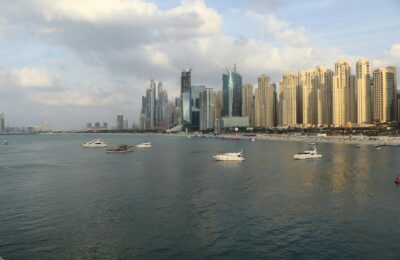
Since 2002, Dubai has permitted foreigners to own property on a freehold basis in designated zones. American citizens do not need an Emirati partner, sponsor, or residency visa to purchase. Freehold zones include the city’s most desirable investment locations: Dubai Marina, Downtown Dubai, Palm Jumeirah, Jumeirah Village Circle (JVC), and Dubai Hills Estate.

Ownership Types
- Freehold: Complete ownership of the property and land with no time limit
- Leasehold: Long-term lease up to 99 years (less common for investment purposes)
For American investors, freehold ownership is the recommended route — it maximizes asset value and provides full disposal rights including resale, lease, and inheritance.
Regulatory Bodies
Dubai Land Department (DLD) and the Real Estate Regulatory Authority (RERA) oversee all transactions. RERA maintains a licensed agent registry, escrow account requirements for off-plan purchases, and a dispute resolution mechanism. This regulatory transparency is a key reason Dubai attracts more foreign real estate investment than any other Middle Eastern city.
Step-by-Step Buying Process for American Investors
Step 1: Define Your Budget and Investment Goal
Determine whether you are investing for rental income, capital appreciation, personal use, or Golden Visa eligibility. Entry points vary significantly:
- Studio apartments in JVC: From AED 400,000 ($109,000)
- 1-bedroom in Dubai Marina: From AED 1.2 million ($327,000)
- 1-bedroom in Downtown Dubai: From AED 1.5 million ($409,000)
- Family villa in Dubai Hills: From AED 3.5 million ($953,000)
- Luxury villa on Palm Jumeirah: From AED 5 million ($1.36 million)
Step 2: Engage a RERA-Licensed Agent
Verify your agent’s license through the Dubai REST app or DLD website. Many agents in Dubai specialize in working with American and international investors, speak fluent English, and can guide you through the entire process remotely if needed.
Step 3: Open a UAE Bank Account
While not mandatory for cash purchases, a UAE bank account simplifies rental income collection and profit repatriation. Major banks including Emirates NBD and First Abu Dhabi Bank accept U.S. citizens, though expect additional FATCA compliance documentation. Processing takes 2-4 weeks.
Step 4: Complete the Purchase
- Sign the Sale and Purchase Agreement (SPA)
- Pay a 10% deposit to the escrow account
- Transfer remaining funds via international wire
- Register the property at DLD
- Receive your Title Deed — the legal proof of ownership
The entire process from offer acceptance to title deed typically takes 30-45 days for ready properties and can be completed entirely remotely via Power of Attorney.
Step 5: Remote Property Management
American investors based in the U.S. can hire a Dubai-based property management company for 5-8% of annual rent. Firms like Betterhomes, Allsopp & Allsopp, and Driven Properties offer full-service packages including tenant sourcing, rent collection, maintenance coordination, and annual RERA contract renewals.
Transaction Costs and Fees
| Item | Cost |
|---|---|
| DLD Registration Fee | 4% of property value |
| DLD Admin Fee | AED 2,000-4,000 ($545-$1,090) |
| Agent Commission | 2% of property value |
| Mortgage Registration (if applicable) | 0.25% of loan value |
| NOC Fee (from developer) | AED 500-5,000 ($136-$1,360) |
Total transaction costs typically range from 7-8% of the purchase price — lower than closing costs in most U.S. states, where buyers can expect 8-10% when including title insurance, attorney fees, and transfer taxes.
Best Areas for American Investors in March 2026
Jumeirah Village Circle (JVC) — Highest Yields
Rental yield: 7.5-8.5%. One-bedroom prices: AED 650,000-900,000 ($177,000-$245,000). JVC is Dubai’s top-performing yield zone, popular with young professionals and small families. Ideal for investors prioritizing cash flow over prestige.
Dubai Marina — Most Popular with Expats
Rental yield: 5.5-6.5%. One-bedroom prices: AED 1.2-1.8 million ($327,000-$490,000). Waterfront living with a Miami-like lifestyle. Consistently high occupancy rates due to walkability, metro access, and proximity to the beach. Strong resale demand.
Downtown Dubai — Iconic Luxury
Rental yield: 5-6%. One-bedroom prices: AED 1.5-2.5 million ($409,000-$681,000). Home to the Burj Khalifa and Dubai Mall. Premium addresses command premium rents but lower percentage yields. Best for capital appreciation plays.
Dubai Hills Estate — Family-Friendly
Rental yield: 5.5-6.5%. Villas: AED 3.5-7 million ($953,000-$1.9 million). Master-planned community with golf course, international schools, and Dubai Hills Mall. The top choice for American families relocating to Dubai.
Palm Jumeirah — Ultra-Luxury
Rental yield: 3.5-5%. Properties: AED 5-50 million ($1.36-$13.6 million). Dubai’s most iconic address. Luxury villas and penthouses attract ultra-high-net-worth buyers. In January 2026 alone, 990 luxury homes above AED 10 million were sold across Dubai.
Payment Methods from the United States
Cash Purchase (Most Common)
60% of Dubai real estate transactions in January 2026 were all-cash. International wire transfer (SWIFT) from a U.S. bank takes 2-5 business days. Services like Wise and OFX offer exchange rates 1-2% better than traditional bank wires, which can save tens of thousands on large transfers.
UAE Mortgage for Non-Residents
Non-resident foreigners can obtain financing up to 50% of property value (compared to 80% for UAE residents). Interest rates range from 4.5-6% annually as of March 2026. Required documents include passport, six months of bank statements, and proof of income. Minimum property value for mortgage eligibility is typically AED 1 million.
Off-Plan Payment Plans
71.27% of all Dubai transactions are off-plan (under construction). Developers offer flexible payment plans spanning 3-5 years: 10-20% down payment followed by installments tied to construction milestones. This reduces the need for bank financing and allows investors to enter the market with smaller initial capital. Some developers offer post-handover payment plans extending 2-3 years after completion.
Golden Visa: Residency Through Real Estate Investment
A property investment of AED 2 million ($545,000) or more qualifies for a 10-year renewable Golden Visa. Benefits for American investors include:
- Long-term residency without an employer sponsor
- Family sponsorship (spouse and children)
- Right to work and establish a business in the UAE
- Ability to leave the country for over six months without losing residency status
- Priority processing for government services
- Access to UAE banking and financial services on resident terms
For Americans considering a partial relocation or a Plan B residency, the Golden Visa through real estate is the most straightforward path. Multiple properties can be combined to reach the AED 2 million threshold.
U.S. Tax Obligations on Dubai Property
Reporting Foreign Rental Income
As a U.S. citizen, you must report worldwide income including rental income from Dubai on your federal tax return — even though Dubai imposes zero income tax. The good news: you can deduct operating expenses including property management fees, maintenance, service charges, insurance, and depreciation to reduce your taxable rental income.
FATCA Compliance
Foreign bank accounts exceeding $10,000 at any point during the year must be reported via FBAR (FinCEN Form 114). The property itself does not require FBAR reporting, but your UAE bank account used for rent collection does. Form 8938 (Statement of Specified Foreign Financial Assets) may also apply depending on total foreign asset values.
Capital Gains Tax
When you sell the property, profits are subject to U.S. capital gains tax — 15-20% for properties held over one year, or ordinary income rates for shorter holding periods. Since the UAE charges no capital gains tax, there is no foreign tax credit available to offset the U.S. liability. Consult a tax professional specializing in expatriate taxation before purchasing.
Estate and Inheritance
Dubai property owned by a U.S. citizen is subject to U.S. estate tax rules. Additionally, UAE inheritance law (based on Sharia law by default) may apply unless you register a will with the DIFC Wills Registry — strongly recommended for American property owners to ensure your assets are distributed according to your wishes.
The War Discount: Is This the Right Time to Buy?
The Iran military strikes beginning March 1, 2026 triggered a 20% decline in Dubai’s real estate index within one week. The question every American investor is asking: is this a buying opportunity or a warning sign?
The Bull Case
- 60% cash-based market reduces systemic risk from forced liquidations
- Dubai has recovered from every previous geopolitical shock (2011 Arab Spring, 2019 Saudi Aramco attacks, 2020 COVID)
- Sellers offering 2-7% discounts to close deals — rare in Dubai’s historically seller-friendly market
- Underlying demand drivers (population growth, visa reforms, business relocation) remain intact
- Dubai is 150+ km from the nearest conflict zone
The Bear Case
- Strait of Hormuz disruption (shipping down 95%) creates economic uncertainty for the entire Gulf
- 23,000+ cancelled flights reduce tourism and short-term rental demand
- If conflict escalates further, the discount could deepen
- Oil price volatility ($67 pre-war to $120 peak) creates unpredictable macro conditions
The balanced approach: look for quality properties at a discount, but maintain adequate cash reserves and avoid over-leveraging. Time in the market has historically outperformed timing the market in Dubai real estate.
Common Mistakes American Investors Make
- Ignoring service charges: Annual service fees of AED 15-40 per square foot can significantly reduce net yield — always factor these into your ROI calculations
- Not vetting the developer: Some off-plan projects face multi-year delays. Stick to established developers like Emaar, Nakheel, DAMAC, and Meraas for off-plan purchases
- Underestimating transfer costs: Currency conversion fees and wire transfer charges can add 1-3% to your total investment — use specialist FX services instead of bank wires
- Skipping U.S. tax advice: Foreign property tax rules for U.S. citizens are complex and changing — budget $1,000-3,000 annually for a qualified expatriate tax accountant
- Not registering a DIFC will: Without a registered will, your Dubai assets may be distributed under UAE Sharia inheritance law, which may not align with your intentions
Frequently Asked Questions
Can an American citizen buy property in Dubai?
Yes. American citizens have full freehold ownership rights in Dubai’s designated zones. There are no nationality restrictions, no residency requirements, and no need for a local partner. The process is straightforward and can be completed entirely remotely.
What is the minimum investment for Dubai real estate?
There is no official minimum. Studio apartments in emerging areas start from approximately AED 400,000 ($109,000). For Golden Visa eligibility, the minimum is AED 2 million ($545,000) in property value.
Do I need to visit Dubai to buy property?
No. The entire purchase can be completed remotely via Power of Attorney. Many American investors buy their first Dubai property without visiting. However, a site visit is recommended before purchasing high-value properties.
How do I transfer money from a U.S. bank to Dubai?
International wire transfer (SWIFT) is the standard method, taking 2-5 business days. Specialist FX services like Wise and OFX offer better exchange rates than traditional banks. For transfers over $10,000, expect your bank to file a Currency Transaction Report — this is routine and not cause for concern.
Is Dubai real estate safe to invest in during the Iran war in March 2026?
Dubai is located over 150 km from the nearest conflict zone. The market has experienced a temporary slowdown but not a collapse, supported by a 60% cash transaction base. The decision depends on your individual risk tolerance and investment horizon. Those with a 5-10 year outlook may find current discounts attractive.
What are the annual costs of owning a Dubai property?
Ongoing annual costs include: service charges (AED 15-40/sq ft), property management (5-8% of rent if using a manager), insurance (AED 1,000-3,000), and DEWA utility connection fees. There is no annual property tax in Dubai — a significant advantage over U.S. property ownership where annual taxes range from 0.5-2.5% of assessed value.
This article is for informational purposes only and does not constitute investment or tax advice. Consult qualified legal and financial professionals before making real estate investment decisions.
Related articles on The Middle East Insider: