Vision 2030 is Saudi Arabia’s national economic transformation plan, launched in April 2016 by Crown Prince Mohammed bin Salman (MBS). Its core objective: reduce Saudi Arabia’s dependence on oil revenue and build a diversified, modern economy that can thrive in a post-oil world.
The plan is the most ambitious economic reform program in the Middle East’s modern history. It touches everything — from building futuristic megacities to opening cinemas, attracting tourists, listing Saudi Aramco on the stock exchange, and creating entirely new industries in a country that has relied on petroleum for over 70 years.
Understanding Vision 2030 is essential for anyone tracking the Saudi Arabia economy, investing in the region, or covering GCC geopolitics.
Why Saudi Arabia Needed Vision 2030
For decades, Saudi Arabia operated on a simple model: pump oil, sell it, fund the government. When oil prices were high, the budget was flush. When they dropped — as in 2014-2016 when Brent crude fell from $115 to below $30 — the country burned through over $100 billion in reserves in a single year.
The math was unsustainable:
| Problem | Data Point |
|---|---|
| Oil revenue dependence | 87% of government revenue from oil (2015) |
| Youth unemployment | 29% among Saudis aged 15-24 (2016) |
| Population under 30 | Over 60% of citizens |
| Women in workforce | 17% participation rate (2016) |
| Tourism sector | Virtually nonexistent beyond Hajj/Umrah |
| Entertainment options | Cinemas banned, limited public events |
| Private sector employment | Dominated by foreign workers |
Saudi Arabia needed to create millions of jobs for its young population, generate non-oil revenue, and build an economy that could function even if oil demand eventually declined. Vision 2030 was the answer.
The Three Pillars of Vision 2030
Pillar 1: A Vibrant Society
- Develop Saudi Arabia’s cultural, entertainment, and tourism infrastructure
- Increase quality of life for citizens
- Preserve Islamic heritage while opening to the world
- Goals: 30% of household spending on culture and entertainment, increase Umrah visitors to 30 million annually
Pillar 2: A Thriving Economy
- Diversify away from oil dependence
- Grow the private sector
- Create jobs for Saudi nationals
- Goals: reduce unemployment to 7%, increase non-oil revenue, raise SME contribution to GDP to 35%
Pillar 3: An Ambitious Nation
- Build effective, transparent government institutions
- Improve public services
- Increase government efficiency
- Goals: move from 80th to 20th in Government Effectiveness Index, raise non-profit sector contribution to GDP to 5%
Key Goals and Targets
| Target | 2016 Baseline | 2030 Goal | Status (2025) |
|---|---|---|---|
| Non-oil revenue | SAR 163.5B | SAR 1 trillion | ~SAR 450B (on track) |
| Oil share of revenue | 87% | 58% | ~62% (improving) |
| Unemployment (Saudi) | 11.6% | 7% | ~11% (slow progress) |
| Women in workforce | 17% | 30% | 33% (exceeded early) |
| PIF assets | SAR 570B | SAR 7.5 trillion | ~SAR 3.5T (growing fast) |
| Annual Umrah visitors | 8M | 30M | ~15M (growing) |
| Annual tourism visits | 16M | 100M (revised from 150M) | 109M (2024, exceeded) |
| FDI as % of GDP | 3.8% | 5.7% | ~4.5% (rising) |
| Private sector GDP share | 40% | 65% | ~46% (gradual) |
| Household spending on entertainment | 2.9% | 6% | ~5% (near target) |
Some targets have been exceeded ahead of schedule (women’s workforce participation, tourism). Others lag, particularly unemployment and private sector GDP share. For a detailed breakdown, read our Vision 2030 Progress analysis.
The Mega-Projects
Vision 2030’s most visible components are the “giga-projects” — massive developments designed to create entirely new economic engines.
NEOM ($500 billion)
A futuristic megacity in northwestern Saudi Arabia featuring The Line (a 170km linear city), Trojena (mountain resort hosting the 2029 Asian Winter Games), Oxagon (floating industrial hub), and Sindalah (luxury island resort, already operational).
Qiddiya ($8 billion)
Saudi Arabia’s entertainment capital being built outside Riyadh. Includes the world’s largest theme park (Six Flags Qiddiya), a motorsports complex, water parks, performing arts venues, and residential communities. Positioned as the answer to the decades-long entertainment gap in the Kingdom.
The Red Sea Project ($16 billion)
A luxury tourism destination spanning 28,000 km² along the Red Sea coast. Features pristine islands, coral reefs, and high-end resorts targeting international tourists. First resorts opened in 2023 under the Red Sea Global brand.
Diriyah Gate ($20 billion)
A cultural and heritage district being developed around the historic birthplace of the Saudi state on the outskirts of Riyadh. Features luxury hotels, museums, retail, and residential areas built in traditional Najdi architectural style.
KAFD (King Abdullah Financial District)
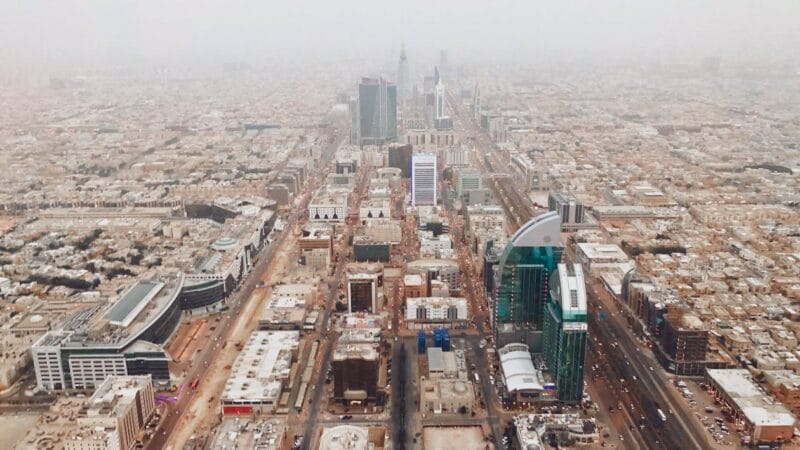
Riyadh’s financial center, repurposed as the hub for the Regional Headquarters Program — which requires multinational companies operating in the GCC to base their regional HQ in Saudi Arabia.
Jeddah Tower
The planned world’s tallest building at 1,000+ meters. Construction paused during budget reprioritization but remains part of the Jeddah economic zone vision.
What Has Changed Since 2016
Vision 2030 has already transformed daily life in Saudi Arabia:
Entertainment: Cinemas were banned until 2018. Now, Saudi Arabia has 50+ cinema locations, hosts international concerts and sporting events (Formula E, WWE, boxing, golf), and runs a General Entertainment Authority that oversees a booming events calendar.
Tourism: Saudi Arabia launched tourist visas in September 2019 for the first time. International visitors can now visit for leisure, not just religious pilgrimage. AlUla, a UNESCO World Heritage site, has become a major cultural destination.
Women’s rights: Women gained the right to drive (2018), travel without male guardian permission (2019), and enter the workforce in record numbers. Female labor force participation more than doubled from 17% to over 33%.
Business environment: Regulations were streamlined, foreign ownership restrictions eased, and a new bankruptcy law introduced. The World Bank’s Ease of Doing Business ranking improved significantly.
Capital markets: Saudi Aramco’s IPO in December 2019 (raising $25.6 billion) was the world’s largest. The Tadawul exchange has attracted foreign institutional investors and now hosts a growing pipeline of IPOs.
How Vision 2030 Is Funded
The Public Investment Fund (PIF) is the primary engine:
- PIF assets: Grown from ~$150 billion in 2016 to over $930 billion in 2025
- Role: Invests domestically (giga-projects, new industries) and internationally (stakes in Uber, Lucid Motors, gaming companies, global real estate)
- Target: Reach $2 trillion in AUM by 2030
- Revenue recycling: PIF generates returns that partially self-fund further investment
Additional funding comes from:
– Government budget allocations (funded by oil revenue during the transition)
– Foreign direct investment
– Private sector co-investment
– Sovereign bonds (Saudi Arabia has become a major bond issuer)
– Revenue from new sectors as they mature (tourism, entertainment)
Criticism and Challenges
Vision 2030 is not universally praised. Common criticisms include:
Scale vs. reality: Some targets (NEOM’s 9 million residents, for instance) are seen as unrealistic by urban planners and economists.
Cost overruns: Megaprojects of this scale routinely exceed budgets. Total spending commitments may require sustained oil revenue to bridge the gap.
Employment gap: The hardest target — reducing Saudi unemployment to 7% — has shown the least progress. Many new jobs in construction and services are still filled by foreign workers.
Top-down approach: Vision 2030 is heavily centralized through PIF and government entities. Critics argue private sector growth needs more organic conditions.
Human rights concerns: International organizations have raised issues about labor conditions at construction sites and limits on political dissent, despite social liberalization.
Oil price dependency: Ironically, funding the transition away from oil requires high oil prices. A sustained price drop would strain the budget and slow project timelines.
FAQ
When was Vision 2030 launched?
Vision 2030 was announced on April 25, 2016, by Crown Prince Mohammed bin Salman. It replaced earlier, less comprehensive diversification plans.
Is Vision 2030 working?
Results are mixed. Tourism and women’s workforce participation have exceeded targets. Non-oil revenue is growing steadily. But unemployment reduction and private sector growth remain behind schedule. The plan has fundamentally changed Saudi society, even if not all economic targets will be met on time.
How much does Vision 2030 cost?
There is no single total cost figure. PIF alone manages over $930 billion, and the combined investment commitment across all giga-projects exceeds $1 trillion. The total economic transformation cost, including infrastructure, is likely several trillion dollars over the full timeline.
Will Saudi Arabia stop producing oil because of Vision 2030?
No. Vision 2030 aims to reduce dependence on oil revenue, not stop oil production. Saudi Aramco remains central to the economy, and oil will continue to fund the transition for decades. The goal is for non-oil sectors to grow large enough that oil price swings no longer threaten the national budget.
What happens after 2030?
Vision 2030 is a milestone, not an endpoint. Many projects (particularly NEOM) will continue construction and development well beyond 2030. The Saudi government has indicated that the framework will evolve into longer-term national plans, much like the UAE’s Centennial 2071 vision.
Key Takeaways
- Vision 2030 is Saudi Arabia’s plan to diversify beyond oil, launched in 2016 by Crown Prince MBS
- Three pillars: vibrant society, thriving economy, ambitious nation
- Mega-projects include NEOM ($500B), Qiddiya, Red Sea, and Diriyah Gate
- PIF is the primary funding engine, now managing over $930 billion
- Women’s workforce participation and tourism have exceeded targets; unemployment and private sector growth lag
- The plan has already transformed Saudi daily life: cinemas, concerts, tourist visas, women driving
For how these goals are tracking, read our Vision 2030 Progress Tracker. For the full economic context, see our Saudi Arabia Economy Guide. For NEOM specifics, see What Is NEOM?