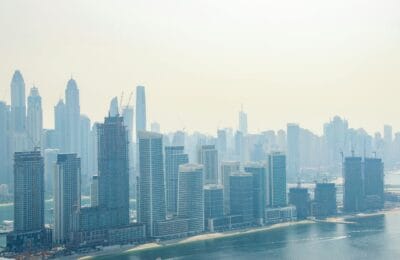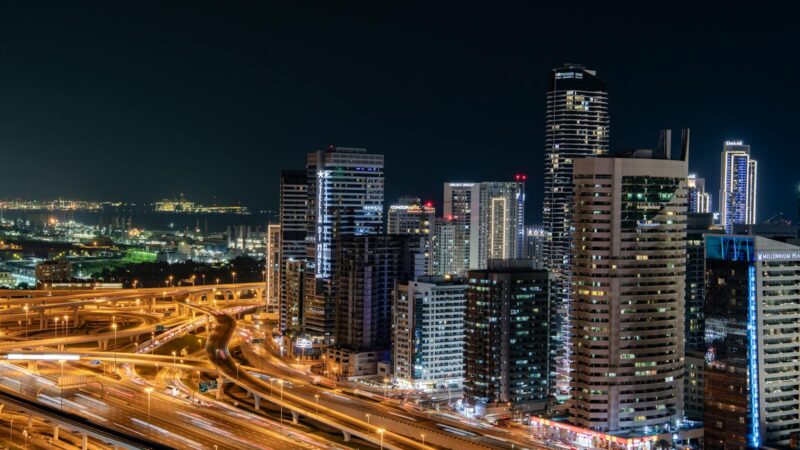
The Gulf’s two largest real estate markets are competing for investment capital with unprecedented intensity in 2026. Dubai, which recorded over 270,000 property transactions worth AED 917 billion during 2025, now faces an ambitious challenger: Saudi Arabia, which officially opened its doors to foreign property ownership in early 2026 — a move analysts describe as the most significant development in Gulf real estate since Dubai introduced freehold ownership in 2002.
The question confronting Gulf and international investors is no longer “Should I invest in Gulf real estate?” but rather: Where exactly? In Dubai’s mature market with its proven liquidity and established returns, or in Saudi Arabia’s emerging market that promises exceptional capital growth driven by Vision 2030 reforms? In this detailed analysis, we lay out the real numbers, compare returns and risks, and assess the regulatory landscape to help you make the right investment decision.
Market Overview: Two Markets, Two Trajectories
Dubai Real Estate: Record Numbers and Growing Maturity
The Dubai real estate market continued shattering records in 2025. The Dubai Land Department (DLD) registered 205,100 residential transactions, an 18.3% year-on-year increase, while total residential transaction values reached AED 541.5 billion — a 24.7% rise. The Residential Market Sales Price Index climbed 12.88% year-on-year through December 2025, with villas (+15.16%) outperforming apartments (+12.52%).

The citywide weighted-average residential price reached AED 1,689 per square foot (approximately AED 18,180 per square meter, or USD 4,950) by year-end 2025, up 19.8% year-on-year. Premium areas like Palm Jumeirah, Downtown Dubai, and DIFC command between AED 25,000 and AED 48,000 per square meter for luxury apartments, while mid-range communities like Business Bay and Dubai Marina range from AED 18,000 to AED 28,000.
For 2026, Knight Frank anticipates around 3% price growth in the prime segment, while Cushman & Wakefield Core expects appreciation of 5% to 8% across the broader market. Approximately 100,000 residential units are scheduled for delivery in 2026, though historical completion rates suggest actual handovers will range between 33,000 and 50,000 units after accounting for typical construction delays.
Real estate remains a backbone of the diversifying UAE economy. Dubai’s population surpassed 4 million in 2025, adding 208,000 residents in a single year — a 5.2% increase that outpaces the Dubai 2040 Urban Master Plan trajectory. This rapid population growth serves as a critical buffer against oversupply risk.
Saudi Arabia: A Historic Opening and Accelerating Growth
The Saudi real estate market is undergoing a fundamental transformation powered by Vision 2030. Riyadh commanded 41.5% of the national market share in 2025, followed by Jeddah at 28%. Apartment prices in Riyadh surged 10.5% and villa prices jumped 12.4% in the year through mid-2025, driven by the influx of multinational corporations relocating their regional headquarters to the Saudi capital.
Among the most significant regulatory developments: Crown Prince Mohammed bin Salman enacted a five-year rent freeze across residential and commercial properties in Riyadh in September 2025 — an extraordinary measure to curb rising living costs that had been straining residents. Meanwhile, the new foreign property ownership law took effect in January 2026, allowing international investors to purchase real estate in designated zones for the first time in the Kingdom’s history.
Analysts project 8% to 10% annual price growth in Riyadh and 4% to 6% in Jeddah through 2026. The market requires over 115,000 new housing units annually through 2030 to meet surging demand from both citizens and residents. Riyadh’s total housing stock stands at 1.46 million units and Jeddah’s at 899,000 — both figures still insufficient to meet escalating demand.
Price Comparison: Dubai vs Riyadh vs Jeddah
A square-meter price analysis reveals substantial differences that reflect each market’s maturity level. Dubai’s average residential price per square meter reached approximately AED 16,924 (USD 4,580) as of December 2025, while Riyadh’s average ranges between SAR 3,000 and SAR 5,000 (USD 800 – 1,333) per square meter, and Jeddah between SAR 2,500 and SAR 4,500.
This means Dubai’s average per-square-meter price is roughly 3 to 4 times that of major Saudi cities. However, this gap narrows considerably in the luxury segment, where Riyadh’s upscale northern neighborhoods like An Narjis and Al Sahafah command SAR 8,000 to SAR 11,000 per square meter, compared with AED 25,000 to AED 48,000 in Palm Jumeirah and Downtown Dubai.
| Category | Dubai (AED/sqm) | Riyadh (SAR/sqm) | Jeddah (SAR/sqm) |
|---|---|---|---|
| Luxury Apartments | 25,000 – 48,000 | 8,000 – 11,000 | 6,000 – 8,000 |
| Mid-Range Apartments | 18,000 – 26,000 | 3,000 – 5,000 | 2,500 – 4,000 |
| Luxury Villas | 38,000 – 60,000 | 8,000 – 11,000 | 5,000 – 8,000 |
| Mid-Range Villas | 14,000 – 21,000 | 3,000 – 5,000 | 2,500 – 4,500 |
| Off-Plan (Average) | 12,000 – 20,000 | 2,500 – 4,500 | 2,000 – 3,500 |
In practical terms, an investor can purchase a new apartment in Riyadh for less than half the cost of a comparable unit in Dubai Marina. However, this price gap reflects fundamental differences in market maturity, liquidity, and the scale of international demand. Dubai’s market serves an established global buyer base spanning over 200 nationalities, while Saudi Arabia’s international demand is only beginning to form.
The price differential represents both opportunity and risk: opportunity because it implies significant capital appreciation potential as Saudi Arabia’s market matures, and risk because lower prices may reflect limited demand and liquidity in the current phase.
Rental Yields: Which Market Delivers Better Returns?
Both markets offer competitive rental yields that significantly outperform mature global markets such as London (3-4%) and New York (2-3%). Dubai’s average gross rental yield stands at 6.76%, with apartments (7.07%) outperforming villas (4.93%). Areas like International City achieve yields up to 9%, while Al Furjan ranges between 7.5% and 8.5%, and Jumeirah Village Circle between 7% and 8%.
Studios and one-bedroom apartments deliver the highest yields in Dubai, averaging 7% to 8.5%, driven by relatively low purchase prices and strong demand from the emirate’s large workforce population. By contrast, villas in communities like Arabian Ranches yield a more modest 4-5% but offer stronger capital appreciation owing to constrained supply.
Saudi Arabia, however, posts higher headline numbers. Riyadh records an average gross rental yield of 8.89% — among the highest in the region — while Jeddah averages 7.89%. Residential rents in Riyadh rose 10% and in Jeddah 8% year-on-year through Q3 2024, propelled by rapid population growth and the influx of workers tied to massive infrastructure projects.
One critical caveat: the five-year rent freeze in Riyadh (through September 2030) means rental yields will not increase for existing or new contracts within city boundaries. This materially impacts calculations for investors seeking short-term rental income growth. However, the freeze does not apply in Jeddah and other Saudi cities, where rental growth continues unimpeded.
Foreign Ownership and Residency Programs
Dubai: Freehold Zones and the Golden Visa
Dubai’s freehold system, established in 2002, allows nationals of all countries to purchase property in designated zones that encompass most major investment areas including Dubai Marina, Business Bay, Palm Jumeirah, Downtown Dubai, JVC, and many others. There are no restrictions on the number of properties a foreigner may own.
Investors acquiring real estate worth at least AED 2 million (USD 545,000) qualify for the 10-year Golden Visa, which includes full family sponsorship and flexible residency conditions with no minimum stay requirement. Multiple properties can be combined to meet the threshold, and both ready and approved off-plan properties qualify.
Registration fees at the Dubai Land Department total approximately 4% of the transaction value plus administrative charges. Dubai imposes no individual income tax, no annual property tax, and no capital gains tax — meaning an investor’s net yield closely approximates the gross yield, a significant advantage compared with Western markets that impose multiple layers of taxation.
Saudi Arabia: Premium Residency and the New Ownership Law
The new law effective January 2026 permits foreign residents to own one residential unit, while non-resident ownership is restricted to designated government-approved zones. Makkah and Madinah remain largely restricted, with limited exceptions for Muslim foreigners and specific corporate entities. Listed companies, investment funds, and special-purpose vehicles may acquire property across the Kingdom, including the holy cities, subject to Capital Market Authority oversight.
The Premium Residency program grants broad rights including ownership of residential, commercial, and industrial real estate across the Kingdom, excluding Makkah, Madinah, and border regions. In the two holy cities, Premium Residency holders may acquire property through 99-year lease agreements. The minimum real estate investment for Premium Residency is SAR 4 million (USD 1.07 million) — roughly double Dubai’s Golden Visa threshold.
Total transaction costs in Saudi Arabia reach approximately 10% of the property value (including real estate transaction tax and administrative fees), compared with roughly 4-5% in Dubai. This substantial difference in entry and exit costs directly impacts return calculations, particularly for investors planning shorter holding periods.
Key Developers and Major Projects
Dubai’s Flagship Developments
Palm Jebel Ali stands as Dubai’s most notable comeback story for 2026. Dormant for over a decade, Nakheel relaunched the project with a fully redesigned master plan, recording a 244% surge in transaction volumes with first-phase villas selling out within days. Dubai Creek Harbour is emerging as a “second Downtown” with premium waterfront living and the ambitious Creek Tower designed to rival the Burj Khalifa.
Emaar continues to dominate the market through projects at Emaar Beachfront, Dubai Hills Estate, and The Valley, while DAMAC expands its Mediterranean-themed Lagoons community with clusters like Ibiza and Monte Carlo nearing completion. Sobha has gained prominence with Sobha Hartland II and Sobha One developments.
Off-plan properties accounted for over 75% of total transactions in 2025. Entry prices for one- to two-bedroom apartments with 2026 handover dates start from AED 800,000 to AED 1.2 million in mid-market areas, rising to AED 1.3 to 2.5 million in prime locations such as Emaar Beachfront, Dubai Marina, and Downtown Dubai.
Saudi Arabia’s Mega-Projects
Roshn, the PIF-backed developer, leads the residential sector with projects like SEDRA in northern Riyadh and ALAROUS in northern Jeddah, committed to achieving Saudi Arabia’s 70% homeownership target by 2030. Diriyah Gate advances as a USD 63 billion heritage and cultural mega-project targeting 27 million annual visitors by 2030, attracting interest from prominent international investors.
NEOM has undergone significant restructuring, representing a shift in the Kingdom’s approach to its mega-projects. The Line’s population projections have been scaled back from 3 million to fewer than 300,000 residents by decade’s end, with the focus redirected toward data centers and artificial intelligence. Qiddiya continues developing as a massive entertainment destination south of Riyadh, having opened the first Six Flags theme park outside the United States. Jeddah Tower prepares to become the world’s tallest building at over 1,000 meters.
Dar Al Arkan maintains an active pipeline of residential and mixed-use developments, alongside the Saudi Real Estate Company that contributes to meeting the growing demand for affordable housing units.
Financing and Mortgage Rates
Financing represents a pivotal factor in the investment decision, and here the UAE holds a clear competitive advantage. UAE mortgage rates start from 3.75%, with 3-year fixed-rate options ranging from 3.85% to 4.10%. The 3-month EIBOR trended toward 3.58% in late February 2026. Most financing products comply with Islamic banking principles, which are experiencing rapid growth across the region.
In Saudi Arabia, mortgage rates for foreigners range from 5% to 8%, with fixed options between 3.5% and 6% for residents depending on credit profile and lender. Pricing is linked to the Saudi Central Bank’s repo rate of 5%. The vast majority of home loans are structured as Murabaha (Islamic cost-plus financing).
The 2-3 percentage point difference in financing rates means the total cost of leveraged ownership in Saudi Arabia is meaningfully higher — a factor investors must weigh carefully when comparing net returns between the two markets.
Regulatory Framework
Dubai operates under the Real Estate Regulatory Authority (RERA), a mature oversight body that administers the mandatory Ejari lease registration system and the Smart Rental Index, which caps rent increases through a tiered system linking current rents to market averages. Escrow accounts require developers to deposit buyer funds in segregated accounts, providing substantial purchaser protection.
In Saudi Arabia, the Real Estate General Authority (REGA) oversees the market, alongside the Ejar platform for mandatory lease registration and the Wafi system that regulates off-plan sales and buyer protection. While the Saudi regulatory framework has evolved rapidly through 2025-2026, it remains less mature than Dubai’s in terms of transparency, dispute resolution mechanisms, and enforcement track record.
Risks and Challenges
Dubai Market Risks
- Potential oversupply: Approximately 100,000 units are scheduled for 2026 delivery, with 45% of under-construction stock concentrated in just five districts (JVC, Dubai South, MBR City, Business Bay, and Dubailand). Fitch projects a moderate correction of up to 15% through 2025-2026 following a 60% price run-up since 2022.
- Off-plan speculation: With off-plan transactions representing 75% of the market, concerns around speculative flipping are intensifying, potentially inflating a price bubble.
- Small-unit saturation: Studios and one-bedroom apartments comprise 66% of upcoming supply, creating downward pressure on prices and rents in this specific segment.
- Decelerating growth: Even under the most optimistic scenarios, price growth is slowing from double digits to single digits, narrowing profit margins for speculators.
Saudi Market Risks
- Market immaturity: The secondary market lacks adequate liquidity, with limited resale platforms and international demand that has not yet entered the system at scale. Selling a property in Saudi Arabia may take significantly longer than in Dubai.
- Mega-project downsizing: NEOM’s restructuring and The Line’s scale-back raise legitimate questions about other projects’ ability to deliver on ambitious targets and timelines.
- Rent freeze impact: Riyadh’s five-year rent freeze constrains rental income growth despite rising purchase prices, eroding real returns over time when accounting for inflation.
- High transaction costs: At approximately 10%, Saudi transaction fees significantly erode margins compared with Dubai’s 4%, making short-term investment economically unviable.
- Regulatory uncertainty: Despite rapid progress, the legal framework for foreign ownership is new and has not been sufficiently tested in practice.
Comprehensive Market Comparison
| Criteria | Dubai | Saudi Arabia |
|---|---|---|
| Average Rental Yield | 6.76% (Apartments: 7.07%) | Riyadh: 8.89% / Jeddah: 7.89% |
| Expected Price Growth 2026 | 3% – 8% | Riyadh: 8-10% / Jeddah: 4-6% |
| Foreign Ownership | Established freehold zones (since 2002) | Designated zones (new January 2026) |
| Residency Minimum Investment | AED 2M (USD 545,000) | SAR 4M (USD 1.07M) |
| Transaction Fees | ~4 – 5% | ~10% |
| Income Tax / Capital Gains | None | None |
| Mortgage Rates | From 3.75% | 5% – 8% |
| Secondary Market Liquidity | Very high | Limited |
| Market Maturity | Mature and well-regulated (20+ years) | Emerging and evolving |
| Regulatory Framework | RERA + Ejari + Smart Index | REGA + Ejar + Wafi |
| Off-Plan Market Share | 75% of transactions | Growing via Wafi platform |
| Population Growth | +5.2% annually (Dubai) | +3.5% annually (Riyadh) |
Investment Strategy: Who Should Invest Where?
Investors Seeking Immediate Rental Income
Dubai is the clear choice. The market is mature, liquidity is high, and rental yields are backed by a track record spanning two decades. Small apartments in areas like JVC, Arjan, and Al Furjan deliver yields between 7.5% and 9%. The Golden Visa threshold at AED 2 million adds genuine residency value that extends beyond the direct financial return.
Investors Seeking Long-Term Capital Appreciation
Saudi Arabia presents an exceptional opportunity for those with a 5-to-10-year investment horizon. Projected price growth in Riyadh (8-10% annually) exceeds Dubai’s forecasts (3-8%), and current prices remain relatively low with substantial room for appreciation as the market matures. An investor entering the Saudi market today occupies a position comparable to those who entered Dubai at the start of its boom in the early 2000s.
GCC Nationals
GCC citizens enjoy greater flexibility in both markets under Gulf Cooperation Council agreements. They can construct a balanced real estate portfolio: Dubai properties for stable rental income with high liquidity, and Riyadh and Jeddah properties for long-term capital growth. There are no ownership restrictions for GCC nationals in either market.
International Investors
Dubai remains the safer and more attractive choice thanks to its transparency, liquidity, ease of exit, and mature financial and legal infrastructure. Saudi Arabia, despite its growing appeal, demands greater patience and tolerance for emerging-market risks, including a regulatory framework that is still crystallizing and high transaction costs.
Residency-Seeking Investors
For those whose primary objective is obtaining Gulf residency through real estate investment, Dubai holds a clear advantage: a lower minimum threshold (USD 545,000 vs. USD 1.07 million), a 10-year Golden Visa with full flexibility in residency and travel, and a proven track record. Saudi Premium Residency offers comparable benefits but at higher cost and in a less mature market.
Conclusion: A Forward-Looking Outlook
There is no single answer to the Dubai versus Saudi Arabia equation. Dubai offers a mature market with high liquidity, proven returns, and an established regulatory framework tested through multiple market cycles — but faces oversupply concerns and moderating price growth. Saudi Arabia presents an exceptional growth opportunity at lower entry prices with transformative mega-projects — but carries the risks of an emerging market with limited liquidity and a nascent regulatory framework.
The prudent investor may find the optimal solution not in choosing between the two markets, but in maintaining positions in both: Dubai for immediate returns in a transparent and highly liquid marketplace, and Saudi Arabia for long-term growth as its market opens to the world. This intra-Gulf geographic diversification blends stability with ambition and positions the investment portfolio to capture the two largest real estate waves in the region.
What is certain is that 2026 represents a pivotal turning point in Gulf real estate history: Dubai is transitioning from rapid expansion to sustainable maturity, while Saudi Arabia is opening an entirely new chapter in the history of its property market with the decision to permit foreign ownership. The real winner is the investor who understands the dynamics of each market and deploys capital in the right place at the right time.