Something unprecedented is happening in the technology world right now. Not a gradual evolution or a minor improvement — but a genuine earthquake reshaping entire industries in weeks rather than decades. In February 2026 alone, Anthropic launched three advanced AI models — Claude Sonnet 5, Claude Opus 4.6, and Claude Sonnet 4.6 — each dramatically surpassing its predecessor. Claude Code has hit a $2.5 billion annualized run rate, 29 million daily installs inside VS Code, and 4% of all public GitHub commits worldwide are now written by AI. Meanwhile, $2 trillion has been wiped from traditional software companies’ market capitalization. The world isn’t just changing — it’s being rebuilt from scratch. And the most important question is: where does Saudi Arabia stand in all of this? The answer may surprise you.
What’s Happening in the AI World Right Now?
To understand the magnitude of what’s unfolding, let’s put the numbers in context. Just two years ago — at the start of 2024 — generative AI was still in its experimentation phase. Companies talked about it more than they used it. Today, in February 2026, the landscape is completely different:
- Claude Code from Anthropic generates $2.5 billion in annualized revenue — a figure that has doubled since the start of the year. According to CNBC, daily installs have reached 29 million inside the world’s most popular code editor.
- 4% of all code published on GitHub — the world’s largest software platform — is now written by Claude Code. AI is no longer an assistant — it has become an actual programmer.
- Claude Sonnet 5 (Fennec) scored 82.1% on the SWE-Bench test — a benchmark measuring AI’s ability to solve real software engineering problems — approaching professional human programmer performance.
- Claude Cowork — Anthropic’s new office tool — now works inside Microsoft Excel and PowerPoint, performing specialized tasks in HR, wealth management, and design. According to CNN, this development has sparked widespread concern about the future of office jobs.
- The New York Stock Exchange (NYSE) has begun deploying Claude for complex financial data analysis — an unmistakable signal that the world’s largest financial institutions are betting on this technology.
The Software Stock Crash: $2 Trillion Evaporates
Investors didn’t wait to see the final results. According to JPMorgan analysis, over $2 trillion has been wiped from global software companies’ market caps since early 2026. Giants like Adobe, Salesforce, and ServiceNow are down 25% to 30%. Even Palantir — once considered an AI beneficiary — has lost 22% of its value.
According to CNBC, the S&P North American Software Index recorded its worst month since October 2008 — yes, since the global financial crisis. A Gartner report revealed that 40% of enterprise applications had already integrated specialized AI agents by early 2026. The traditional per-user subscription model is breaking — because a single AI agent can do the work of multiple employees.
Saudi Arabia: Not a Spectator But a Major Player
As these transformations accelerate, Saudi Arabia is strategically positioning itself to be one of the biggest beneficiaries — not victims — of the AI revolution. The numbers speak for themselves:
The $40 Billion Fund
The Saudi government announced a $40 billion fund dedicated to AI investment — the world’s largest government fund for this sector. According to Asharq Al-Awsat, the fund aims to build an integrated ecosystem spanning infrastructure, startups, and scientific research.
Google Cloud and PIF’s $10 Billion Partnership
The Public Investment Fund (PIF) partnered with Google Cloud in a $10 billion deal to establish a global AI hub in the Kingdom. This isn’t just a technology deal — it signals that tech giants see Saudi Arabia as a strategic partner, not just a market.
SDAIA: The Mastermind
The Saudi Data and AI Authority (SDAIA) leads the national strategy across three pillars: building human capacity, developing an integrated AI ecosystem, and responsible governance aligned with international standards. SDAIA investments exceed $5 billion in national AI infrastructure.
#1 Globally in Government AI Adoption
According to the Public Sector AI Adoption Index 2026, Saudi Arabia scored 66 out of 100 — first globally by a significant margin. The Kingdom has also officially joined the Global Partnership on AI (GPAI).
How Will AI Affect the Saudi Job Market?
This is the question on millions of minds — not just in Saudi Arabia but worldwide. The answer isn’t simple because it carries two contradictory faces simultaneously.
The Bright Side: Unprecedented Opportunities
According to the World Economic Forum (WEF) Future of Jobs Report 2025, AI and related technologies will create 170 million new jobs globally by 2030, while displacing 92 million — a net positive of 78 million new positions. Key Saudi-specific highlights:
- 81% of Saudi enterprises already deploy AI solutions tailored to their industries, with 96% planning to invest in data quality improvement.
- 73% of Saudi professionals plan to seek new jobs in 2026, with one-third actively building AI skills. According to Zawya, the Saudi job market is experiencing its highest mobility rates in history.
- New AI jobs in Saudi Arabia include: AI engineers, big data analysts, AI ethics managers, prompt engineers, and process automation specialists — roles that didn’t exist a few years ago and carry globally competitive salaries.
The Dark Side: Risks That Cannot Be Ignored
- 25% to 30% of current Saudi jobs could be affected by AI by 2030, according to Oliver Wyman. This doesn’t mean these jobs will disappear, but they will be radically redefined.
- Routine jobs are most vulnerable: data entry, basic admin tasks, some customer service roles, and initial-stage accounting.
- The skills gap is a major challenge. Not all workers can smoothly transition to new roles.
- Inequality may worsen. Large companies and tech-skilled individuals will benefit disproportionately, while small businesses and lower-skilled workers may fall behind.
Vision 2030 and AI: A Critical Intersection
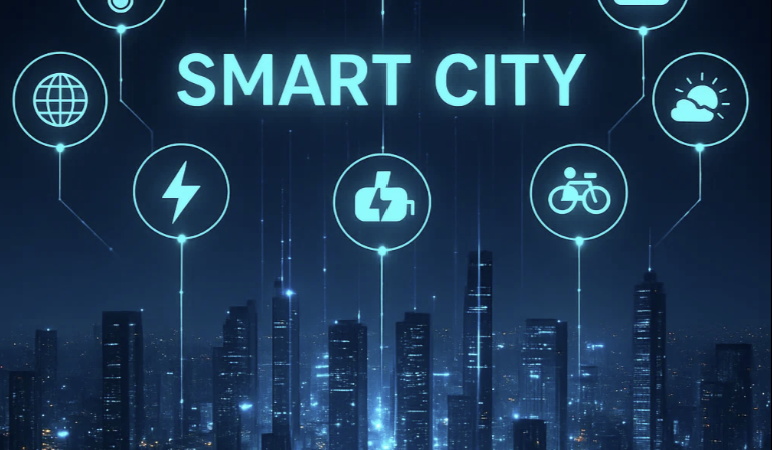
What makes Saudi Arabia’s position unique is that the AI boom coincides with the region’s largest economic transformation program — Vision 2030. The intersection creates exceptional opportunities: NEOM and The Line will be AI-native smart cities, Aramco has launched a $5 billion VC arm targeting clean tech and AI startups, and the Kingdom is building its own semiconductor manufacturing capacity.
Claude and the Competition: What Makes This Moment Different?
What makes February 2026 a watershed isn’t just new model releases — but the speed of improvement unprecedented in any technology sector. In a single month, Anthropic launched Claude Sonnet 5 (1 million token context window), Claude Opus 4.6 (deepest reasoning), Claude Sonnet 4.6 (computer use at 72.5%), Claude Cowork enterprise updates, and Remote Control mobile. This pace isn’t unique to Anthropic — OpenAI, Google, Meta, and Chinese competitors like DeepSeek are racing at similar speeds.
The Bottom Line: We’re at the Beginning, Not the End
What we’re witnessing today isn’t the peak of the AI boom — it’s its true beginning. The transition from experimentation to direct economic impact means the next few years will be decisive for every country, company, and individual.
Saudi Arabia possesses rare advantages: massive capital, clear political will, partnerships with the world’s largest tech companies, and mega-projects that need AI at their core. But these advantages will only translate into results if accompanied by genuine investment in people — in education, training, and reskilling.
On an individual level, the message is clear: those who learn to work with AI will find opportunities that never existed before. Those who ignore it will find their world shrinking day by day.
We’re not writing about a distant future — we’re writing about the coming weeks. And Saudi Arabia, with all its resources and ambition, has decided to be in the driver’s seat.
This article is for educational and analytical purposes only and does not constitute financial or investment advice. Consult a licensed financial advisor before making investment decisions.