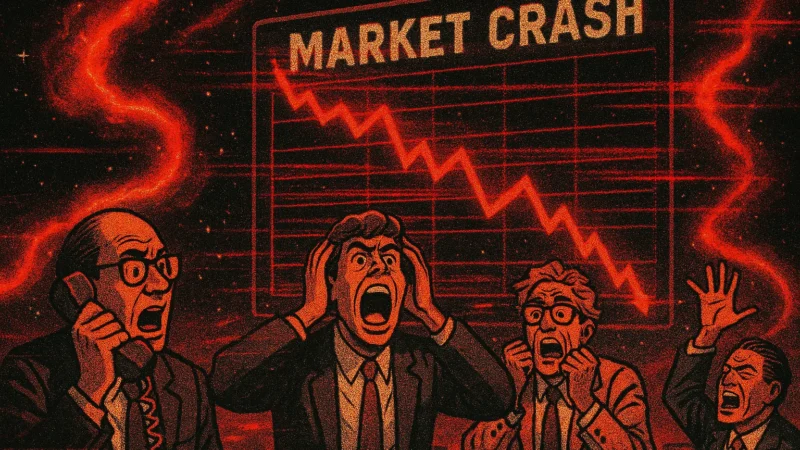
Have you ever bought gold, silver, Bitcoin, or stocks — only to watch the price crash immediately after? If you think it’s just bad luck, the truth is far deeper. What happens to you happens to millions of investors worldwide, and it’s a direct result of how global financial markets are designed to favor large institutions over the average individual.
The News You Hear Has Already Arrived Late
When you read a headline saying “Gold hits all-time high” or “Bitcoin breaks $100,000”, you’re reading old news. Major financial institutions like Goldman Sachs, JPMorgan, and BlackRock started buying months before the news reached you.
According to Bloomberg, over 70% of daily trading volume in global markets is driven by algorithmic trading owned by hedge funds and investment banks. These algorithms move in milliseconds based on data before it becomes public news.
How Institutional Asset Rotation Works
Large investment institutions don’t invest in one asset. They move billions of dollars between asset classes — from stocks to bonds, from gold to crypto, from oil to real estate — through Asset/Sector Rotation.
The institutional investment cycle works like this:
- Accumulation: Institutions buy quietly when nobody cares about the asset. Prices are low and news is negative.
- Markup: Prices start rising gradually. Positive reports appear. Analysts on CNBC and Reuters start covering the asset.
- Distribution: This is when the news reaches you! Headlines talk about record numbers. Social media buzzes with profit stories. You buy at this moment — but institutions are actually selling to you what they bought at much lower prices.
- Decline: After institutions finish selling, the price drops. You’re now holding the asset that smart money abandoned.
Gold, Silver, Bitcoin, and Stocks — All the Same Pattern
Whether it’s precious metals in the Saudi and UAE markets, Bitcoin ETF approvals covered by The Wall Street Journal, or stocks on Tadawul — the cycle repeats. A famous DALBAR study shows the average investor earns roughly 50% less than the index they invest in, primarily due to poor timing.
How to Protect Yourself
Once you understand this mechanism, you can change your investment behavior:
- Buy when nobody cares — as Warren Buffett says: “Be fearful when others are greedy, and greedy when others are fearful.”
- Use Dollar-Cost Averaging — invest fixed amounts monthly, as recommended by Vanguard.
- Watch what institutions do, not what they say — follow COT reports and central bank gold purchases.
- Don’t invest based on breaking news — if you heard it on the news, you’re already late.
Understand the game. Control your emotions. Invest rationally.
This article is for educational purposes only and does not constitute financial advice. Consult a licensed financial advisor before making investment decisions.